

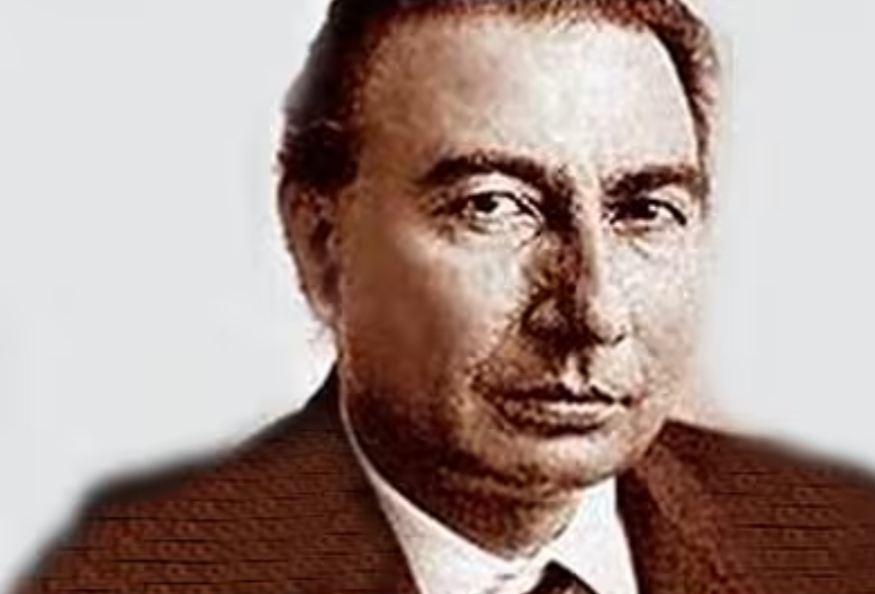
Sahir Ludhianvi: The Romantic Rebel and Immortal Conscience
Forty-five years after his passing on October 25, 1980, the magic of Sahir Ludhianvi remains unbroken.
Born Abdul Hayee in Ludhiana in 1921, he grew into his pen name—Sahir, meaning ‘magician’—by casting a spell of defiance, tenderness, and unflinching honesty. A recipient of the Padma Shri in 1971 and a subject of commemorative postage stamps, he is an enduring colossus in Urdu literature and Hindi cinema, a conscience-keeper who refused to be domesticated by fame or fear. His life, marked by personal turmoil and professional triumphs, spanned from the pre-Partition era to the heart of Bollywood, weaving his journey of resilience into a legacy that embodies the syncretic Ganga-Jamuni tehzeeb (syncretic culture).
A Voice for the Voiceless: The People’s Poet
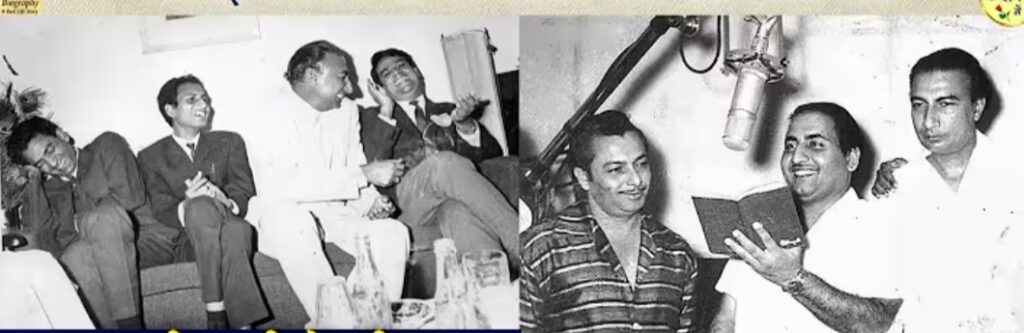
Sahir was, in his own words, a “shayar-e-awaam,” the people’s poet. His verses spoke to the dispossessed, the disenchanted, and the dreamers alike, capturing the raw struggle between idealism and survival, faith and rebellion, love and loss. Through his collections like Talkhiyan (Bitterness) and Parchhaaiyaan (Shadows), and his countless film songs, he lent a lyrical voice to the common man’s anguish and the have-nots’ tribulations.
His iconoclasm was rooted in ethics and a worship of humanity, not ritual or conformity. He exposed the hypocrisies of religion, politics, and patriarchy with unerring precision. His defiance was proclaimed early on in his poem Avaaz-e-Adam, recited in Lahore in 1949:
> Dabegi kab talak aawaaz-e-Aadam hum bhi dekhenge,
> Rukenge kab talak jazbaat-e-barham hum bhi dekhenge,
> Chalo yoonhi sahi ye jaur-e-paiham hum bhi dekhenge.
> > (Till when can the voice of Adam be suppressed? We too shall see. Till when can angry emotions be controlled? We too shall see. We too shall see, for sure, just like this, the constant oppression.)
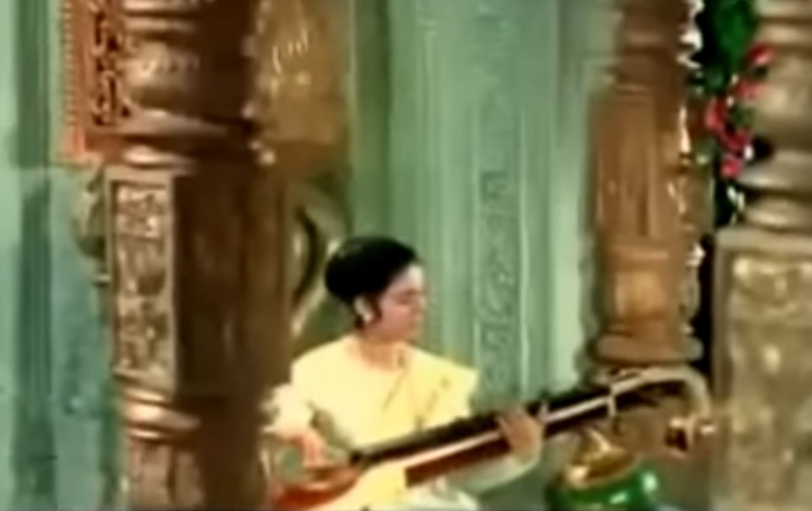
He had little patience for pretence, questioning both religious hypocrisy and political power, and daring to shake the conscience of a nation still giddy from independence with poems like Jinhe naaz hai Hind par woh kahan hain? (Where are those proud of India?).
The Poet of Protest and Conscience
Sahir’s poetry was a revolution in verse, making resistance lyrical and conscience immortal. In an age of rising orthodoxy and blind nationalism, he risked ostracism by daring to question. His lines, written in protest after the assassination of African freedom fighter Patrice Lumumba, became an anthem against tyranny across continents:
> Zulm phir zulm hai badhta hai to mit jaata hai,
> Khoon phir khoon hai tapkega to jam jaayega.
> > (Oppression is but oppression, it increases and sometimes it does not. Blood is but blood, it will drip, then it will clot.)
He asserted that every injustice leaves an indelible mark that cannot be erased by the oppressor’s will. For Sahir, blood and resistance were metaphors of moral awakening, reminding the powerful that tyranny is temporary:
> Tum ne jis khoon ko maqtal mein dabaana chaaha,
> Aaj vo koocha-o-bazaar mein aa nikla hai.
> > (The blood you tried to bury in the slaughterhouse now walks the streets and bazaars.)
His iconic lines from Pyaasa (1957), “Yeh duniya agar mil bhi jaaye toh kya hai?” (What if I gain this world?), captured the moral decay of his times.
The Progressive and Anti-War Thinker
As a progressive thinker, Sahir decried the senselessness of war and critiqued capitalism’s role in moral decay. His masterpiece, the long, haunting poem Parchhaiyaan (Shadows), tears away the glamour of patriotic sacrifice, envisioning a time when “dreams burn in the embers of ambition, and lovers become collateral to empires.” It masterfully juxtaposes war’s macro-destruction with a lovers’ micro-tragedy, warning of global conflict’s horrors and humanity’s self-destruction.
His progressive stance was clearly articulated as a plea against warmongers:
> Utho k aaj har ik jangju se y kah dein,
> K ham ko kaam ki khatir kalon ki hajat hai.
> Hamein kisi ki zamiin chhiin-ne ka shauq nahien,
> Hamein to apni zamiin par halon ki hajat hai.
> > (Let us rise and tell every warmonger that we need implements to do our work. We do not wish to possess anyone else’s land, but we need ploughs for tilling the land that we own.)
> >
>
These lines, penned decades ago, echo eerily today, proving his idealism was steeped in realism and his protest was poetry.
The Feminist Poet and Romantic Soul
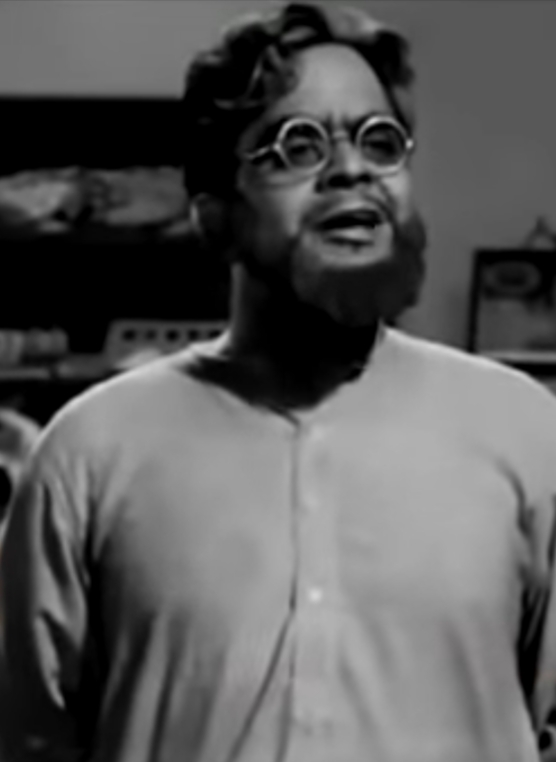
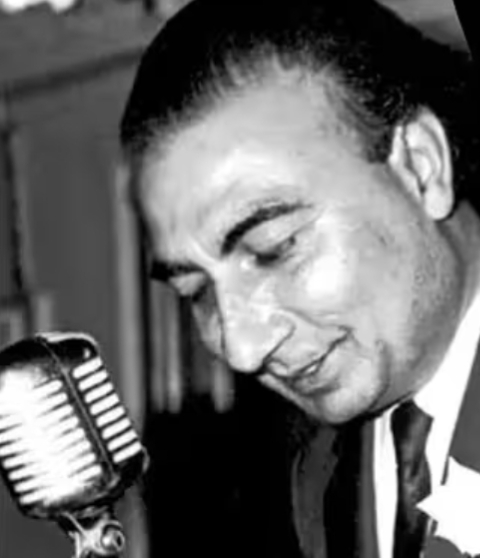
Few male poets of his time wrote about women with Sahir’s empathy and insight. His deep reverence stemmed from his mother, Sardar Begum, who endured abandonment and social humiliation with quiet strength. That his birth anniversary falls on International Women’s Day is no coincidence, symbolizing his feminist ethos. In a world that saw women as mere objects, Sahir humanised them—their struggles, silences, and dignity.
His verses remain among the most searing feminist statements in Indian poetry, exposing societal commodification:
> Aurat ne janam diya mardon ko,
> Mardon ne usse bazaar diya.
> (Woman gave birth to men, yet men consigned her to the marketplace.)
He condemned objectification with piercing clarity:
> Log aurat ko faqat jism samajh lete hain,
> Rooh ka, dukh ka, jazbaat ka ehsaas nahin.
> > (Men see a woman as just a body, never as a soul—her pain and feelings never recognised.)
Beneath the fierce rebel lay a philosophical romantic soul. His love for Amrita Pritam, immortalized in her lines “Main tenu phir milangi”, and his affection for Sudha Malhotra inspired verses that oscillated between longing and loss. Even in heartbreak, he retained respect, never possessiveness. His romanticism was not escapist, but reflected the ache of a world where tenderness struggled to survive.
This blend of love, philosophy, and melancholy is immortalized in Kabhii Kabhii, written when he was only 24:
> Kabhii Kabhii mere dil me.n Khayaal aataa hai,
> Ke zindagii terii zulfo.n kii narm chaao.n me.n
> Guzarane paatii to shaadaab ho bhii sakatii thii.
> (Now and again the thought crosses my heart, that life may have brimmed with happiness if spent in the soft shadow of your tresses, it might have bloomed.)
The Nonconformist of Bollywood
Sahir’s move to Mumbai in 1949, fleeing arrest warrants from post-Partition Pakistan for his ‘inflammatory’ statements, marked a new chapter in film lyricism. His collaborations with maestros like S.D. Burman, Khayyam, and Ravi produced immortal songs—from the secular “Allah Tero Naam Ishwar Tero Naam” to the defiant “Yeh Duniya Agar Mil Bhi Jaye Toh Kya Hai.”
He penned film songs with as much literary integrity as his poetry, refusing to dilute his message for mass appeal. He transformed film lyrics into vehicles for social commentary without compromising quality. More importantly, he was the first to insist that lyricists be paid royalties equal to composers—a quiet revolution that changed Bollywood’s creative hierarchy and demanded respect for words over mere melody.
Though his nonconformist nature often strained relationships, his film lyrics provided a timeless soundtrack to millions: “Chalo ek baar phir se ajnabi ban jaayein hum dono,” “Main zindagi ka saath nibhata chala gaya,” and “Saathi haath badhana, ek akela thak jayega.”
An Enduring Legacy: Beyond Mortality
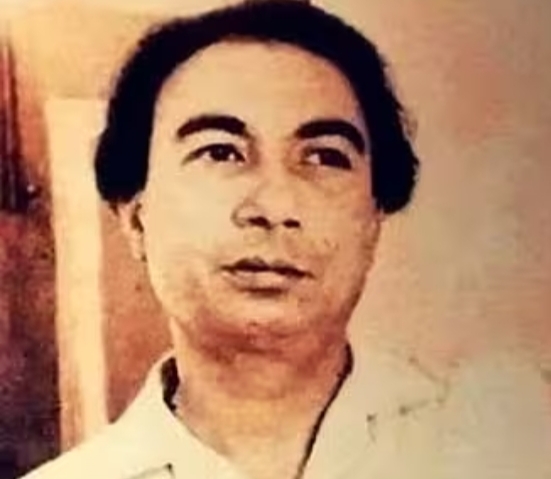
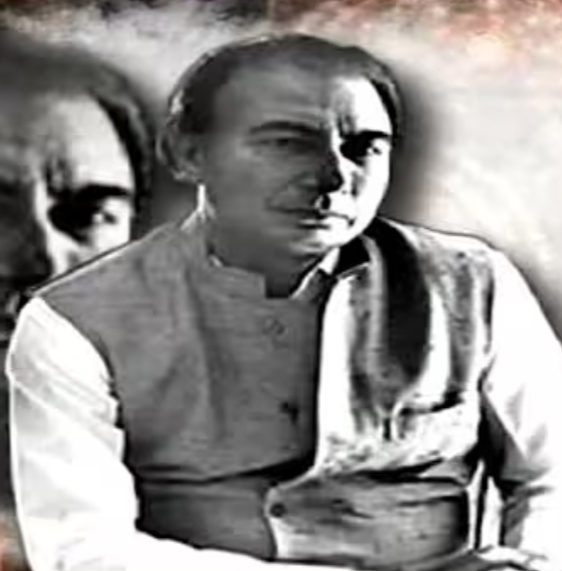
Sahir Ludhianvi died on October 25, 1980, but his voice never did. He lived simply, often alone, a man of solitude and idealism who bore life’s wounds with stoic grace. His literary potential, though partially diverted to cinema, towers over contemporaries as an eclectic force.
His ultimate self-description remains the most poignant, a meditation on loneliness, mortality, and the human condition:
> Main pal do pal ka shair hoon, pal do pal meri kahani hai,
> Pal do pal meri hasti hai, pal do pal meri jawani hai.
> (I am a poet of a moment or two, my story lasts but a moment, My being, my youth, are but for a moment.)
>
>
And yet, that moment has lasted an eternity. Sahir taught us that poetry can be both song and sword; that truth, even when bitter, is beautiful. He reminds us that “Jism ki maut koi maut nahi hoti” (The death of the body is not death), and his richly cast shadow, as rebel, romantic, and philosopher, will not fade as long as injustice calls for a rebel’s answer. His words continue to speak for those who have none—the silenced, the forgotten, the betrayed—proving a colossus remains eternal, undimmed by time.
Hasnain Naqvi is a former member of the history faculty at St. Xavier’s College, Mumbai
All pictures credit, social media

~Hasnain Naqvi is a former member of the history faculty at St. Xavier’s College, Mumbai