

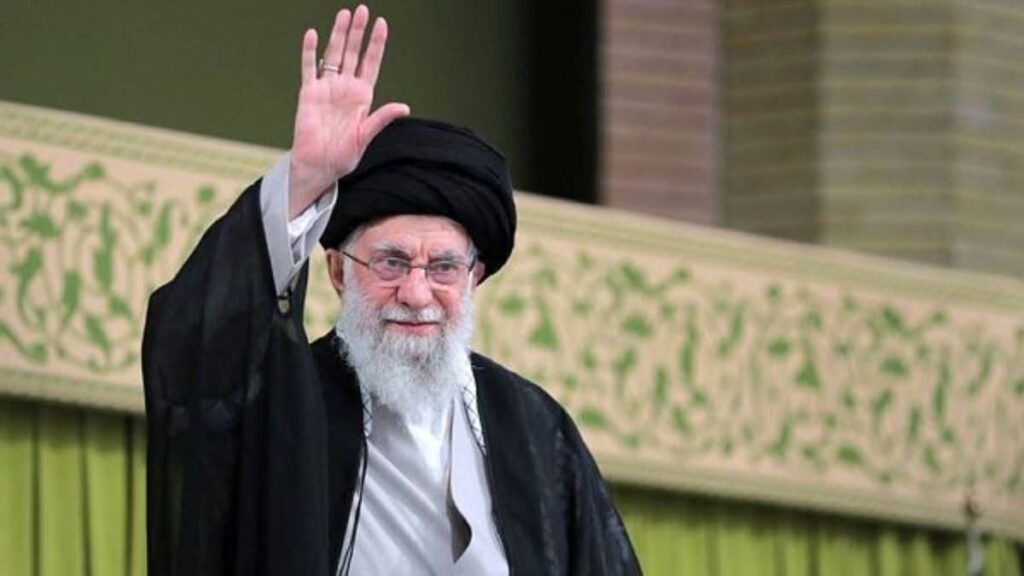
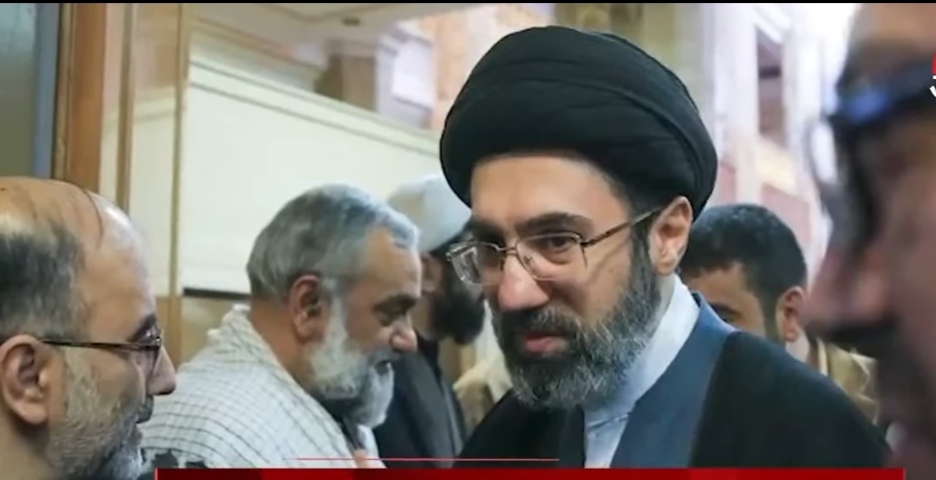
The passing of Ali Khamenei would not simply close a chapter in Iran’s political history; it would reopen a defining question of global consequence: does the Islamic Republic remain bound by its long-asserted religious opposition to nuclear weapons? For years, Tehran has projected its nuclear restraint not only as a matter of strategy but as a reflection of moral theology. Yet in a system where religious authority and state power are fused, the endurance of such a position is far from automatic.
To understand this moment, one must turn to the doctrinal foundations of Twelver Shiism, which governs both the spiritual and political life of the Iranian state. In this tradition, believers follow the rulings of living jurists—maraji‘—whose authority derives from their scholarship and contemporary relevance. Religious guidance, therefore, is not static; it evolves with time, circumstance, and leadership.
*Fatwa and State Power: A Crucial Distinction*
Iran’s political order, however, complicates this theological framework. Since the revolution of 1979, the country has operated under the doctrine of Wilayat al-Faqih, articulated by Ruhollah Khomeini. Here, the Supreme Leader is not merely a religious guide but the ultimate arbiter of state policy.
This dual authority produces two distinct kinds of rulings. A fatwa addresses personal religious conduct, guiding individuals in matters of faith and ethics. A hukm, by contrast, is a governmental decree—binding, enforceable, and shaped by considerations of public interest and national survival. The distinction is central to the debate over Iran’s nuclear stance.
The oft-cited prohibition on nuclear weapons attributed to Ayatollah Ali Khamenei falls closer to the latter category. It has functioned less as a purely theological injunction and more as a state-oriented position, articulated in religious language to reinforce its legitimacy at home and credibility abroad.
*Doctrine Meets Geopolitics*
This framing carries profound implications. Within the logic of Wilayat al-Faqih, state decrees are not immutable. They are contingent, shaped by the principle of expediency (maslaha) and subject to revision when circumstances demand it. The Supreme Leader, as guardian of the state, is empowered to reassess policies in response to shifting threats and opportunities.
Iran’s own history illustrates this flexibility. During moments of existential crisis, including the Iran-Iraq War, positions once framed in religious terms were recalibrated to meet strategic needs. Even Ruhollah Khomeini acknowledged that the preservation of the Islamic state could justify reinterpreting secondary religious rulings. Over time, this doctrine of expediency has become embedded in Iran’s governing ethos.
The nuclear issue sits squarely within this tradition. While Tehran has repeatedly invoked its religious stance in international diplomacy—including during negotiations over the Joint Comprehensive Plan of Action—that stance has always been intertwined with broader strategic calculations.
*A Changing Strategic Landscape*
The geopolitical environment confronting Iran today is far more volatile than it was a decade ago. Heightened tensions with the United States, an ongoing shadow conflict with Israel, and the gradual erosion of the JCPOA framework have all altered the strategic equation. Sanctions pressure, regional rivalries, and shifting alliances across West Asia continue to shape Tehran’s security calculus.
In such a context, the absence of Ayatollah Ali Khamenei would introduce both uncertainty and opportunity. His successor—whether a single figure or a collective leadership—would inherit not only the authority of the office but also its discretion. There is no binding theological mechanism that compels continuity in state decrees. On the contrary, the system is designed to allow reinterpretation in response to changing realities.
*Between Restraint and Recalibration*
None of this makes a shift toward nuclear weaponisation inevitable. Iran’s leadership must weigh the costs of further international isolation, the risks of military escalation, and the ethical debates that persist within its own clerical circles. The discourse on weapons of mass destruction is neither monolithic nor conclusively settled within the Shia tradition.
What is clear, however, is that the religious barrier often cited in discussions of Iran’s nuclear policy is not absolute. It derives its force from the authority that issued it, not from an unchanging doctrinal consensus. With Ali Khamenei’s passing, that authority does not automatically persist in its original form—it must be reinterpreted, reaffirmed, or revised.
*An Open Question with Global Consequences*
For the international community, this moment calls for nuance rather than assumption. Iran’s religious-legal system is neither rigid nor purely symbolic; it is a living framework where theology and statecraft intersect. Misreading its dynamics risks either overstating the permanence of restraint or underestimating the potential for change.
The future of Iran’s nuclear doctrine will not be determined by doctrine alone. It will emerge at the intersection of belief, power, and survival—where legal tradition meets geopolitical necessity. In that space, the end of one leader’s tenure does not settle the question. It merely reopens it, with consequences that extend far beyond Iran’s borders.
Picture credit social media

~Hasnain Naqvi is a former member of the history faculty at St. Xavier’s College, Mumbai