

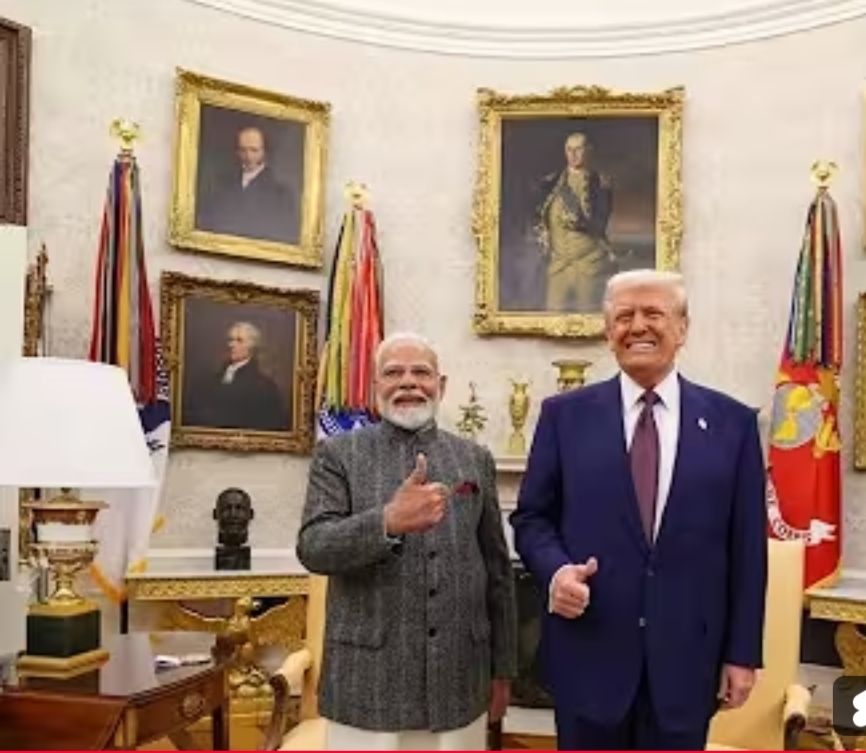
In a surprise announcement that bypassed conventional diplomacy, US President Donald Trump declared a “trade deal” with India on February 2, 2026, following a phone call with Prime Minister Narendra Modi. Trump framed it as a personal triumph, crediting Modi’s “request” and “friendship.” Modi responded with measured praise, highlighting the reduction in US tariffs on Indian goods to 18% as a win for 1.4 billion Indians. Yet the asymmetry in their accounts — and the absence of a published text — has sparked sharp questions about what India truly conceded.
No Formal Signature, No Full Disclosure
This is not a comprehensive Free Trade Agreement (FTA) nor a narrow Preferential Trade Arrangement (PTA). It resembles an interim, executive-level truce — a “mini-deal” or tariff de-escalation framework — aimed at resolving punitive duties imposed in 2025. No joint document has been signed or released. Trump posted details on Truth Social; Modi tweeted gratitude. Commerce Minister Piyush Goyal has promised a joint statement “shortly” — now specified as likely in the next 4–5 days — but has withheld specifics, insisting sensitive sectors remain shielded. A formal legal agreement is anticipated by mid-March.
Tariff Relief — But at What Cost?
The headline concession is clear: US tariffs on most Indian exports drop from an effective 50% (a 25% reciprocal rate plus a 25% penalty linked to Russian oil buys) to 18%. This benefits labour-intensive sectors like textiles, apparel, leather, gems, jewellery, and engineering goods, potentially boosting competitiveness against rivals facing 19–20% rates.
In exchange, India has agreed to slash tariffs on US industrial goods to zero from around 13.5%, and reduce duties on select agricultural items such as tree nuts, fruits, vegetables, wine, and spirits. Trump and US officials claim broader access: zero tariffs and non-tariff barriers on American goods overall, plus massive Indian purchases — over $500 billion in US energy, technology, coal, agriculture, defence, aircraft, and more — spread over years and including existing projects.
The Russian Oil Pivot and Energy Realignment
Trump explicitly tied the tariff cut to India halting Russian crude imports — a major demand amid the Ukraine conflict — and shifting toward costlier US and potentially Venezuelan supplies. New Delhi has not confirmed this commitment. Kremlin officials stated they have received no such indication from India. If true, the shift would disrupt one-third of India’s oil imports, strain ties with a key defence partner, and raise energy costs without guaranteed long-term benefits.
Agriculture and Dairy: Protected or Exposed?
Here the narratives clash most starkly. Goyal repeatedly assured Parliament and the public that agriculture and dairy remain “fully protected,” with no compromise on sensitive items like fertiliser. Yet US Agriculture Secretary Brooke Rollins celebrated the pact as a victory for American farmers, opening India’s vast market to their products. US Trade Representative Jamieson Greer described limited but meaningful access for US farm goods as a “big win,” while noting India retains protections in “key areas.”
The fine print remains hidden. No text clarifies whether non-tariff barriers — quality standards, sanitary rules, GM crop restrictions, or import quotas — have been diluted. With American agriculture heavily subsidised and mechanised, even partial opening could pressure India’s 700 million farm-dependent population, where small holdings dominate. Concerns linger over potential GM corn and soy influx, patented seeds eroding indigenous varieties, and hormone-treated or carnivore-fed dairy altering consumer health and cultural norms.
Strategic Leverage or Diplomatic Necessity?
The deal ends months of tariff warfare that strained bilateral ties. Indian officials reportedly told Washington they were prepared to “wait out” Trump’s term rather than rush concessions. The sudden accord suggests pragmatism: averting broader economic damage while preserving core red lines. Yet Trump’s maximalist claims — echoed by US officials — contrast with India’s restrained framing, raising suspicions of unequal bargaining.
In a significant development, Prime Minister Modi addressed the Rajya Sabha on February 5, 2026, during the debate on the Motion of Thanks to the President’s address. He hailed the pact as a milestone in India’s economic diplomacy, stating that big countries are eager for trade relations with India. He described the agreements — including the recent one with the US — as “future-ready” deals drawing global approval. Modi emphasized that the EU deal boosted confidence in global stability, while the US pact further enhanced that confidence, adding a sense of accelerated progress and momentum. He portrayed the world as openly praising these pacts, tilting toward India amid uncertainty, with the biggest beneficiaries being the nation’s youth through new opportunities in trade, investment, and growth.
Opposition voices in Parliament have demanded transparency: Will India divert all major imports toward America? Why the secrecy if protections hold firm? Facts will emerge in coming months — through import data on Russian oil, actual US farm shipments, and the promised joint statement.
For now, the pact delivers immediate relief to exporters battered by high US duties. But the opacity, one-sided announcements, and unverified giveaways on energy and market access leave a lingering question: Did India secure a fair reset, or accept terms that prioritise “America First” over its own farmers, consumers, and strategic autonomy?
The full story awaits the fine print — and the courage to publish it .
~Hasnain Naqvi is a former member of the history faculty at St. Xavier’s College, Mumbai

~Hasnain Naqvi is a former member of the history faculty at St. Xavier’s College, Mumbai