

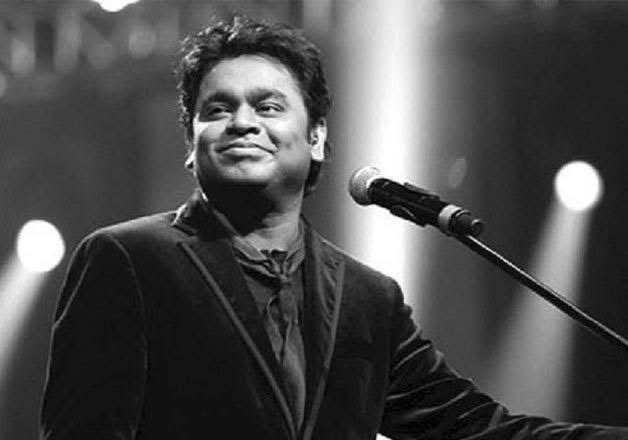
The controversy surrounding A.R. Rahman’s recent BBC interview has less to do with what the composer actually said and far more to do with how his words were framed, provoked, and subsequently amplified. A closer reading of the interview reveals a pattern that deserves scrutiny—not of Rahman’s intent, but of the manner in which the conversation was steered.
It was not Rahman but the interviewer, Haroon Rashid, a Pakistani-British journalist, whose line of questioning repeatedly sought to push the composer into politically and communally charged territory. Questions such as why Rahman composed Vande Mataram, whether Bollywood discriminates against Tamilians because it is Mumbai-centric, whether Chaavaa was “divisive,” and whether the present political climate restricts artistic choice were not neutral probes. They were clearly designed to elicit contentious sound bites.
On multiple occasions during the interview, Rahman attempted to deflect confrontation and bring nuance into the discussion. Yet the questioning persisted, driven by a binary Pakistan-versus-India framing. In this relentless pursuit of conflict, Rahman eventually found himself ensnared in a narrative not of his making.
Separating Fact from Perception
One of the most amplified claims from the interview is Rahman’s remark that Bollywood has sidelined him. However, data tells a different story. Of the roughly 15 projects Rahman has worked on in recent years, nine are for Bollywood filmmakers. Between 2022 and 2025, nearly half of his compositions were for Hindi cinema. Importantly, Rahman himself qualifies his remark in the interview, stating that it is based on what he has heard—what he describes as “Chinese whispers”—rather than personal grievance. This caveat, however, has largely been ignored in the public discourse.
Similarly, his comments on Chaavaa have been selectively quoted. Rahman does acknowledge that he felt elements of the film were divisive, but he also explains that this was driven by perceived market demand and the director’s choices. Crucially, he adds that the film ultimately conveys the courage and bravery of a Maratha warrior more than any communal message. In the current media ecosystem, nuance is often sacrificed for virality, and Rahman’s remarks were no exception.
An Artist Beyond Labels
A.R. Rahman’s body of work defies the narrow ideological boxes into which he is now being pushed. He is the composer of Vande Mataram, but also of O Palan Haare, one of Hindi cinema’s most evocative bhajans (Lagaan). His Jai Ho earned him an Academy Award; Khwaja Mere Khwaja (Jodhaa Akbar) and Kun Faya Kun (Rockstar) stand as modern musical landmarks.
His artistic choices have consistently crossed religious and cultural boundaries. He recorded a song with Asha Bhosle so that she could leave behind a memorable final chapter in her storied career. He is currently composing music for Ramayana alongside Hans Zimmer—one a Muslim, the other Jewish—collaborating on a Hindu epic. This is not symbolism manufactured for public relations; it is simply who Rahman has always been.
Rahman is not media-savvy, nor is he aligned with the communal agendas that thrive in online echo chambers. To read his interview as ideological positioning is to fundamentally misunderstand both the man and his music. Fairness demands that he be allowed to remain what he has always been: an artist, not a political instrument.
A Broader Shift in Bollywood
That said, Rahman’s comments have inadvertently opened a necessary conversation about the changing character of Bollywood itself. Over the past several years—roughly between 2019 and 2025—a distinct trend has emerged in Hindi cinema. A growing number of films with overtly nationalistic, Hindutva-aligned, or government-supporting narratives have dominated screens and public discourse.
Critics have frequently described these films as ideological or propagandist in nature. Many align closely with the worldview of the ruling Bharatiya Janata Party, rely on selective historical interpretation, or portray specific communities and political opponents as antagonists. Several of these films have been declared tax-free in BJP-ruled states and have received explicit political endorsements.
The Films and the Pattern
Titles such as The Kashmir Files (2022), The Kerala Story (2023), Article 370 (2024), The Sabarmati Report (2024), Swatantrya Veer Savarkar (2024), and Main Atal Hoon (2024) have shaped this phase of Bollywood. Others like Uri: The Surgical Strike (2019), The Tashkent Files (2019), Bellbottom (2021), and the upcoming The Bengal Files (2025) further reinforce the pattern.
While each film varies in craft and reception, analysts point to recurring characteristics: narratives drawn directly from contemporary political debates, stark villainization of Pakistan, Muslims, left-wing activists, or dissenting voices, and a strong emphasis on Hindu victimhood or valour. A noticeable stylistic shift has also taken place—away from traditional Bollywood song-and-romance formats toward a more abrasive, quasi-documentary aesthetic.
The Larger Question
This evolving cinematic landscape provides essential context to Rahman’s remarks. His discomfort, when read carefully, is less about exclusion and more about an industry increasingly driven by ideological imperatives rather than artistic plurality.
To single him out, misrepresent his words, or subject him to communal scrutiny is both unfair and counterproductive. A.R. Rahman’s legacy is not defined by a BBC interview but by decades of music that has united audiences across faiths, languages, and borders.
The debate worth having, therefore, is not about Rahman’s loyalty or intent—but about what kind of cinema India wants to make, celebrate, and preserve.
~Hasnain Naqvi is a former member of the history faculty at St. Xavier’s College, Mumbai

~Hasnain Naqvi is a former member of the history faculty at St. Xavier’s College, Mumbai