
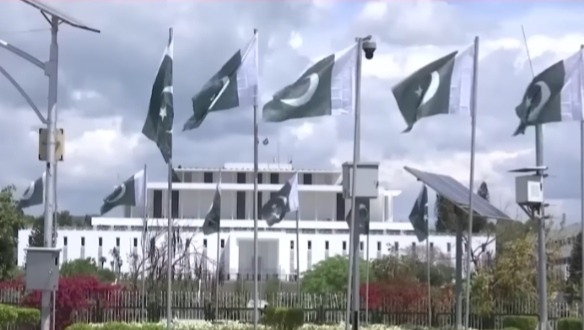
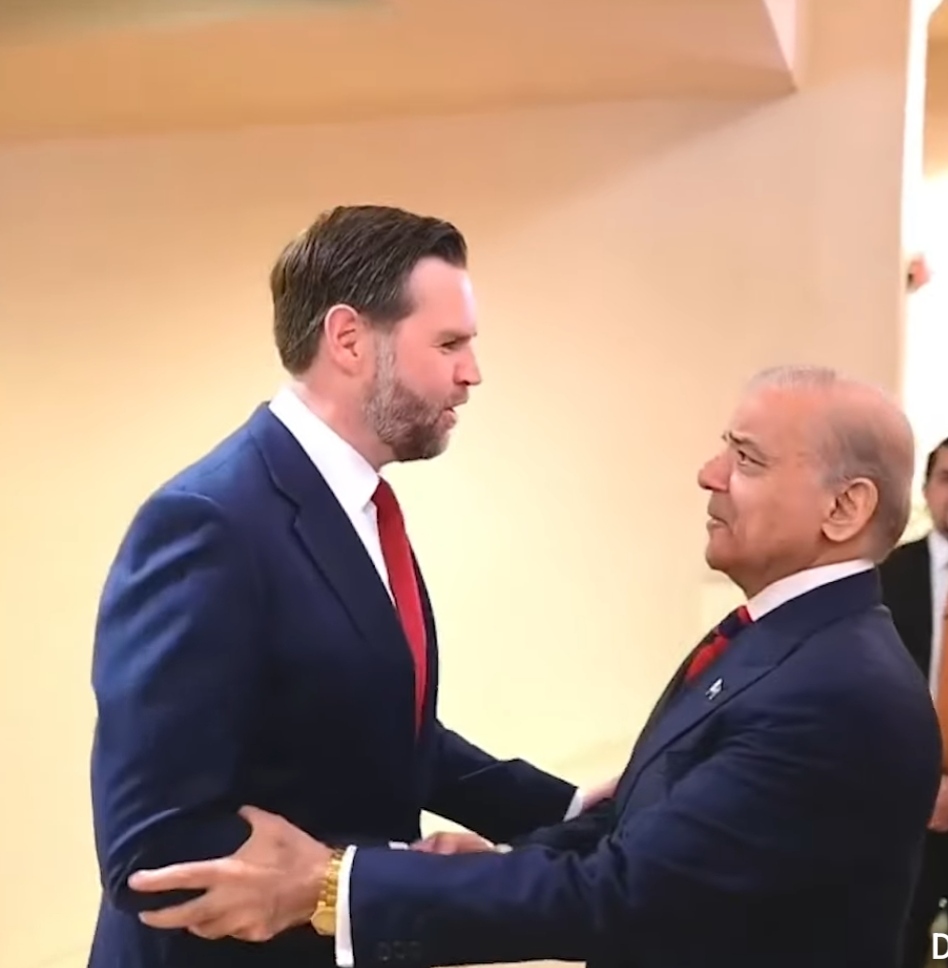
New Delhi ,12 April 2026 ,With a complete lid on information, the talks in Islamabad, continuing till 3 AM, two hours before this is being written, allow no peep into where the myriad issues that triggered the West Asia conflict stand. Only “a stepping stone”, as Pakistan Prime Minister Shahbaz Sharif put it, they will hopefully continue into more rounds, and allow a vexed world some relief.
As it entered its 43rd day, with Israel’s attacks on Lebanon, and continuing devastation in Gaza, United States President Donald Trump, the principal actor, has said that America wins “regardless”, and that he doesn’t care about the outcome of negotiations, and whether or not a deal is reached with Iran “, makes no difference to me”.
He has been in office for barely 15 months, affecting millions of lives around the world. How far his gambles, current and those he is bound to indulge in the next 45 months, will affect his domestic standing is impossible to assess. But their accumulation is sufficient to trigger speculation on his successor, well before any past presidential race.
If nothing else, that gives something to bite about the Indian Americans. Although it is still far in 2028, former US Vice President Kamala Harris, the first Afro-Indian to hold that post, has teased that she plans to enter the presidential race.
She lost to Trump in 2024, but she scored in popular votes, winning more votes than Bill Clinton and Barack Obama, Democratic Party circles have begun to say.
Among the ruling Republicans, Vice President D J Vance (Trump’s negotiator in Islamabad on a make-or-break mission) and Secretary of State Marco Rubio have been talked about as the likely ‘heirs’ to Trump – provided he doesn’t gamble on a third term. Too early, though, with wife Usha by Vance’s side, the Indian angle is ‘live’.
Let us see America’s political and democratic processes and the role that Indian Americans play.
US-born Smita Ghosh is the key challenger before the US Supreme Court that is hearing the closely-watched birthright citizenship case, “Trump versus Barbara”. Senior Appellate Counsel at the Constitutional Accountability Center, she is operating largely outside the glare of television cameras and political theatre. Her specialisation is the history of the American Constitution.
Chidananda Rajghatta writes that Ghosh “has emerged as a central intellectual architect behind the defence of the 14th Amendment to the US Constitution, which is at the core of Trump’s policy of ejecting thousands of immigrants, including Indians.
“She brings to bear a rare combination of appellate advocacy and deep historical scholarship. Her work—meticulous, text-driven, and rooted in early American legal tradition—is expected to play a significant role in how the judges approach a case that could redefine the meaning of US citizenship”.
This is important in America, which was once called “the nation of immigrants.” Whichever way the highest court decides, it will impact 53.3 million immigrants who have made America their home as of January 2025. They form 17 per cent of all international migrants worldwide. Besides, there are 18.6 million illegal or ‘undocumented’ immigrants, roughly 8.3 million being part of the American workforce.
At heart is the Trump administration’s challenge to whether those born on American soil automatically become American citizens. The verdict could influence other governments dealing with immigration. How Trump will perceive a negative verdict can be imagined.
He was furious when the apex court ruled that his policy of imposing tariffs on other countries was illegal and unconstitutional. He attacked Indians, as the principal lawyer who won the case is Indian American Neil Katyal. The US must refund various countries USD 120 billion. This has been pushed away for now by the West Asia conflict.
If Indian Americans have displayed legal acumen, their democratic pursuit of seeking elected offices is longer and is growing sharper. Zohran Mamdani’s election as New York’s Mayor last year became a world event. Could Washington be next?
Come June, the first South Asian candidate to be on the ballot for the primaries of the mayoral election in the country’s capital city will be Tamil Nadu-born Rini Sampath, 31. Like Mamdani, she must go through the process for the voting in November.
Mamdani has Gujarat roots, an African birth and an American upbringing in a mixed Hindu-Muslim family. Rini Sampath was born in Theni, Tamil Nadu and went to the US at age seven. She is a businesswoman working as a contractor.
Like Mamdani, whose election slogan was making New York “A City We Can Afford,” Rini has based her election campaign on the theme ‘Fix the Basics’ and the promise of “A new DC” (District of Columbia, where Washington is located). Both are working for the poor, working citizens who get edged out by the world-class cities’ elite and are denied civic facilities, cheaper transport and housing. Recently, Indian-origin Ghazala Hashmi became a candidate in Virginia’s Lieutenant Governor election.
Washington DC is dominated by Democrats, and the city has never had a Republican mayor since the elections to the post began in 1975.
Like their parents, Mamdani and Sampath are not professional politicians. “I’m not a politician. I don’t owe any special interest groups. It’s time for an outsider who is relentlessly focused on fixing our basic city services,” Rini says on her campaign website.
These democratic aspirations are nurtured by the regular elections India holds, in which their parents may have voted while in India. It is carrying forward the democratic practices and ethos.
Besides younger, US-born men, the Indian Americans have witnessed the rise of Women in Politics: Over 40% of the more than 100 Indian American candidates in 2024 were women.
A significant trend change is that most of them belong to the Democratic Party, which has attracted over 60 per cent of the Indian Americans, who number 5.4 million. This is a change since many Indians voted for Trump, partly due to his friendship with PM Modi.
With Mamdani’s win last year, other US results may mark the Indian diaspora vote shifting away from Trump, back to the Democratic Party. According to Indian American expert Milan Vaishnav, “India must broaden engagement with diaspora, not put all eggs in the Republican/MAGA basket.”
This may well happen after Trump’s harsh treatment of illegal migrants from India, his government’s ten months-long the tariff war with New Delhi, which remains unsettled, his penalising India for buying Russian oil, his questionable claims of having ended the India-Pakistan war last year and, as is happening at the US-Iran talks in Islamabad, his switching his diplomatic affections from “my friend Modi” to “my favourite field marshal”, Asim Munir of Pakistan.
Picture credit social media

Mahendra Ved is a veteran Journalist and an Expert on international affairs.

