
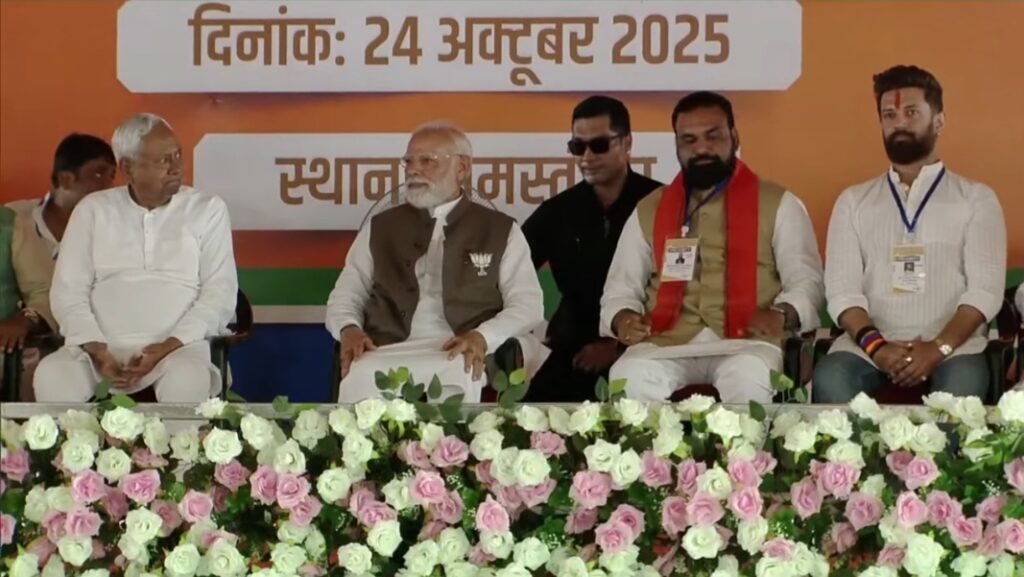
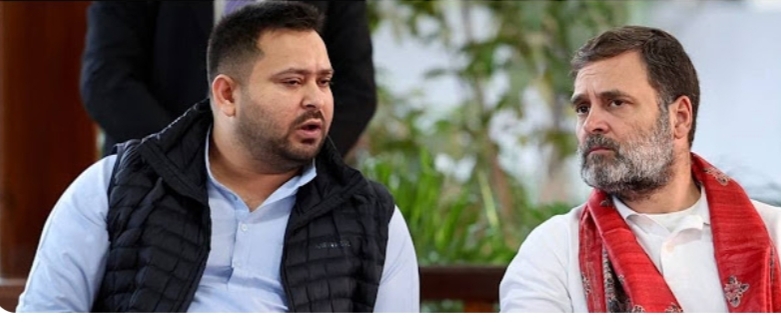
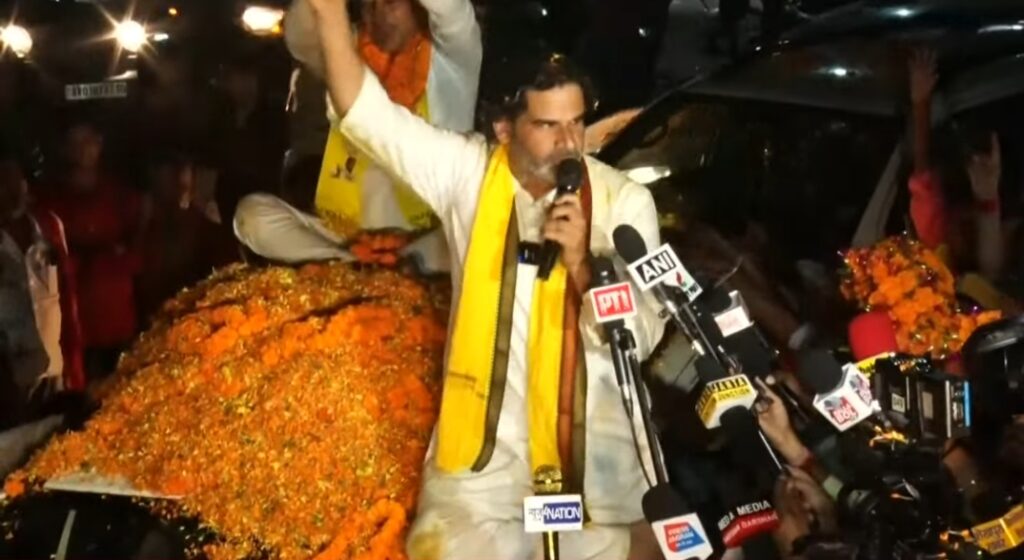
NEW DELHI: With electioneering for the first phase of the Bihar Assembly polls entering its final hours, the political battleground has reached a fever pitch. Campaign vehicles are making their last runs, star campaigners are squeezing in final rallies, and the rhetoric from all sides has peaked, underlining the intensity of what analysts believe is one of Bihar’s most fiercely contested elections in recent memory.
The BJP, despite being in the ruling National Democratic Alliance (NDA) until recently, is racing with the zeal of a challenger. Party strategists insist that their target is not merely to perform well—but to emerge as the single largest party, positioning themselves to stake claim to government formation in the post-poll scenario. Senior BJP and RSS functionaries suggest that while the electoral battle remains tight, the party believes it has the grassroots machinery, narrative control, and organisational depth to edge out rivals.
“BJP is not leaving any stone unturned,” said a senior strategist, adding that the party has been working on the ground “constantly and quietly” to bridge the gap created by the strained relations with its former ally, the Janata Dal (United).
According to insiders, the BJP has deployed specialised teams to ensure that its core vote base remains intact while simultaneously attempting to attract traditional JDU voters, especially in urban, upper-caste, and non-Yadav OBC pockets.
However, opposition leaders and political observers critical of the BJP have raised concerns over electoral fairness. They argue that the party is banking heavily on the Election Commission’s decisions—particularly after the start of Special Intensive Revision (SIR) of voter rolls, a process the BJP strongly supported.
Allegations have surfaced that the deletion of nearly 79 lakh names from electoral rolls has disproportionately impacted constituencies seen as strongholds of the opposition alliance. With Bihar’s 243 Assembly seats, this amounts to an average removal of approximately 23,000 voters per constituency, a figure that opposition parties describe as “massive and politically consequential.”
While the Election Commission has defended the revisions as part of routine cleanup efforts, critics insist that the timing and scale of deletions are unprecedented and may play a decisive role in the outcome.
As the state prepares to vote in the first phase, the campaign crescendo underscores a single truth: neither side is willing to leave anything to chance. With ground equations shifting and controversy swirling around voter rolls, Bihar stands on the cusp of an electoral showdown that could reshape its political landscape.
[Writer is Senior Journalist and Political Commentator]
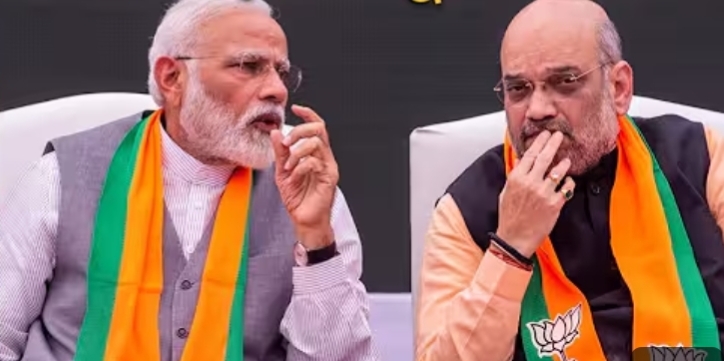
All picture credit social media

Umakant Lakhera is a Senior Journalist and Political Commentator