

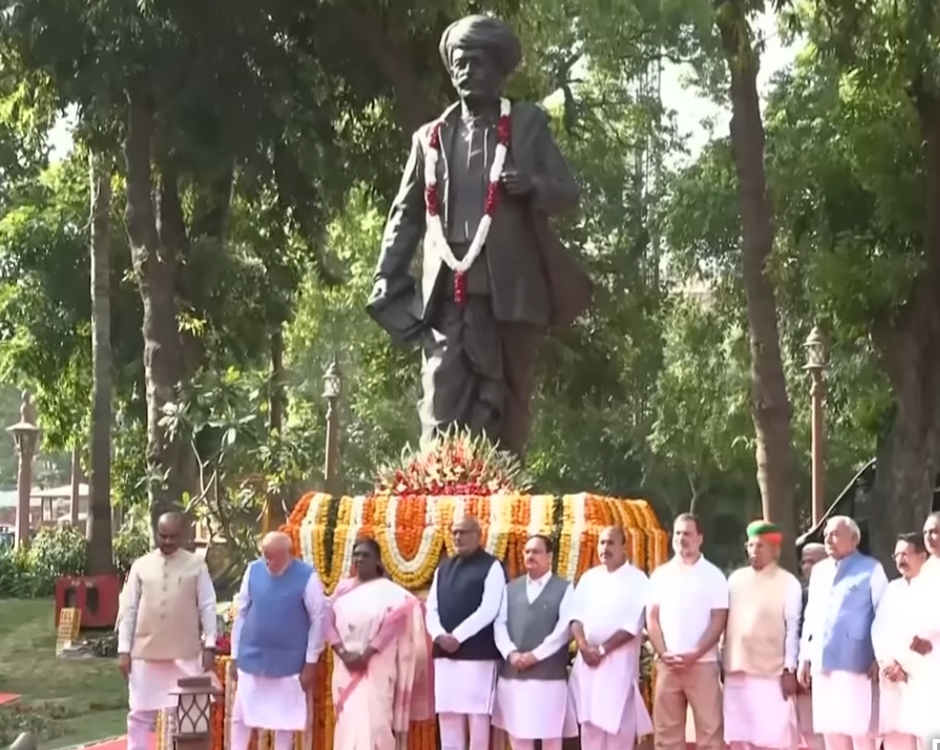
New Delhi,13 April 2026,Mahatma Phule Jayanti was observed on Saturday, April 11, 2026. This year held special significance as it marked the beginning of his 200th birth anniversary year (bicentenary celebrations), which is being celebrated nationwide from April 11, 2026, to April 10, 2027.
The commencement of a year-long birth centenary commemorations of Jyotirao Phule by the BJP government has put the spotlight back on a glaring irony: “BJP is the anti-thesis of everything that Mahatma Phule stood for” and that underscores an unbridgeable chasm between his fierce anti-caste radicalism and the party’s Hindutva framework, which many see as reinforcing upper-caste hegemony.
This “belated discovery” of Phule’s legacy by the BJP, after years of relative neglect, invites scrutiny of their past conduct and the treatment of Dalits in states like Maharashtra, UP, Haryana, and Rajasthan under their rule.
Phule’s Radical Assault on Caste Tyranny
Jyotirao Govindrao Phule (1827-1890), born into a low-caste Mali family, waged a lifelong battle against Brahminical supremacy and caste oppression in Maharashtra. He founded the Satyashodhak Samaj on September 24, 1873, as a structured platform to awaken Shudras and Ati-Shudras (untouchables) to their rights, directly challenging upper-caste dominance.
Phule’s *Gulamgiri* (Slavery, 1873) branded Brahmins as enslavers who fabricated the caste system to exploit lower castes, citing degradations like Shudras bearing pots for Brahmin spittle or facing beatings if their shadows “polluted” sacred spaces. He hailed British rule for liberating Shudras from this “physical thraldom,” arguing Brahmins engineered divisions to monopolize Shudra labour for their opulence.
Scholars like Dhananjay Keer, in *Mahatma Jotirao Phooley: Father of the Indian Social Revolution*, hail Phule as the pioneer of India’s social upheaval for empowering the oppressed against Brahmin rule. Rosalind O’Hanlon’s *Caste, Conflict and Ideology* frames his protests as a pivotal 19th-century revolt against Brahmanical ideology.
Exposing Exploitation in Phule’s Writings
Phule’s *Shetkaryacha Asud* (Cultivator’s Whipcord, 1881) exposed Brahmin priests and officials’ grip on farmers, even under Maratha kings like Shivaji, whom they manipulated through rituals and ignorance. He lamented: “Vidyevina mati geli… Evdhe anartha eka avidyeni kele” (Without knowledge, wisdom vanished… all ruin from one ignorance), blaming Brahmin education monopolies for Shudra subjugation.
*Sarvajanik Satya Dharma Pustak* (1889) dismissed Vedas as elite inventions propping dominant interests, envisioning a universal, egalitarian faith; P.G. Patil’s *Collected Works* preserves these calls for sarvajanik (universal) justice. Gail Omvedt’s *Jotirao Phule and the Ideology of Social Revolution* underscores his revival of folk traditions to forge a bahujan counter-culture against Brahmanism. Before the Hunter Commission in 1882, Phule demanded primary education for lower-caste girls and Shudras, slamming fund biases toward elite higher learning.
His play *Tritiya Ratna* (1885) dramatized Brahmin greed and education’s emancipatory power, marking Marathi theater’s modern anti-caste turn. Phule’s *Nirmik* concept rejected religious texts as man-made, affirming a creator God beyond caste.
BJP’s Opportunistic Rediscovery
While leaders claim icons, the BJP’s push—via Ambedkar Foundation events for Phule’s 2027 bicentennial—faces backlash as cynical OBC-Dalit outreach, glossing over Phule’s incompatibility with RSS-BJP Hindutva. Critics decry this as sanitizing his anti-Brahmin fire for electoral optics, especially after decades of sidelining him.
Dalit Realities Betray Phule’s Vision
Phule, who pioneered girls’ schools (1851, with Savitribai), untouchable education (1854), and orphanages, would recoil at Dalit conditions in BJP states. Congress data shows 76% of Dalit atrocities in BJP-ruled Maharashtra, UP, Haryana, Rajasthan, and Madhya Pradesh, with these states dominating NCRB charts; Rajasthan’s 2026 cases included protected rapists. UP and Maharashtra lead in violence, undercutting BJP’s sarvajan rhetoric.
Phule’s rational, casteless humanism—pitting equality against “artificial” Hinduism—exposes the BJP’s temple nationalism as its antithesis, rendering such appropriations hollow on his anniversary under their watch.
On this 199th birth anniversary, let the BJP government honour Phule not with garlands or resolutions, but by confronting the truth in his books. As he wrote in Gulamgiri: the Shudras must be educated to recognise their chains. The real tribute would be dismantling the very structures Phule spent his life whipping into obsolescence. Until then the statement stands unrefuted: the “BJP remains the antithesis of everything Mahatma Phule stood for.”
Picture credit social media

~Hasnain Naqvi is a former member of the history faculty at St. Xavier’s College, Mumbai