

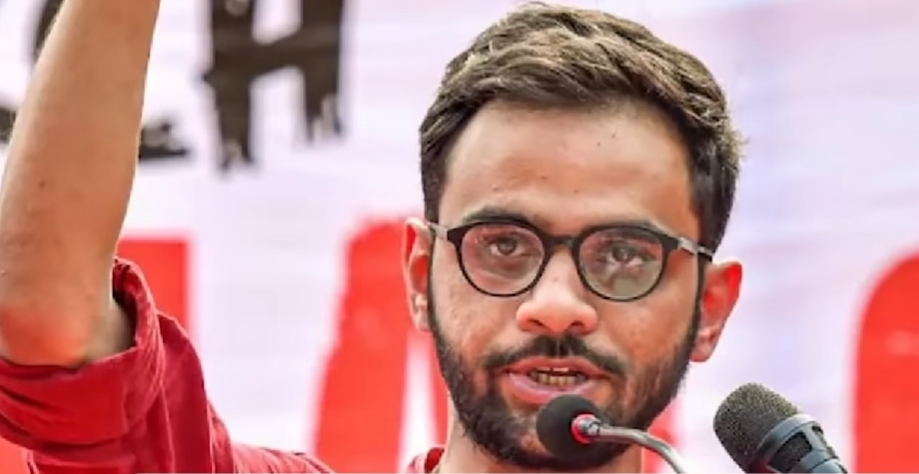
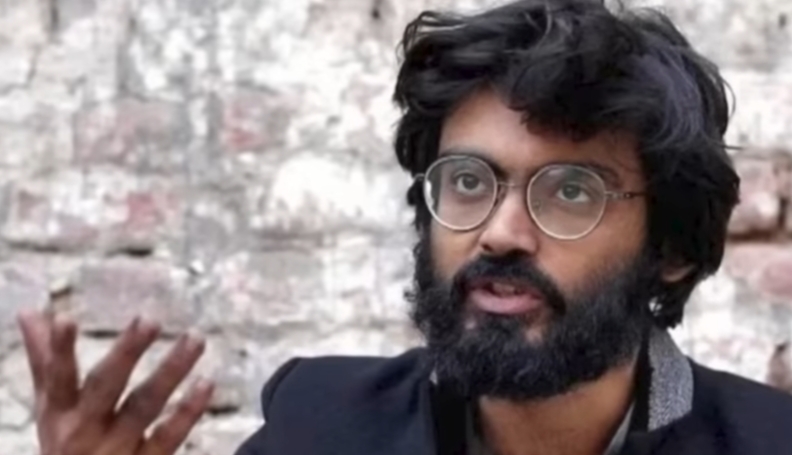

NEW DELHI: The Supreme Court on Wednesday reserved its verdict on the bail petitions filed by six accused in the Delhi riots larger conspiracy case — Umar Khalid, Sharjeel Imam, Gulfisha Fatima, Meeran Haider, Shadab Ahmed and Mohd. Saleem Khan — after the Delhi Police argued that speeches delivered by Sharjeel Imam could be relied upon as evidence against Khalid and the other co-accused.
A Bench of Justice Aravind Kumar and Justice NV Anjaria reserved the judgment, likely to be delivered on December 19 before the Court’s winter break, after the conclusion of arguments by the Delhi Police opposing the bail pleas.
The Bench asked advocates for both sides to submit, by December 18, their respective convenience compilations containing all material relied upon during the hearing, including lists of dates and events, synopses, written submissions and authorities.
Directing the submission of convenience compilations by December 18, the Bench said it would “take a decision before the winter break” beginning December 20.
The Bench also expressed concern over the large volume of documents being handed up by both sides during arguments. “It is very difficult tracing all this. In High Courts it is much better. This applies to them (the accused side) also. They keep handing out documents like magicians. Your instructing counsel have adopted a policy — either convince the judge or confuse the judge,” Justice Kumar remarked, as ASG SV Raju handed over a copy of a 2016 FIR to the Court.
A key moment came when ASG Raju submitted that Imam’s speeches formed part of the alleged conspiracy and could be attributed to Khalid and the others. “Sharjeel Imam’s speeches can be attributed to Umar Khalid. His case will be considered as evidence against the others,” he said.
The bench questioned the prosecution on its reliance on the unrelated 2016 FIR relating to ‘tukde-tukde’ slogans allegedly raised in JNU. “Why are you showing a prior FIR for riots that happened in 2020? What has it got to do with it?” the Court asked.
Raju replied that conspiracies may begin years before the actual event, adding that a protected witness had linked instructions to Khalid. “Conspiracy begins before the act … all instructions came from Umar Khalid,” he submitted.
On the issue of delay — one of the grounds for bail — the ASG sought to blame the accused, stating that they insisted on receiving the entire material before arguing and had demanded hard copies of nearly 30,000 pages. He maintained that the prosecution was ready but the defence wanted the full set of documents first.
Raju further alleged that Khalid deliberately left Delhi shortly before the riots. He added that the accused initially used the WhatsApp group ‘Delhi Protest Support Group’ for coordination and later shifted to Signal “after March 11, 2020.”
When the Bench asked how the prosecution proposed to bring the alleged conspiracy under Section 15 of the UAPA, which defines a terrorist act, Raju argued that “speech led to action.” The Court pressed further: “What action? How do you link it?” The ASG responded that the speeches indicated an intention to threaten economic security and unity, thus attracting the provision.
Earlier, Solicitor General Tushar Mehta had argued for the Delhi Police opposing the bail pleas.
The six accused — represented by Kapil Sibal, Abhishek Manu Singhvi, Siddhartha Dave, Salman Khurshid, Siddharth Agarwal, Sidharth Luthra and Gautam Khazanchi — had concluded their arguments on Tuesday.
They have challenged the Delhi High Court’s September 2 order refusing bail in the conspiracy case linked to the 2020 North-East Delhi riots, which left 53 people dead and hundreds injured.