
New Delhi, The Election Commission of India (EC) has formally launched the second phase of the Special Intensive Revision (SIR) of electoral rolls across 12 states and Union Territories, triggering sharp criticism from opposition parties over the pace and transparency of the exercise.
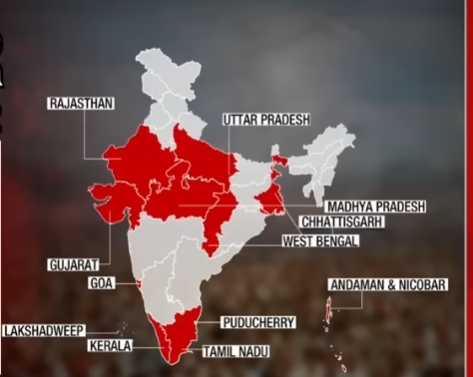
The move comes immediately after the completion of the Bihar Assembly election process, which was conducted on fresh rolls prepared under the SIR mechanism. Phase-II of the revision, which began on November 4, will continue until December 4, covering an estimated 50.99 crore electors across diverse regions ranging from large states like Uttar Pradesh and West Bengal to smaller territories such as Lakshadweep and Andaman & Nicobar Islands.
Massive Enumeration Drive Underway
Under the standards set by the SIR protocol, the month-long exercise involves door-to-door verification, printing of elector-specific forms, and their distribution by Booth Level Officers (BLOs). The objective is to ensure purity of electoral rolls ahead of the 2026 cycle of major state elections and future Lok Sabha polls.
Rajasthan is among the largest states participating in this phase. According to EC data, the state has 5,48,84,479 registered electors, and the groundwork is being handled by 1,01,333 BLOs. A total of 5,46,56,215 enumeration forms have already been printed, while 5,34,11,991 have been distributed to households.
Other states undergoing the revision include West Bengal, Uttar Pradesh, Tamil Nadu, Puducherry, Madhya Pradesh, Lakshadweep, Kerala, Gujarat, Goa, Chhattisgarh, and the Andaman & Nicobar Islands. Together, they represent one of the largest voter-verification exercises undertaken in recent years.
Opposition Critique: “Rushed and Opaque”
Even as the EC highlights the scale and efficiency of the rollout, several opposition parties have accused the Commission of conducting the revision in “haste” and without adequate public communication.
Leaders in West Bengal, Tamil Nadu, and Kerala have expressed concerns that the tight deadlines and limited awareness campaigns may lead to large-scale omissions—particularly among migrant workers, minorities, and first-time voters.
Some parties have also alleged that the distribution of forms in several districts has been uneven, resulting in confusion among voters about verification requirements. In states like Uttar Pradesh and Chhattisgarh, opposition blocs have demanded additional time and more rigorous monitoring to ensure accuracy.
EC Stands Firm on Timelines
Senior officials within the Election Commission, however, maintain that the SIR timeline is essential to streamline the 2025–26 electoral calendar. The EC has said that it is using technology-driven tracking, including BLO dashboards and form-distribution audits, to ensure transparency and to respond quickly to field-level discrepancies.
“The objective is to deliver accurate, inclusive and updated rolls. States have been given clear operational guidelines, and all BLOs have been trained accordingly,” a senior EC official stated.
Looking Ahead
Once the enumeration is completed on December 4, the EC will undertake the verification, corrections, and objections process before integrating the revised data into the final electoral rolls early next year. Officials say the next phases of nationwide roll updates will depend on the outcomes and feedback from this current exercise.
As political temperatures rise ahead of crucial state elections in 2026, the accuracy and credibility of electoral rolls are likely to remain a contentious political issue—one that may shape not just voter participation but also the larger political narrative in the months ahead.