

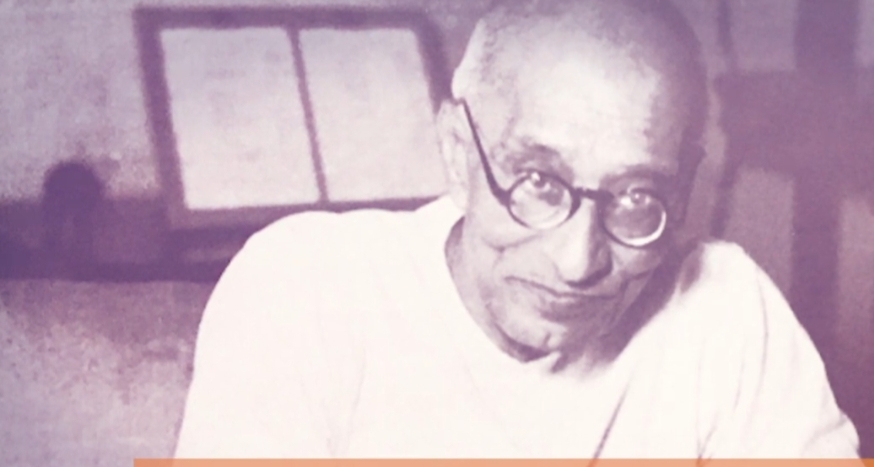
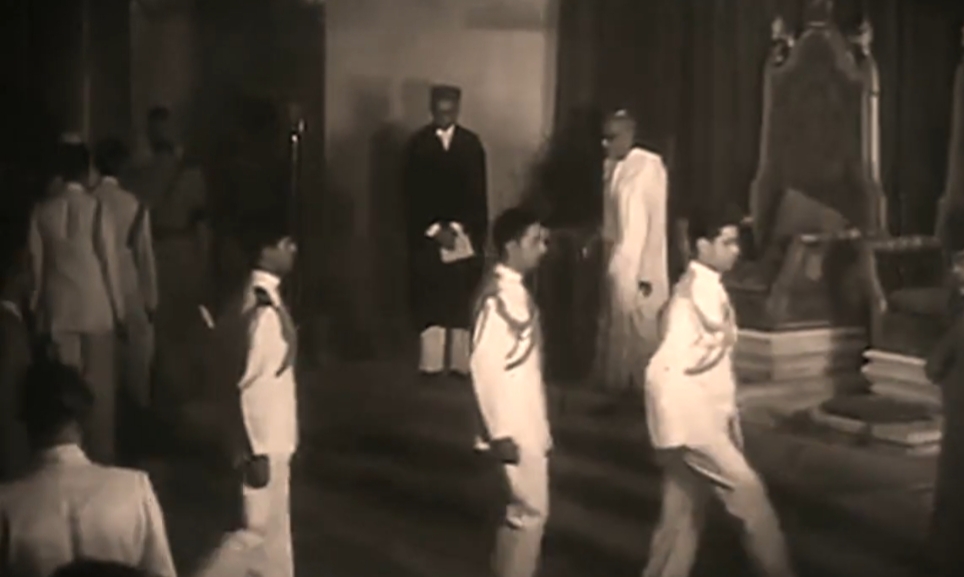
February , 2026, a ceremony at Rashtrapati Bhavan marked yet another symbolic gesture by the Bharatiya Janata Party (BJP)–led government that goes beyond mere commemoration. The bust of C. Rajagopalachari—India’s first and only Indian Governor-General—was unveiled, replacing the bust of the British architect Edwin Lutyens that had stood in the grand staircase of the presidential residence for decades. The ceremony, attended by the President of India and senior ministers, was framed as a “mental decolonisation” of public spaces, a reclamation of Indian heritage from lingering colonial shadows.
But beneath the surface of heritage politics lies a much more calculated and concerning trend: the politicization of history for electoral and ideological purposes. This latest act joins a broader pattern of attempts by the BJP to co-opt historical figures, transforming complex personalities into curated icons that serve the present political project. Previous iterations of this effort have included the party’s reframing and appropriation of Sardar Vallabhbhai Patel, Subhas Chandra Bose, Dr. B.R. Ambedkar, and even Mahatma Gandhi—a process that has often been selective, opportunistic, and deeply partial.
Rajaji: A Statesman Miscast for Political Ends?
Rajagopalachari, affectionately known as Rajaji, was one of the towering figures of India’s freedom struggle and a close associate of Mahatma Gandhi. His career spanned law, politics, governance, and literature, and he was respected for his commitment to constitutionalism and civil liberties. Yet his intellectual legacy—particularly his conservative critique of socialism and his advocacy for free-market policies—does not fit neatly into any simple ideological rubric. This complexity is precisely what makes his contemporary political co-optation troubling.
At the unveiling, President Droupadi Murmu articulated the official line that this was part of a series of steps “to shed the vestiges of the colonial mindset and embrace, with pride, India’s culture, heritage, and traditions.”  Prime Minister Narendra Modi, from his Mann Ki Baat platform, earlier praised Rajaji as someone who “saw power not as a position but as service,” linking his commemoration with a broader “decolonisation” project. 
Yet these official statements mask an essential truth: this is not merely about decolonisation or heritage. It is politics by other means—where history is shaped to fit a narrative that enhances the ruling party’s cultural capital and electoral appeal.
Historical Figures as Political Tokens
The replacement of Lutyens’ bust with Rajaji’s is symbolic for obvious reasons: Lutyens represents the architectural imprint of the British Raj, and his removal is a powerful image of rejecting colonial dominance. But if symbolism were the only motive, this gesture would be relatively uncontroversial. What sets it apart is the political packaging and timing of the act.
The unveiling comes at a time when the BJP is seeking to solidify its presence in southern India, a region where its political traction has traditionally lagged behind the Hindi heartland. The choice of Rajaji—a revered Tamil leader—as the figure to foreground in the heart of national symbolism suggests a strategic appeal to regional sentiments at a politically opportune moment. 
This mirrors previous efforts to appropriate figures whose historical legacies do not easily align with the party’s ideological core. Sardar Patel, for instance, has been lionised as the “Iron Man of India”, stripped, in much of the contemporary discourse, of his nuanced federalism and rendered instead as a poster figure for strong central leadership and national integration. Similarly, repeated attempts to co-opt Subhas Chandra Bose have often selectively emphasised his militancy and anti-colonial fervour while downplaying his ideological divergences with mainstream nationalist politics.
The case of Dr. B.R. Ambedkar is even more illustrative of this trend. While Ambedkar’s role as the chief architect of the Indian Constitution is rightly celebrated, political uses of his imagery have often obscured his deep critiques of caste, religion, and majoritarianism—reducing him to a token of inclusivity that bolsters party claims without engaging with his radical legacy.
Even Mahatma Gandhi, whose inclusion on the pantheon of India’s revered heroes is beyond dispute, has been selectively invoked. The BJP’s engagements with Gandhian symbolism have been inconsistent, oscillating between appropriation and distance depending on political convenience.
From Commemoration to Competition
What unites these cases is less a genuine engagement with historical ideas than a competition over symbolic ownership. By enshrining specific narratives in public spaces, the political class—particularly the BJP—seeks to construct a national imagination that aligns with its vision of Indian identity. This is a form of soft power that is unmistakably strategic.
Historical figures are thus repurposed as cultural capital: avatars that lend moral legitimacy, emotional resonance, and a veneer of historical inevitability to contemporary political objectives. This is not unique to India—politics everywhere seeks to harness history—but it becomes problematic when it distorts historical complexity and turns plural legacies into singular slogans.
When leaders are reduced to curated icons, their full intellectual contributions, contradictions, and debates are lost. The result is not a richer engagement with history but a flattened, competitive mythology that serves politics rather than inquiry.
Why It Matters
The politics of symbolic representation has real consequences. Public memory shapes civic culture, and when historical figures are appropriated, simplified, or repackaged for present-day goals, it influences how citizens understand both their past and their present.
A democratic society requires a critical engagement with history that respects nuance and diversity of thought. It should allow for debate over the legacies of its leaders. It should resist the temptation to turn complex human beings into static symbols. When history becomes a battlefield for contemporary political battles, it loses its educative power and becomes a tool for division and dominance.
The replacement of Lutyens’ bust with Rajaji’s is neither entirely benign nor entirely malign—it is acknowledged even by critics that celebrating Indian figures in places of historical prominence can be justified. But in the current context—where every act of commemoration is freighted with electoral calculation—the gesture cannot be disassociated from its political optics.
Towards a More Reflective Engagement With History
India’s past is rich and contested, its leaders complicated, its struggles multifaceted. To erect statues and name spaces after heroes is not in itself objectionable. But to do so while ignoring the full texture of their thought and actions—to co-opt them into a monolithic narrative—diminishes both history and democracy.
Rajaji deserves to be remembered for his contributions, as do Patel, Bose, Ambedkar, Gandhi, and others. But remembrance should not be synonymous with appropriation. There is a difference between honouring a legacy and instrumentalising it. By blurring that line, politics not only impoverishes memory but also impoverishes public life.
In a republic that prides itself on pluralism, the task ought to be to engage history deeply and critically, not to wield it as a rhetorical tool. Citizens, scholars, and political leaders alike must resist the allure of facile symbolism and demand a richer, more honest conversation about the past—one that does justice to its complexities rather than exploits them for political gain.
Only then can the project of mental decolonisation be more than a slogan and truly enrich the civic imagination of a diverse nation.
~Hasnain Naqvi is a former member of the history faculty at St. Xavier’s College, Mumbai.
Picture credit social media

~Hasnain Naqvi is a former member of the history faculty at St. Xavier’s College, Mumbai

