

NEW DELHI: India exported over 20 million metric tonnes of rice in 2024 to more than 170 countries. It is easily the world’s largest rice exporter, bigger than the next four countries combined. The US buys only a sliver of India’s shipments, just 3% to be precise .
President Donald Trump’s latest threat against India has quite literally stirred the rice pot, and everyone from growers to grocery shoppers is now waiting to see if it will reach the boiling point. This time, he has set his sights on India’s basmati, accusing India, without providing evidence, of “dumping” cheap rice into the American market. In an off-the-cuff remark, the President in his usual style promised tariffs to punish what he called “unfair” trade.
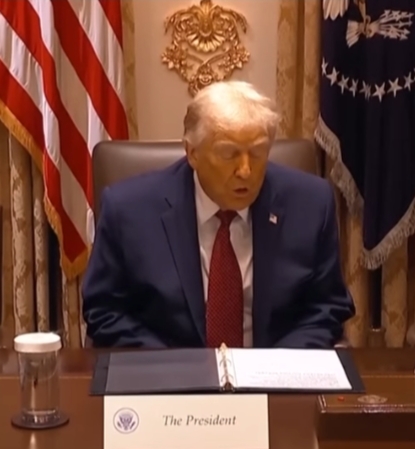
The threat came during a White House meeting with the American farmers and lawmakers. Indeed, this is the kind of political theatre in which Trump thrives. Just to remind the readers, a grumbling farmer spoke of cheaper imports from India and a couple of other rice exporting countries. Mr Trump seized the moment and assured the complaining farmer he would take action. He boasted that tariffs can solve the problem in two minutes.
India exported over 20 million metric tonnes of rice in 2024 to more than 170 countries. It is easily the world’s largest rice exporter, bigger than the next four countries combined. Yet, the US buys only a sliver of India’s shipments. In 2025, Indian rice exports to the US amounted to about $392 million, roughly 3% of India’s total rice exports. Most of that is basmati, the long-grain aromatic rice loved by the Indian diaspora as well as immigrants from the Persian-Arab world.
American farmers do not grow basmati. They cannot. The soil needs different minerals and the grain needs Himalayan foothill air. The US produces long-grain and medium-grain varieties suited to Louisiana, Arkansas and California. So the idea that India is undercutting American farmers by dumping basmati is like saying Italian olive oil is destroying the soybean market. They are not substitutes.
Dumping, in trade law, is not an insult. It is a technical finding. A country must investigate whether the exporter is selling below cost. It must also prove that these sales are harming domestic producers. This involves months of paperwork, hearings and appeals. Who will dare to tell the President that this complicated, long-drawn out process is as bureaucratic as rice is simple. And if tariffs are raised without proof, India will always have the option to challenge the move at the World Trade Organisation (WTO), however subservient it has become to the US these days. India has done so before and has won in several cases.
Trump, however, uses tariffs like a magic wand. He waves it and expects the world to be frightened. No mention of legal requirements. No mention of due process. No mention that the US has lifted tariffs on some products because they were hurting American households just as much as they were hurting foreign exporters.
If the US President were to raise tariffs on Indian rice any further, the impact would be uneven. For American consumers, especially immigrant families who use basmati every day, the price will rise. Restaurants, from Indian to Persian, will feel the squeeze. Retailers who depend on imported aromatic rice will have fewer choices. Some shoppers will switch to Thai jasmine, others to cheaper grades, but the overall bill will go up. For American farmers, the gesture may feel protective, but it will not solve structural challenges. Domestic varieties do not fill the basmati gap. Tariffs will not help them. So, the benefit, if at all, will be emotional rather than economic.