

“Girte hain shahsawar hi maidan-e-jung mein, woh tifl kya gire jo ghutno ke bal chale”
(Only the experienced horseman falls in the battleground; how will the child fall who crawls on his knees)
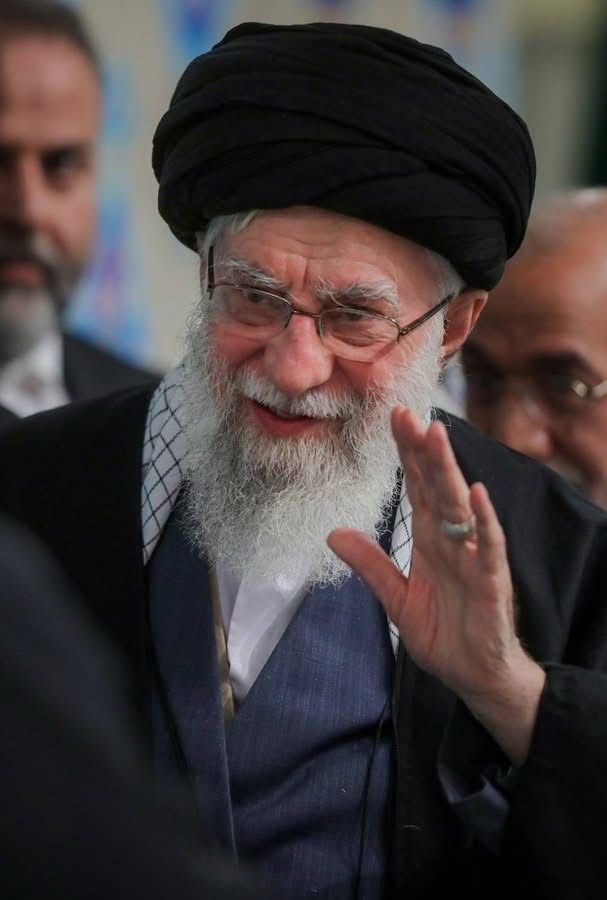
The Ideologue of Resistance: Ayatollah Ali Khamenei (1939–2026)
Ayatollah Ali Khamenei, the Second Supreme Leader of the Islamic Republic of Iran and the fulcrum of Middle Eastern geopolitics for over three decades, has been killed. He was 86. His death, confirmed by state media in the early hours of March 1, 2026, followed a massive joint military operation by the United States and Israel—an escalation that has permanently altered the trajectory of the region.
The strike, which leveled the Supreme Leader’s compound in Tehran on the morning of February 28, 2026, claimed not only the life of the man who shaped Iran’s “Axis of Resistance” but also members of his immediate family, including his daughter and grandchild. In the wake of his “martyrdom,” Tehran has declared 40 days of public mourning, while the Islamic Revolutionary Guard Corps (IRGC) has vowed a “ferocious” offensive in retaliation.
A Legacy of Defiance
Khamenei’s final hours were defined by the same uncompromising anti-imperialism that characterized his 37-year rule. As “Operation Epic Fury” commenced, the Supreme Leader refused a final demand for unconditional surrender from U.S. President Donald Trump. In a statement read by a state television presenter just hours before the fatal strike, Khamenei remained defiant.
“Intelligent people who know the Iranian nation and its history will never speak to this nation in threatening language,” the statement declared. It was a final, quintessential expression of his worldview: that Iran would never again be a client state to Western powers.
This defiance made him a polarizing figure. To his supporters, he was the “Ideological Polestar,” a man of steely resolve who stood alone as Russia and China offered little more than rhetorical support. To his detractors, his tenure was marked by regressive social policies and the crushing of internal dissent. Yet, in his final stand against what he termed a “fascist” hegemonic axis, he managed to galvanize a “rally around the flag” sentiment, even among those who had long criticized his authoritarian domestic rule.
From Kintoor to Tehran
While Khamenei was the quintessential Iranian revolutionary, his roots were deeply tied to the Indian subcontinent. He was a descendant of Syed Ahmad Musavi Hindi, who was born around 1800 in the village of Kintoor, in Uttar Pradesh’s Barabanki district. This Indian heritage—a point of historical pride in scholarly circles—connected him to a centuries-old seat of Shia scholarship.
Born in 1939 in the holy city of Mashhad, Khamenei was raised in an environment of rigorous Islamic jurisprudence. He became a key figure in the 1979 Revolution that overthrew the Shah, eventually succeeding Ayatollah Ruhollah Khomeini in 1989. Under his leadership, Iran transformed from a revolutionary state into a regional heavyweight, developing a sophisticated missile program and a network of proxy allies that extended from the Levant to the Arabian Peninsula.
The Decisive Strike
The joint U.S.-Israeli assault on February 28 caught the world by surprise, occurring as the third round of delicate negotiations between Washington and Tehran was reportedly underway. Critics suggest the strike was a deliberate attempt by the Netanyahu administration to scupper any potential détente.
The “decapitation strike” targeted not only Khamenei but the heart of the Iranian security apparatus, including the Ministry of Defence and the Atomic Energy Headquarters. As U.S. and Israeli officials celebrated the elimination of what President Trump called “one of the most evil people in history,” the humanitarian toll on the ground told a different story. Reports from southern Iran described the destruction of a girls’ school in Minab, where over 100 people were killed—a grim reminder of the cost of modern warfare.
A Future in Flux
Khamenei leaves behind a Middle East on the precipice. His death creates a massive power vacuum within the Islamic Republic. While he reportedly appointed a deputy to succeed him, the IRGC—the “muscle and money” of the regime—appears poised to take a more direct hand in governance.
Internationally, the stakes could not be higher. Iran has already begun retaliatory strikes against U.S. bases in Bahrain, Qatar, and Kuwait, and has threatened to disrupt the Strait of Hormuz, a critical chokepoint for global energy markets.
Ayatollah Ali Khamenei lived and died by the sword of resistance. He was a man who viewed history as a perpetual struggle between the “oppressed” and the “arrogant.” As his body is laid to rest, his legacy will be measured by whether his “Axis of Resistance” survives his passing, or if his death marks the final chapter of the revolutionary era he so fiercely defended.
~Hasnain Naqvi is a former member of the history faculty at St. Xavier’s College, Mumbai

~Hasnain Naqvi is a former member of the history faculty at St. Xavier’s College, Mumbai

