

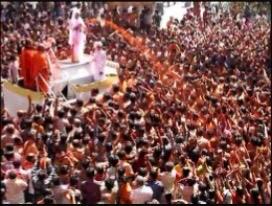
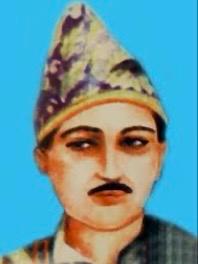
Holi cannot be imagined without invoking Nazeer Akbarabadi, the 18th-century poet whose verses capture its unbridled joy. For those who have immersed themselves in the colours of Braj’s Holi, its essence is visceral; outsiders, glimpsing it only through screens, remain forever distant from its spirit.
Braj’s Timeless Revelry
Over recent decades, Braj has transformed amid its Holi festivities—temples altered, their raucous gatherings subdued, streets less vibrant, and the public’s fervor diluted. Yet true Braj Holi defies rules, offering humanity a day of pure liberation and ecstasy, where one surrenders wholly to delight.
Colours serve merely as pretext; the real aim is freedom from shackles. Smearing color symbolizes breaking bonds, a ritual born perhaps from the anguish of those long oppressed. Beyond mere Holika bonfires or mythic retellings—common to all Indian festivals—Holi’s core is celebratory abandon.
Beyond Colours, Liberation
*Dance like Holi, the colorful fairy is sitting and filled with colors*
This cultural festival transcends its hues, starting with pigments but culminating in emancipation. A splash of colour heralds the death of taboos and the end of constraints, explaining why all join in, turning Holi into India’s grand festival of societal release.
Braj’s Holi, especially Mathura’s, stands supreme. As Krishna’s birthplace—one of ancient India’s urban hubs—and home to the mythic liberator Krishna, Mathura embodies the festival’s ideals.
Caste’s Colourblind Triumph
Its greatness lies in transcending caste. Traditionally linked to Shudras yet embraced by all, Holi counters India’s hierarchies, incinerating divisions in its flames. Smear color, hurl abuse, dunk in dye, or confess love—no offence taken. On Holi, even grave sins are forgiven.
Modern Intolerance Creeps In
Yet late capitalism erodes this tolerance. We bristle at unannounced colours, objecting without consent, clashing in anger. The mantra *Bura na maano Holi hai* fades. Holi reimagines humanity as the playful *bhadua*, mocking the disciplined citizen and elite propriety. Even knowing this, the “civilized” take offense, prompting governments to criminalize unsolicited colours—a regulated mockery of the real thing.
In Braj, celebrations span Phalgun month, with temple colour frenzies. Enemies embrace, ending grudges; gender barriers dissolve in stick-wielding women’s Lathmar Holi, men defenceless—a unique reversal unseen in other festivals.
Nazeer’s Vivid Spring Bloom
*Parion ke rang damakte hon tab dekh bahaaren Holi ki*
Nazeer Akbarabadi’s *Holi Ki Bahaaren* masterfully evokes this essence in Hindustani verse, blending Hindi-Urdu for mass appeal. It paints Phalgun’s gulal-laden air, rhythmic drums, dancing fairies aglow in color, overflowing cups, and intoxicated lovers.
Fairies dance with soaked Holi taunts and coquettish grace; hearts forget worldly cares amid melodies, clanging tablas, puffed cheeks of revelry, and tinkling ghungroos. All festival delights abound—blossoming gardens of beauty, flowing drinks, color-soaked gatherings spraying garments.
*Gulzar khile hon parion ke, aur majlis ki taiyari ho*
Assemblies prepare amid blooming fairy gardens, clothes splashed in vibrant embroidery; red faces, pink eyes, pichkaris aimed at bodices, colours dripping from bosoms. Nautch girls with moon-piece faces and wine-cup eyes sway wildly, clapping rhythms, oblivious in revelry, hurling *bhadua* taunts as pimps retort.
Lads vie for hearts, wrestling playfully, singing Holi songs stubbornly, slim waists twisting, limbs flailing, infidel eyes winking. Chaos reigns—pulling, dragging, *bhadua*-nautch scuffles, confections, drinks, dances, tikki-suf-kakkad treats, even Nazeer muddied in the fray.
*Khum shishe jaam chhalakte hon tab dekh bahaaren Holi ki*
This nazm’s exuberant imagery—flying gulal, Ganga-Jamuni unity, drumbeats, ghungroos, and wine—embodies Holi’s cultural oneness, where all merge in mirth.
As Braj’s spirit wanes under modern constraints, Nazeer’s words urge us to reclaim its boundless, bond-breaking bloom.
~Hasnain Naqvi is a former member of the history faculty at St. Xavier’s College, Mumbai

~Hasnain Naqvi is a former member of the history faculty at St. Xavier’s College, Mumbai