

NEW DELHI,14 March 2026 : US-Israeli strikes killed Iran’s leader but have not toppled the government, which now, from its perch on the Strait of Hormuz, has put the entire world economy on the war’s frontlines.
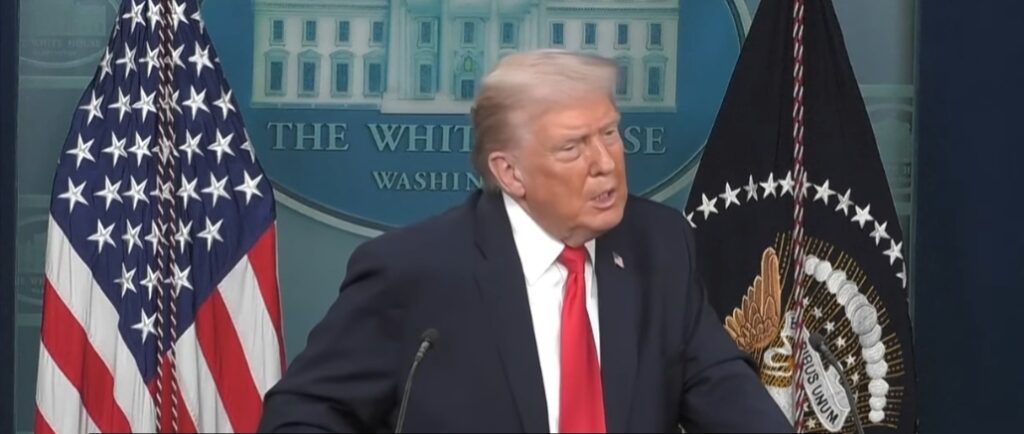
The initial US victory in killing supreme leader Ali Khamenei has given way to a conflict that Washington cannot completely control, sharply limiting President Donald Trump’s options.
Two weeks into a bloody air war, Iran holds many cards as it chokes the world’s oil supply and strikes US allies in the Middle East, including Gulf states who had for years staked their reputations on political and economic stability.
It makes for a drastic turn from the early hours of February 28, when the first clouds of black smoke rose over Tehran.
Amid smouldering ruins of a housing complex in the Iranian capital were Khamenei and dozens of top-ranking officials, killed in strikes that took years of espionage and planning.
The government had been decapitated.
And yet — such strategies have “never been effective” in state-versus-state warfare, writes American professor Robert Pape in his book “Bombing to Win”, a study of military air campaigns.
Iran itself is no stranger to history.
“We’ve had two decades to study defeats of the US military to our immediate east and west,” Iran’s foreign minister, Abbas Araghchi, said recently.
“We’ve incorporated lessons accordingly.”
The government quickly put in place a new supreme leader, while its decentralised “mosaic defence” allowed the military to retaliate without losing much of a step.
The military doctrine was developed in 2005, after the United States toppled the governments of Iraq and Afghanistan, French researcher Elie Tenenbaum, of the French Institute of International Relations (IFRI), said.
It was meant to help a decentralised military command evade a debilitating loss of top leadership, and “the regime seems pretty intact, despite the fact that it has lost some very senior leaders,” said Ali Vaez, Iran project director at International Crisis Group.
That allows Tehran to roll out a “three-part strategy,” Vaez said: “First, ensure survival. Second, keep enough retaliatory capacity to be able to stay in the fight. And then third was to prolong the conflict” so that “you can end it on your terms.”
All of which spells trouble for Trump as the war draws in US allies and drives up the cost of living at home and abroad.
Picture credit social media