

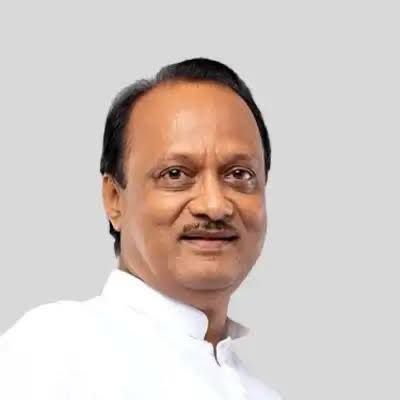
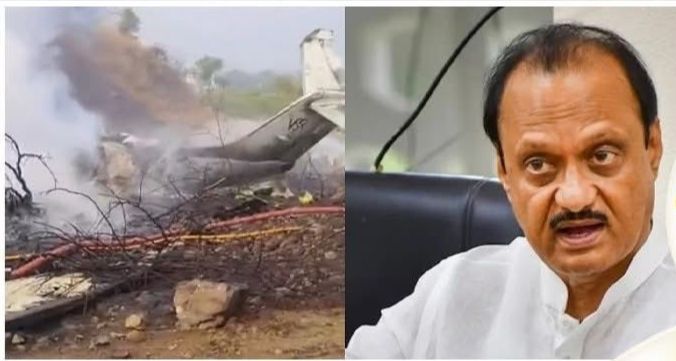
The sudden and tragic news of a plane crash near Pune has sent shockwaves through the nation, marking the abrupt end of a political era. Ajit Pawar, the Deputy Chief Minister of Maharashtra and the NCP Supremo, is no more. His passing leaves a void in a state where he was, for better or worse, an immovable fixture of the political landscape.
The Perennial Deputy
Ajit Dada Pawar held a distinction that was perhaps unique in the history of Indian governance: he was the longest-serving Deputy Chief Minister in Maharashtra, and arguably, in any state across the country. His career was defined by an uncanny ability to remain at the centre of power regardless of which way the political winds blew.
Chief Ministers arrived and departed—Prithviraj Chavan, Uddhav Thackeray, Eknath Shinde, and Devendra Fadnavis all took their turns at the helm—yet Ajit Pawar remained. He was the common thread in every government, a testament to his indispensability, yet therein lay his greatest personal tragedy. For a man of his stature, the top post remained perpetually, frustratingly, just out of reach.
Mastery of the Political Gambit
Few figures in Indian politics could match Pawar’s dynamism or his shrewdness. He possessed the trifecta of political survival: immense wealth, deep-rooted influence, and an unparalleled political cunning. His career was a masterclass in the art of the possible.
Even when faced with grave accusations of corruption from the highest level of leadership—the Prime Minister himself—Pawar displayed a singular skill for reinvention. Within months of such allegations, he managed to integrate himself back into the state government. His infamous 35-hour tenure as Deputy Chief Minister remains a legend of political manoeuvring; in that brief window, he issued orders to close investigations against himself before returning to the opposition benches.
The Architect of Administration
For decades, Ajit Pawar lived under the significant shadow of his uncle, Sharad Pawar. He was often dismissed as “the nephew” or the secondary “deputy” to a rotating cast of Chief Ministers. However, beneath the political manoeuvring and the “badge of honour” that is the typical Indian politician’s history of controversy, lay a formidable administrative mind.
Unlike the “Pappus”—those perceived as naive or incompetent puppets of their party bureaucracies—Pawar was a seasoned and able administrator. He knew the levers of power and how to pull them. Even as Deputy CM, his influence was never secondary; he ran the administration with a grip so firm that his authority often rivalled or eclipsed that of the Chief Minister. He was a complete politician, offering a stark lesson in what it means to master the machinery of the state.
A Legacy of Ambition and Fate
To the idealist, Ajit Pawar’s brand of politics was often difficult to stomach. His history of unethical alliances, the fracturing of his own party, and the splintering of his family for political gain represented a “selling of the mandate” that many found reprehensible. Yet, to ignore his effectiveness would be a disservice to the facts. He was a strong, successful, and undeniably effective leader.
It seemed that time was finally on his side. With a long career still ahead, many believed he would eventually shed the “Deputy” title and ascend to the peak of the mountain. But fate, as it often does, had different plans. It is a sobering reminder that destiny grants no one more than what is written.
Our final respects to Deputy Chief Minister Ajit Pawar (1959-2026).
Goodbye, O Man of Shadows!!
~Hasnain Naqvi is a former member of the history faculty at St. Xavier’s College, Mumbai

~Hasnain Naqvi is a former member of the history faculty at St. Xavier’s College, Mumbai