

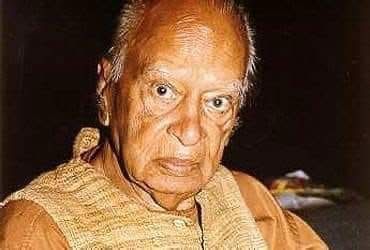
On this 120th birth anniversary of Mulk Raj Anand—born December 12, 1905, in Peshawar—his defiant credo endures: “Our tragic age demands poetry of courage and not whimpers about the inevitable end of all maya.” Far more than a pioneer of Indo-Anglian fiction or “India’s Charles Dickens,” Anand forged novels that elevated the sweeper, coolie, and peasant from society’s margins to its moral core, wielding English as a tool against caste and colonial oppression.
From Cantonment to Bloomsbury
Son of a Punjabi coppersmith-soldier, Anand witnessed empire’s hierarchies firsthand in a military outpost, later channeling them into prose during studies at Punjab University and a London doctorate. His Bloomsbury years bridged worlds: friendships with E.M. Forster, who prefaced *Untouchable*; George Orwell, who praised *The Sword and the Sickle*; and Pablo Picasso enriched a global vision rooted in Indian soil. Returning post-war, he lived until 2004 in Pune, outlasting independence yet lamenting its unfulfilled promises.
Novels That Shattered Silence
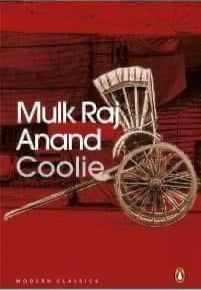
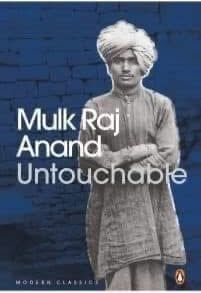
*Untouchable* (1935) traps readers in sweeper Bakha’s humiliating day, exposing untouchability’s spiritual hypocrisy. *Coolie* (1936) traces orphan Munoo’s fatal drift through labor’s grind, while *Two Leaves and a Bud* (1937) unmasks tea plantation brutality. The Lahore Trilogy—*The Village* (1939), *Across the Black Waters* (1939), *The Sword and the Sickle* (1942)—links peasant revolt to world wars; later works like *The Big Heart* (1945), *The Private Life of an Indian Prince* (1953), and *The Road* (1961) probe princely decay and modernity’s caste traps.
*Key Novel*
*Untouchable* | 1935 | Caste stigma and reform |
| *Coolie* | 1936 | Child exploitation, urban migration |
| *Two Leaves and a Bud*| 1937 | Colonial plantations |
| *The Village* | 1939 | Rural awakening |
| *Across the Black Waters* | 1939 | War’s toll on Indian soldiers |
| *The Sword and the Sickle* | 1942 | Peasant radicalism
Linguistic Revolution and Cultural Anchor
Anand’s prose pulsed with Punjabi-Hindustani idioms, decolonizing English into a vernacular force. Founding *Marg* in 1946 with J.R.D. Tata’s backing, he spotlighted India’s art—from Khajuraho temples to modern sculpture—shaping postcolonial aesthetics. Autobiographies like Sahitya Akademi-winning *The Morning Face* (1968), *Seven Summers* (1951), *Conversations in Bloomsbury* (1981), and *Pilpali Sahab* (1985) blend memoir with activism.
Honours and Enduring Echoes
Awards affirmed his stature: International Peace Prize (1953), Padma Bhushan (1968), Sahitya Akademi Fellowship (1971). In 2025, amid Dalit violence and migrant woes, Anand’s lens reveals how far India has strayed from justice. His legacy demands literature ignite change, measuring progress by the dignity of the dispossessed.
~Hasnain Naqvi is a former member of the history faculty at St. Xavier’s College, Mumbai

~Hasnain Naqvi is a former member of the history faculty at St. Xavier’s College, Mumbai

