


Why India Must Renew Its Commitment to the Constitution, Not Merely Celebrate
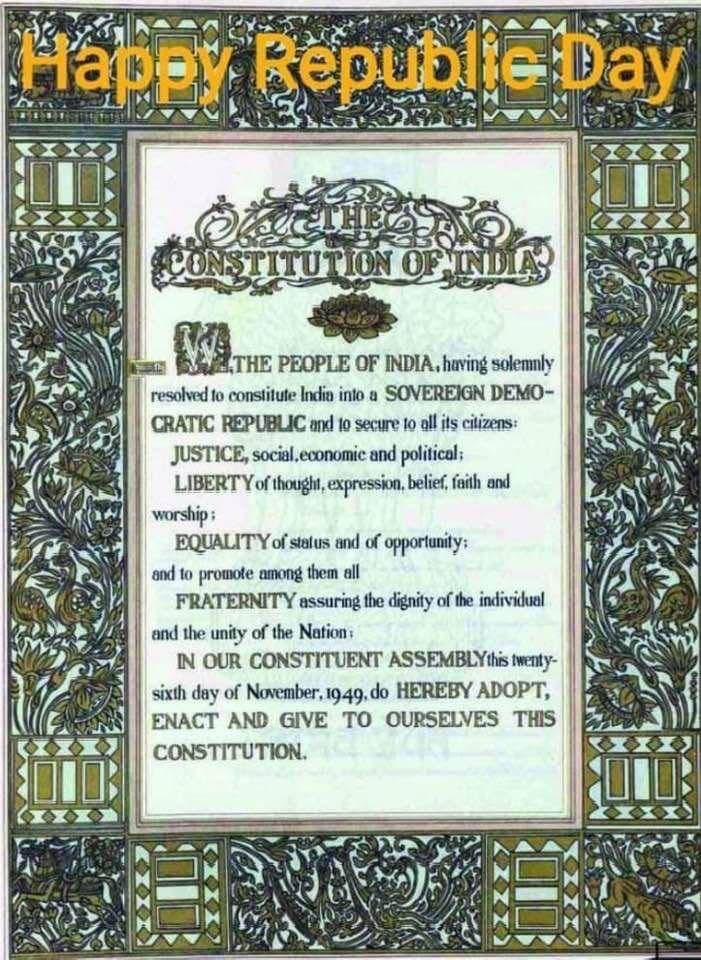
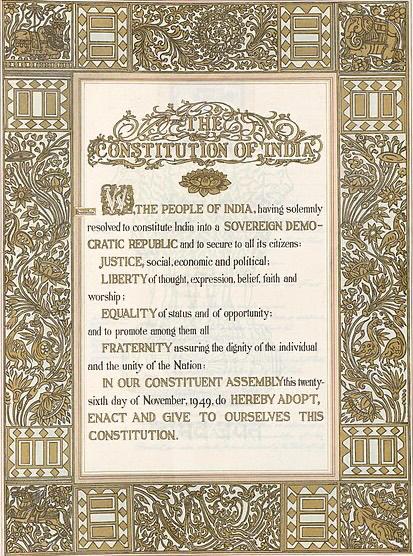
As the smoke from the ceremonial flypasts clears and India steps into its seventy-seventh year as a Republic, the milestone demands more than reflexive pride. It requires a moment of profound constitutional reckoning. The existential question facing the nation today is not whether our founding document has survived—its longevity is a matter of record—but whether the Republic has remained faithful to the moral and democratic covenant established on January 26, 1950.
Forged in the crucible of colonial exit and the trauma of Partition, the Constitution was never meant to be a static rulebook. It was a transformative charter, designed to reimagine a fractured land as a sovereign, socialist, secular, and democratic republic. Its mission was the pursuit of justice, liberty, equality, and fraternity. Seven decades later, while these ideals remain etched in our text, their practice remains jarringly uneven.
The Radical Promise vs. The Lived Reality
The framers made a revolutionary bet by placing universal adult franchise at the heart of the Indian project. They prioritized political equality even as social and economic parity remained distant dreams. Yet, the lived experience of millions reveals that ancient hierarchies remain stubborn.
Despite the formal abolition of untouchability and clear prohibitions against discrimination, the shadows of caste-based exclusion, gender injustice, and economic precarity loom large. We have seen growth, but it has not always been inclusive; we have seen prosperity, but it has frequently bypassed those at the margins. This gap represents an institutional and political failure, not a deficiency in the constitutional framework itself.
The Thinning of Constitutional Morality
Dr. B.R. Ambedkar famously cautioned that a constitutional democracy is only as strong as its “constitutional morality”—a commitment to limits, procedures, and the sanctity of dissent. Today, that warning feels prophetic.
The shrinking space for parliamentary debate, a growing appetite for executive ordinances, and the normalization of majoritarian impulses have strained our democratic conventions. As electoral politics becomes more transactional and prohibitively expensive, the creeping shadow of criminalization continues to erode public trust. We must remember: the Constitution grants authority, but democracy survives only when that power is exercised with restraint.
Faltering Pillars and Institutional Autonomy
Our Republic was designed to be anchored by independent institutions—the judiciary, the civil services, constitutional bodies, and a free press. These were the “checks” meant to guard against the “arbitrary.”
However, the robustness of these anchors is now under scrutiny. Chronic judicial delays, questions over institutional independence, and a narrowing corridor for critical journalism suggest a weakening of the guardrails. When institutions lose their edge, constitutional guarantees risk becoming symbolic artifacts rather than substantive protections. Their credibility cannot be legislated; it must be earned through vigilance.
Fraternity: The Republic’s Silent Casualty
Of all the constitutional virtues, fraternity remains the most neglected. The framers understood that without social cohesion, liberty and equality would be hollow. Yet, today’s public discourse is increasingly defined by polarization and identity-driven friction.
Communal anxieties and a conditional approach to minority rights threaten the secular fabric our founders envisioned. Fraternity was never intended as a rhetorical flourish; it was meant to be the civic ethic essential for a diverse democracy’s survival. A Republic that neglects the bond of its people risks hollowing out its own foundations.
The Federal Friction
India’s federalism was built with a strong Centre to ensure stability during the fragile years of early independence. However, the balance has shifted. Today, recurring friction between the Union and the States—centered on fiscal autonomy, the administrative role of Governors, and jurisdictional authority—highlights a growing structural imbalance.
Diversity has always been India’s greatest asset. Constitutional federalism was designed to accommodate this variety, not suppress it. A confident Republic must learn to trust its federal spirit once more.
Justice Delayed, Justice Denied
Perhaps the most pressing challenge is the accessibility of justice. The Constitution guarantees remedies, yet for the average citizen, the reality is one of prolonged litigation and overcrowded courtrooms. With nearly 50 million cases currently pending across various levels of the Indian judiciary, the promise of timely redress remains elusive. When rights cannot be enforced in a reasonable timeframe, faith in the Republic wavers. This is not just a procedural lag; it is a constitutional crisis.
The Resilience of a Living Text
Despite these mounting pressures, the Constitution has shown a remarkable, almost defiant, resilience. Through judicial interpretation, it has expanded civil liberties, protected the “Basic Structure,” and reaffirmed the dignity of the individual. Its strength lies in its adaptability—its capacity to evolve through a constant dialogue between the state, the courts, and the citizenry.
Meeting the Constitutional Moment
As we enter the seventy-seventh year, the task is not to debate the relevance of the Constitution, but to restore our fidelity to its spirit. This renewal requires a tangible commitment to:
* Restoring institutional independence.
* Protecting the sanctity of civil liberties.
* Reinforcing the federal compact.
* Aggressively reducing social and economic inequality.
* Cultivating a culture of constitutional literacy among the youth.
The Constitution continues to place its faith in the people of India. Whether that faith is justified remains the definitive question of our time. The document stands firm; it is now up to the Republic to rise and meet it.
~Hasnain Naqvi is a former member of the history faculty at St. Xavier’s College, Mumbai.

~Hasnain Naqvi is a former member of the history faculty at St. Xavier’s College, Mumbai

