

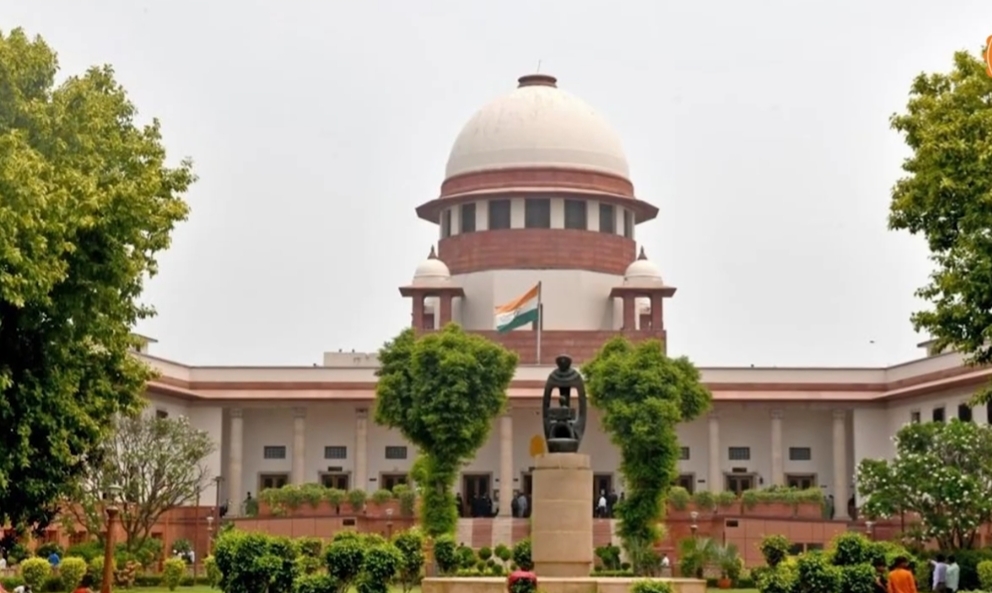
NEW DELHI,6 Jan 2026: The Supreme Court has broadened the meaning of the terrorist act under the Unlawful Activities (Prevention) act, 1967, affecting bail, protest cases and prolonged incarceration of two student activists in the Delhi riot case.
It granted bail on Monday to five of the seven accused in the 2020 Northeast riots case, but denied relief to Umar Khalid and Sharjeel Imam.
The court held that the accused did not stand on equal footing by distinguishing alleged principal planners from those with subsidiary or facilitative roles, even though all faced similar charges.
All accused were booked under UAPA, alogwith Arms Act and other penal provisions.
Central to the ruling are two issues: What consists a “terrorist act” and who determines it, and whether prolonged pre-trial incarceration is justified under the anti-terror act.
Beyond immediate bail outcomes, the order endorses an expansive interpretation of the “terrorist act,” with implications for further UAPA cases.
The Court noted a clear hierarchy of roles, rather than treating all as equally culpable.It centres its bail decision on an individualised assessment of culpability, holding that the accused did not occupy the same position within the alleged conspiracy.
For Umar Khalid and Sharjeel Imam, the Court found the prosecution material at the level of conceptualisation, direction, orchestration and mobilisation. They were described as “ideological drivers” and “masterminds,” allegedly responsible for strategising the transformation of protests against the Citizenship (Amendment) Act into disruptive chakka jams aimed at paralysing Delhi.
In contrast, the five accused granted bail were characterised as “local-level facilitators” or “site-level executors” whose role was derivative, indicating that they acted on instructions from the higher level of the alleged conspiracy.