
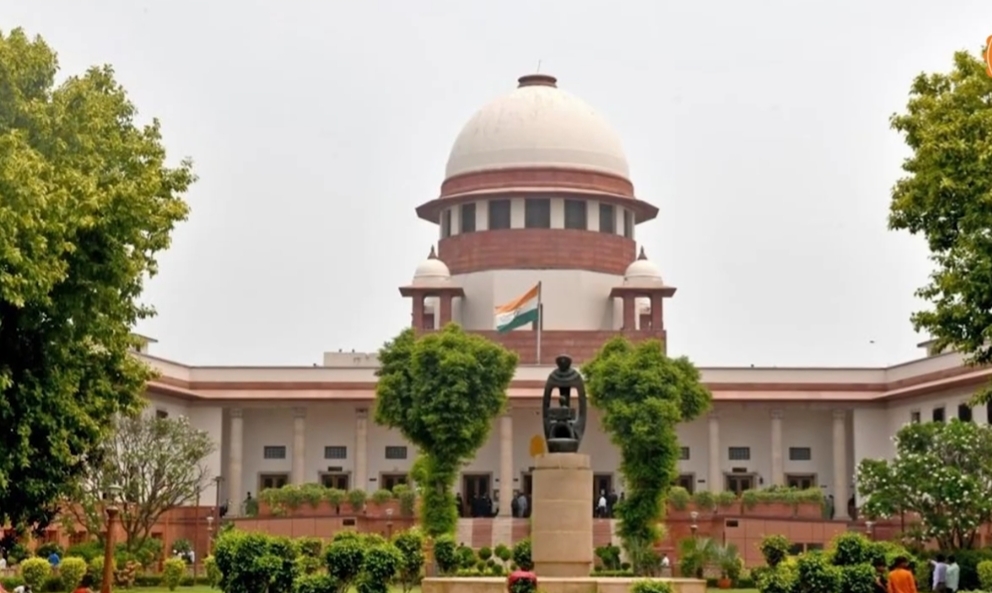
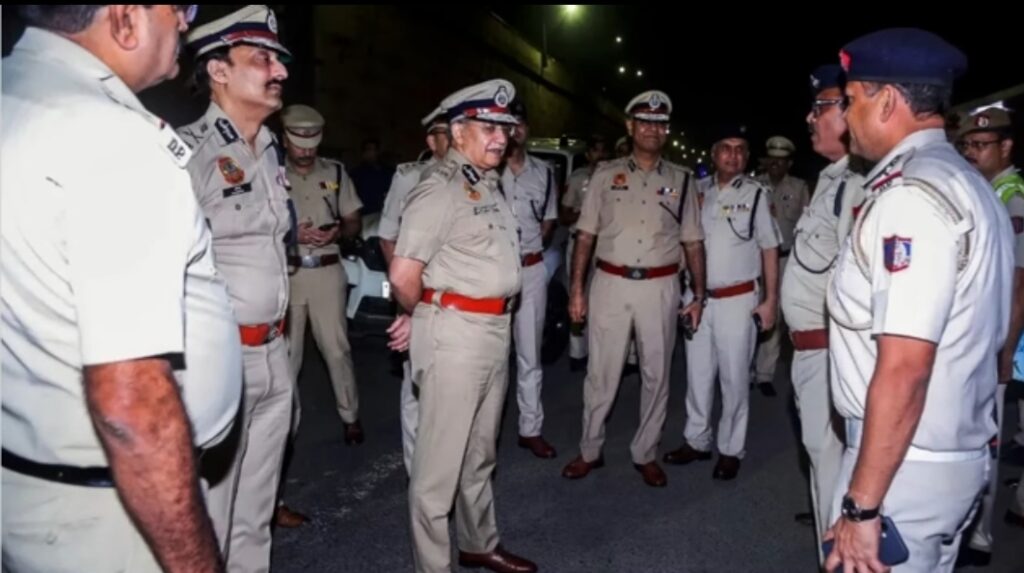
New Delhi, Feb. 5: The Supreme Court on Thursday came down heavily on the growing practice of State governments appointing “acting” Directors General of Police instead of initiating the process for selecting a regular police chief in accordance with its binding guidelines issued in 2006.
A Bench comprising Chief Justice Surya Kant and Justice Joymalya Bagchi observed that repeated delays in forwarding proposals to the Union Public Service Commission (UPSC) for appointment of full-time DGPs not only violate the directions issued in Prakash Singh v. Union of India but also deprive eligible senior officers of fair consideration.
The Court noted that several States avoid timely compliance with the prescribed procedure and instead continue with interim arrangements by appointing acting DGPs, undermining institutional integrity and merit-based selection.
To address this systemic lapse, the Bench authorised the UPSC to proactively seek timely proposals from State governments whenever vacancies for DGPs arise. It further permitted the Commission to approach the Supreme Court if any State fails to act.
“We authorise the UPSC to write to the States to send timely proposals for recommendations of respective DGPs whenever such occasions arise. When such proposals are not sent, we direct the UPSC to move an application in the Prakash Singh case. It goes without saying that necessary consequences including accountability of the concerned States will be taken up,” the Court ordered.
Under the Supreme Court’s guidelines issued in Prakash Singh case also known as police reform case on September 22, 2006, a State government is required to appoint its DGP from a panel of three senior-most eligible officers shortlisted by the UPSC.
The directions were issued today while hearing an appeal arising from a Telangana High Court order that had directed the UPSC to process a belated proposal sent by the State for appointment of its DGP.
The UPSC objected to the High Court’s direction, pointing out that the previous DGP, Anurag Sharma, retired in 2017, and the State had failed to forward any proposal for nearly eight years. Although Telangana eventually sent a proposal with names of eligible senior ranking IPS officers in April 2025, the Commission declined to act on it, citing the prolonged delay and seeking clarity from the Supreme Court.
The UPSC also submitted that Telangana was not an isolated case and that several States routinely resort to such delay tactics.
Agreeing with the concern, the Supreme Court observed that such inaction had adversely impacted the careers of many senior officers who have since retired without ever being considered for the top post. At the ski cap ame time, the Bench noted that refusing to process delayed proposals would only end up benefiting defaulting States.
Accordingly, the Court directed the UPSC to proceed with the selection process for Telangana’s DGP stating “We hold without hesitation that the State should make recommendations for the DGP at the earliest… The zones of consideration will be on eligibility of officers who fall under such zone and will be on the basis of inter se merit. Commission is granted four weeks’ time to do the needful,” the Court ordered.
(Pramod Kumar is a Senior Journalist, Covering Supreme Court of India)
Picture credit social media

Pramod kumar is a Senior Journalist, Covering Supreem Court of India