
Impeachment of Justice Yashwant Varma: SC reserves verdict on plea against LS Speaker constituting inquiry committee
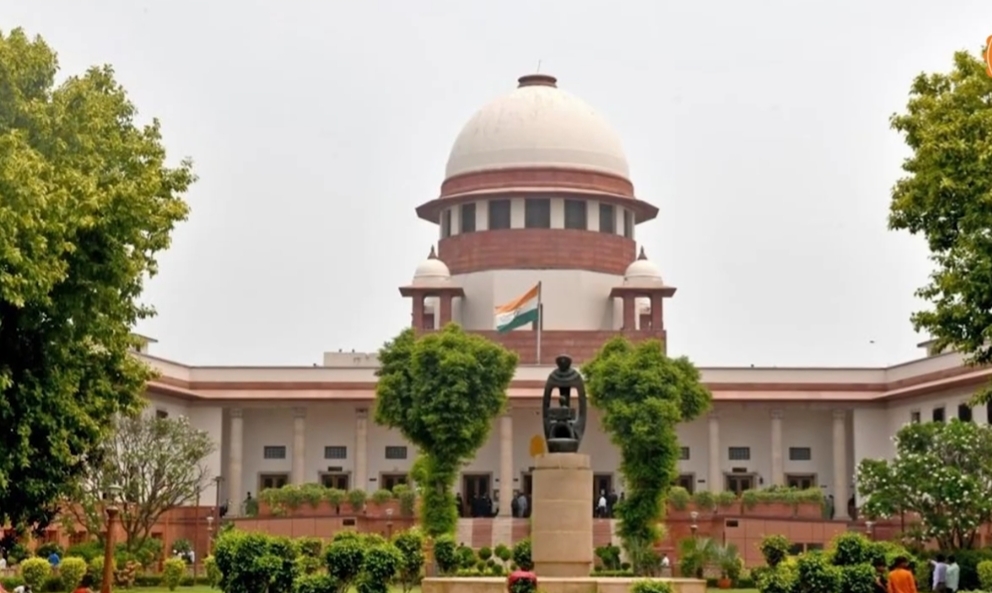
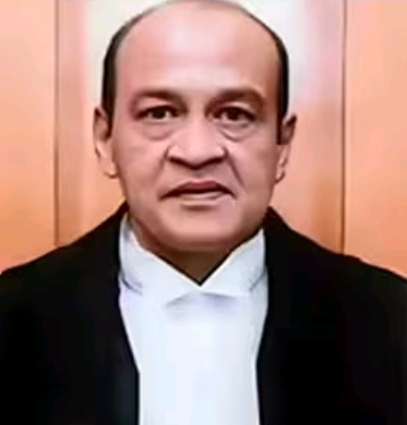
New Delhi, Jan 8: The Supreme Court on Thursday reserved its verdict on a plea filed by Allahabad High Court judge Justice Yashwant Varma challenging the decision of Lok Sabha Speaker Om Birla to “unilaterally” constitute a three-member inquiry committee in connection with impeachment proceedings initiated against him.
The challenge relates to the Speaker’s decision to set up the committee to inquire into the alleged recovery of unaccounted cash from Justice Varma’s then official residence in Delhi by personnel of the Delhi Fire Service following an accidental fire on March 14 last year (2025).
A Bench of Justice Dipankar Datta and Justice S.C. Sharma reserved orders on the conclusion of hearing lasting for two days. Justice Varma contended that the Speaker’s decision to constitute the inquiry committee stood vitiated after the Deputy Chairman of the Rajya Sabha rejected a parallel impeachment notice moved by 62 members of the Upper House on the same day the notice was given in the Lok Sabha.
The Court granted time until Monday, January 11, to Justice Varma’s counsel and Solicitor General Tushar Mehta, appearing for the Lok Sabha Speaker, to file their written submissions.
The Lok Sabha Speaker had admitted the removal notice against Justice Varma, moved by 146 members of the House, and on August 12, 2025, constituted a three-member committee to examine the allegations. At the time of the incident – recovery of semi-burnt cash -, Justice Varma was serving as a judge of the Delhi High Court. The committee comprises Supreme Court judge Justice Aravind Kumar, Madras High Court Chief Justice Manindra Mohan Shrivastava, and senior advocate B. Vasudeva Acharya.
Assailing the August 12 decision, senior advocate Mukul Rohatgi, appearing for Justice Varma, argued that the power to admit or reject a removal notice under the Judges (Inquiry) Act lay exclusively with the Chairman of the Rajya Sabha and could not be exercised by the Deputy Chairman in his absence. The Bench was also told that the order rejecting the notice moved by 62 Rajya Sabha members was flawed, as it was authored by the Secretary-General of the Rajya Sabha, with the Deputy Chairman merely affixing his signature.
Referring to the grounds cited for rejecting the notice, including alleged defects in format, Rohatgi described the decision as “laughable”.
Solicitor General Tushar Mehta, however, defended the Speaker’s action, arguing that the constitutional scheme and the Judges (Inquiry) Act, 1968, must be interpreted purposively to advance the object of the statute rather than frustrate it. He submitted that in the absence of the Chairman — who also holds the office of Vice-President — the Deputy Chairman is empowered to exercise all functions of the Chairman.
It may be recalled that on July 21, 2025, Rajya Sabha Chairman Jagdeep Dhankhar informed the House that a notice seeking Justice Varma’s removal had been received. He resigned as Vice-President later the same day.
The Solicitor General further contended that the Deputy Chairman’s order rejecting the notice was not under challenge and that only the Rajya Sabha members who had given the notice could claim to be aggrieved. He argued that no prejudice had been caused to Justice Varma.
The Bench, however, observed that the rights of a judge proceeded against under the Judges (Inquiry) Act and the rights of Members of Parliament seeking removal must be balanced. It noted that under the statutory scheme, even a motion originating in the Lok Sabha would eventually travel to the Rajya Sabha.
During the hearing on Wednesday, January 7, the Bench had expressed reservations about Justice Varma’s contention that proceedings in the Lok Sabha must collapse if the impeachment notice is not admitted by the Rajya Sabha. Seeking clarity, the Court questioned whether rejection of the notice by the Upper House would legally bar the Lok Sabha from proceeding independently. Justice Datta observed that the proviso to Section 3 of the Judges (Inquiry) Act mandates a joint committee only if both Houses admit the motion.
The impeachment proceedings stem from an incident on March 14, when a fire broke out at Justice Varma’s official residence in New Delhi. Firefighters reportedly recovered large quantities of unaccounted cash from the premises, visuals of which later surfaced showing currency bundles burning.
Justice Varma and his wife were not in Delhi at the time and were travelling in Madhya Pradesh. His daughter and elderly mother were present at the residence. Justice Varma has denied all allegations, claiming that he is being targeted.
Following the incident, then Chief Justice of India Sanjiv Khanna (since retired) constituted an in-house committee of three High Court judges, which submitted its report on May 4, indicting Justice Varma and recommending his removal. After Justice Varma declined to resign, the report was forwarded to the President and the Prime Minister, resulting in impeachment motions being initiated in Parliament.
After the Lok Sabha admitted the motion backed by 146 MPs, the Speaker constituted the inquiry committee. Justice Varma subsequently approached the Supreme Court, stating that he had not received authenticated copies of the parliamentary motions or related orders.
The inquiry committee has extended the deadline for Justice Varma’s response till January 12 and fixed January 24 for his appearance.

Pramod kumar is a Senior Journalist, Covering Supreem Court of India