

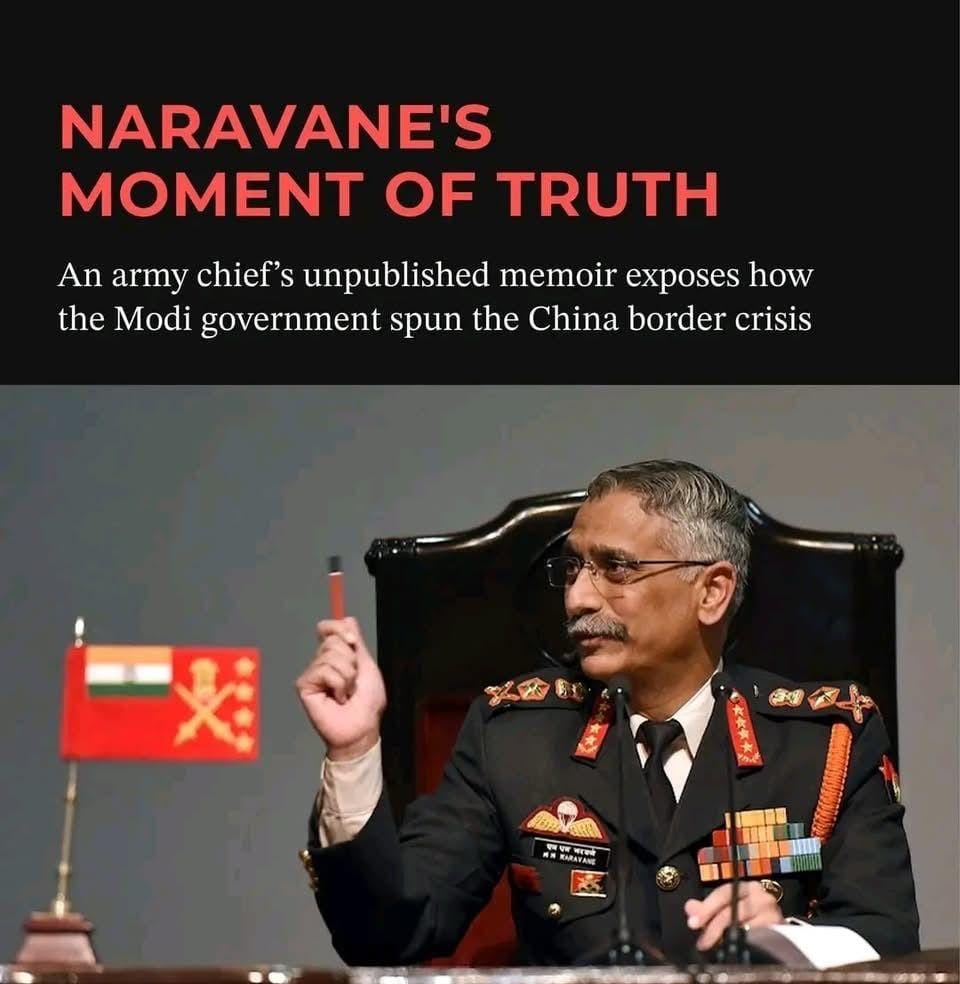
In the heat of parliamentary debate, Rahul Gandhi’s invocation of an unpublished memoir by former Army Chief General M.M. Naravane pierced the government’s armour, sparking chaos that twice adjourned the Lok Sabha. The Congress leader spotlighted revelations from *Four Stars of Destiny*, alleging a leadership vacuum during China’s 2020 incursions in Ladakh. BJP heavyweights, from Defence Minister Rajnath Singh to Home Minister Amit Shah, swiftly branded it misinformation from an unauthorized text, stifling discourse. Yet this uproar betrays deeper unease: why does scrutiny of Galwan still provoke such fury four years on?
The Night of August 31: Tanks at the Gates
Naravane’s account paints a harrowing tableau at Rechin La in eastern Ladakh. At 8:15 p.m., Lieutenant General Yogesh Joshi, head of Northern Command, alerted the Army Chief to four Chinese tanks, backed by infantry, rumbling up a treacherous mountain track toward Indian positions on the vital Kailash Range. Every meter of height here commands dominance along the Line of Actual Control (LAC).
Indian troops fired an illuminating round—a stark warning. The Chinese pressed on. Naravane unleashed a barrage of calls to Rajnath Singh, National Security Advisor Ajit Doval, Chief of Defence Staff Bipin Rawat, and External Affairs Minister S. Jaishankar. His plea was simple: “What are my orders?” Protocol bound him—no shots without political clearance.
Tensions peaked. By 9:10 p.m., tanks loomed less than a kilometer away; by 10 p.m., just 500 meters from the pass. A PLA overture for de-escalation flickered hope—a dawn meeting of local commanders—but the advance continued. Joshi urged artillery fire, a routine against Pakistan yet taboo with China, lest it ignite full war. Caught between battlefield imperatives and Delhi’s silence, Naravane teetered.
At 10:30 p.m., Rajnath relayed Prime Minister Narendra Modi’s verdict: “Do what you deem appropriate.” No directive, no red lines—just a hot potato dumped on the general. Naravane shouldered sole accountability in a crisis that could spiral globally.
Galwan’s Bloody Prelude and Lingering Losses
This drama unfolded months after the June 15, 2020, Galwan Valley bloodbath, the deadliest India-China border clash since 1975. Indian troops, wielding stones, clubs, and spiked rods in a no-firearms pact, lost 20 lives, including Colonel Santosh Babu. China admitted four fatalities; unverified reports whisper more, including drownings in the frigid river.
Preceding skirmishes from May saw Chinese tents and towers sprout in claimed Indian territory. Removal attempts triggered violence. Strategically, Galwan guards Aksai Chin—38,000 square kilometers under Beijing’s grip, with 90,000 more eyed in Arunachal Pradesh. Satellite imagery reveals persistent Chinese infrastructure: watchtowers, bunkers, helipads. Opposition tallies peg post-2020 losses at 2,000 square kilometers; New Delhi denies any intrusion, citing a now-retracted defence report acknowledging incursions.
Partial 2024 disengagements offer cold comfort amid stalled patrols and frozen ties.
A Pattern of Evasion and Opposition Fire
Modi’s June 2020 claim—”na koi ghusa hai, na koi ghusa hua hai” (no one has entered, nor is anyone present)—clashes with Rahul Gandhi’s refrain that China occupies Indian soil unchecked. Congress accuses capitulation: vague briefings hobbled the military, echoing critiques of the Agnipath scheme as further erosion. The government’s parliamentary shutdown—ruling out unpublished sources, expunging remarks—reeks of concealment.
This isn’t mere optics. Indecision at Rechin La exemplifies a broader malaise: political dithering outsourcing life-or-death calls to generals, eroding deterrence. China exploits the void, advancing amid India’s economic courtship via BRICS and trade. Rahul’s gambit forces truth-telling, but evasion sustains the status quo—until the next tank rolls.
~Hasnain Naqvi is a former member of the history faculty at St. Xavier’s College, Mumbai
Picture credit social media

~Hasnain Naqvi is a former member of the history faculty at St. Xavier’s College, Mumbai

