

In late March 2026, a wave of anti-war protests spread across the United States and Israel, reflecting growing public anger over the ongoing war against Iran. What began as scattered demonstrations has now evolved into one of the largest anti-war protest movements in recent years, raising serious political questions for both President Donald Trump and Israeli Prime Minister Benjamin Netanyahu.
The protests are not merely symbolic gatherings; they represent a widening political and economic backlash that could have electoral consequences in the United States and political ramifications in Israel.
America’s “No Kings” Protests and the Anti-War Wave
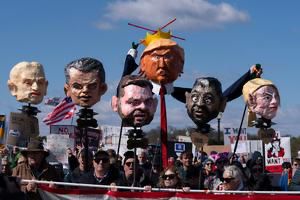
On March 28, 2026, millions of Americans participated in demonstrations across more than 3,200 locations in all 50 states. Major rallies took place in cities such as Boston, Chicago, and New York City, along with large gatherings in Washington D.C. and several university towns.
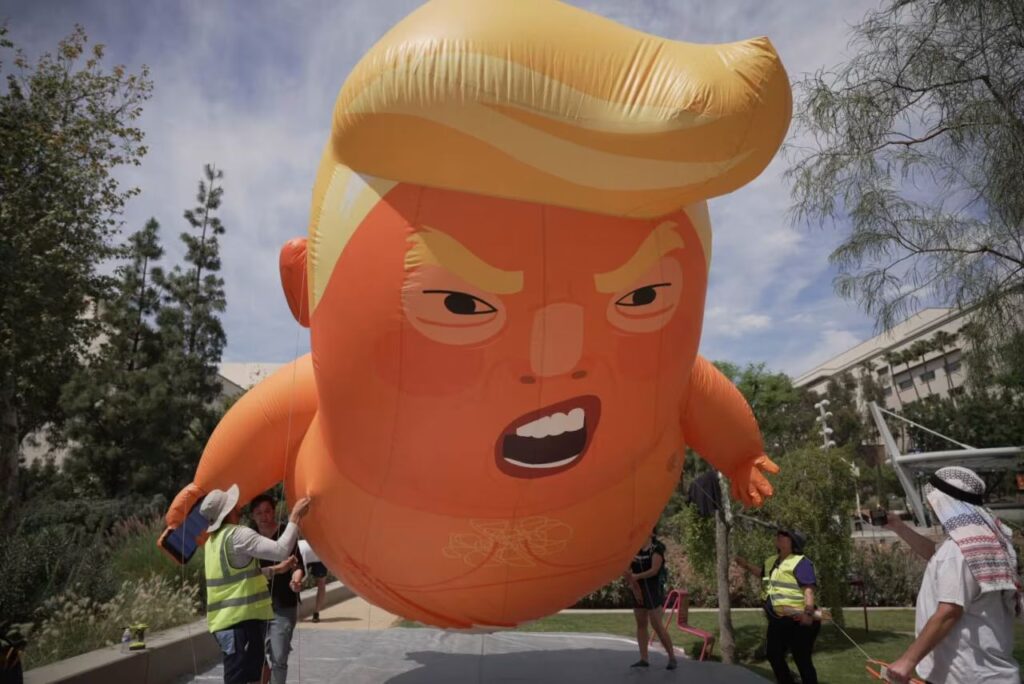
The protests were part of the broader “No Kings” movement, which accuses the administration of expanding executive power, restricting immigration, and dragging the United States into another prolonged Middle Eastern war. Demonstrators carried placards reading “Stop the War on Iran” and “America First, Not Israel First,” reflecting a growing sentiment that the conflict does not serve American national interests.
What makes these protests politically significant is their scale and diversity. They included students, labour unions, civil liberties groups, veterans’ organizations, and even conservative anti-interventionist groups who traditionally supported Trump’s “America First” foreign policy.
Economic Pressure and Political Fallout
The protests are being driven not only by anti-war sentiment but also by economic anxiety. Rising oil prices due to instability in the Persian Gulf have pushed petrol prices upward in the United States, contributing to inflation and increasing the cost of living.
Historically, wars in the Middle East have often had direct political consequences in the United States because of their impact on fuel prices and inflation. The current situation appears to be following a similar pattern. Several opinion polls conducted in early 2026 reportedly show declining approval ratings for Trump, particularly among independent voters and working-class Americans who were a key part of his political base.
The political danger for Trump lies not only in opposition from Democrats but also in dissatisfaction within his own support base, particularly the MAGA movement, which strongly opposed foreign wars and overseas military interventions. Many of these voters supported Trump because he had promised to end “endless wars,” not start new ones.
Internal Dissent and Security Establishment Concerns
Concerns about the war are not limited to street protests. Reports of disagreements within the national security establishment have further complicated the political situation in Washington. The resignation of a senior counter-terrorism official has been widely interpreted as a sign of internal policy disagreements over the war strategy.
Meanwhile, intelligence assessments presented before the U.S. Senate by senior officials, including former intelligence and security figures such as Tulsi Gabbard, have reportedly raised questions about the long-term strategic consequences of the conflict, including the risk of regional escalation and global economic disruption.
Such developments create the perception of a divided national security establishment, something that historically weakens public support for wars.
Anti-War Protests in Israel
At the same time, significant anti-war protests have also taken place in Israel, particularly in Tel Aviv, as well as Jerusalem, Haifa, and Beersheba. Protesters accused the Israeli government of prolonging the war for political reasons and warned of economic and security consequences for Israel.
Several Israeli civil society groups and former political leaders supported the protests, arguing that a prolonged war with Iran could destabilize the entire region and place enormous strain on Israel’s economy and military.
Police attempted to restrict some demonstrations, and clashes were reported, with several protesters arrested. Despite this, the protests continued, indicating that opposition to the war is not limited to fringe groups but includes sections of Israeli society concerned about the long-term consequences of the conflict.
The Midterm Election Factor in the United States
The most important political question now is whether these developments will force President Trump to scale down or exit the war before the U.S. midterm elections scheduled for November 2026.
Historically, wars have significantly influenced American elections. The Vietnam War affected the 1968 election, the Iraq War influenced the 2006 midterms, and the Afghanistan war shaped political debates for two decades. Rising fuel prices, inflation, and military casualties often translate into electoral losses for the ruling party.
If inflation continues to rise and petrol prices remain high, the Republican Party could face significant losses in the midterm elections. Losing control of either the House of Representatives or the Senate would severely weaken Trump’s ability to continue the war.
This political reality may ultimately matter more than battlefield developments. Modern wars are often decided not only on the battlefield but also by public opinion, economic pressure, and electoral politics.
War, Democracy and Public Opinion
The protests in both the United States and Israel demonstrate a recurring pattern in democratic societies: governments may start wars, but public opinion often determines how long those wars continue.
Large-scale protests across thousands of American cities and demonstrations in Israeli cities indicate that the political cost of the war is rising steadily for both governments. If public pressure continues to grow, economic conditions worsen, and election calculations become more urgent, political leadership in Washington may begin looking for a face-saving exit from the conflict.
The streets of Boston, Chicago, New York, and Tel Aviv may ultimately prove as important as the battlefields of the Middle East in determining how long this war continues.
Midterms Hang in Balance
The growing anti-war protests in the United States and Israel signal a turning point in public opinion regarding the war against Iran. Rising inflation, increasing fuel prices, dissent within the security establishment, and electoral pressures are creating a political environment in which continuing the war may become politically more dangerous than ending it.
Whether President Trump exits the war soon will depend less on military strategy and more on political survival. With midterm elections approaching and public protests expanding across thousands of locations, the pressure to find an exit strategy is likely to grow stronger in the months ahead.
Picture credit social media

~Hasnain Naqvi is a former member of the history faculty at St. Xavier’s College, Mumbai