
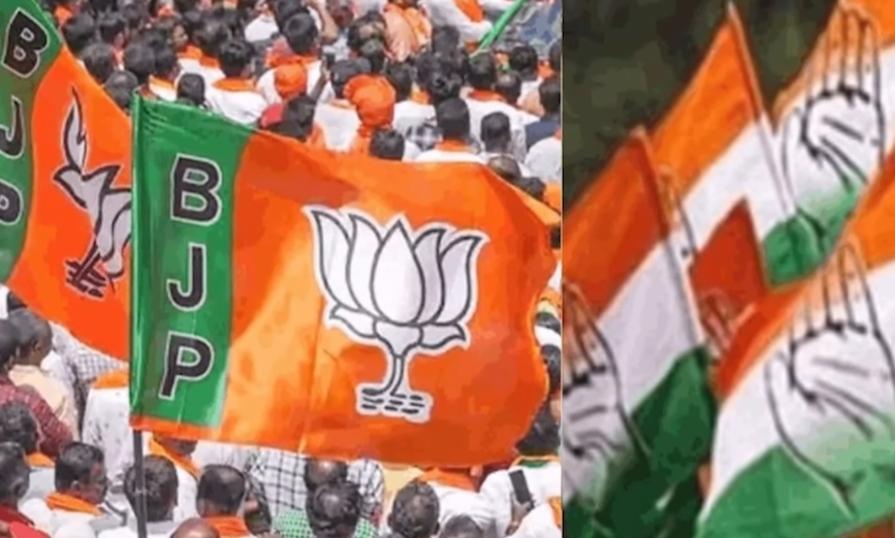

NEW DELHI: In a surprising political realignment in Maharashtra, the Bharatiya Janata Party has formed an alliance with the Indian National Congress to secure power in the Ambernath Nagar Palika, sidelining the Shiv Sena action led by Eknath Shinde.
The unexpected tie-up comes even as the BJP has also entered into a local alliance with the AIMIM in another municipal body, triggering sharp reactions and accusations of political double standards.
While leaders describe the moves as tactical and limited to civic bodies, the alliances have reignited debate over ideology, convenience, and coalition politics ahead of crucial elections in the state.
The municipal elections in Maharashtra are slated on January 15 next week.
But the Maharashtra Congress refused such an alliance and suspended Amberfnath bloc chief Pradeep Patil and all its elected coucillors for what it described as a “violation of party discipline.”
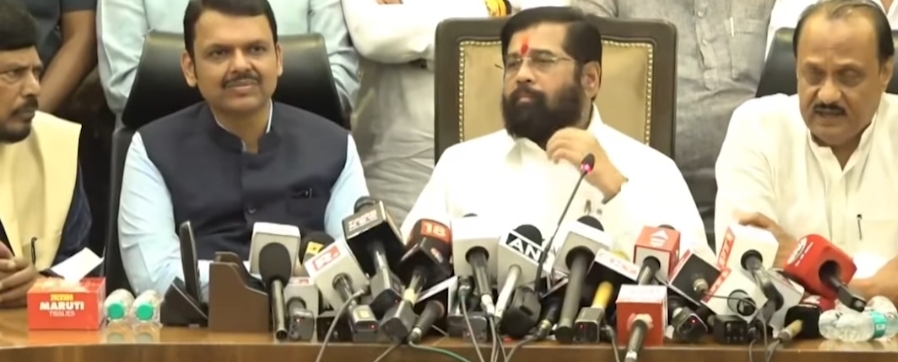
Senior BJP leader and Chief Minister Devendra Fadnavis said the tie-up was unacceptable and would be scrapped. “If any local leader has taken such a decision on their own, it is wrong in terms of discipline and action will be taken,” Fadnavis said in an interview with a TV channel. If such an alliance has been formed, an order has been issued to scrap it, he added
BJP, Congress and the Ajit Pawar-led NCP came together to form an alliance named “Ambernath Vikas Aghadi. The alliance comprised of 14 BJP councillors, 12 Congress councillors, four from the NCP (Ajit Pawar faction), and one independent corporator. With the inclusion of the municipal president’s post, the alliance’s strength has risen to 32, giving the BJP a comfortable majority in the municipal council.
Backed by this alliance, BJP leader Tejashree Karanjule was elected President (Mayor) of the Ambernath Municipal Council. This outcome is particularly significant because, after the election results, the Shiv Sena (Shinde faction) had emerged as the single largest party. Despite that numerical advantage, the Shinde faction was sidelined from power through post-poll political manoeuvering.
The local BJP leadership had earlier defended its decision by linking it to development and clean governance. Local BJP leader Gulabrao Karanjule Patil stated that the alliance was formed in the larger interest of making Ambernath a fear-free and corruption-free city. He alleged that during the tenure of the Shiv Sena (Shinde faction), serious corruption cases had emerged and that two former municipal presidents had even landed in jail.
The Ambernath episode has clearly exposed growing strains within the Mahayuti alliance. The BJP-Congress alliance in Ambernath carries implications far beyond a single municipal council. It raises critical questions about the future of alliance politics in Maharashtra: Will similar unexpected coalitions emerge in upcoming municipal corporation and civic elections? Are ideological slogans losing relevance in the face of power arithmetic and post-poll strategies?