

A quiet rewrite of the past risks hardening the present
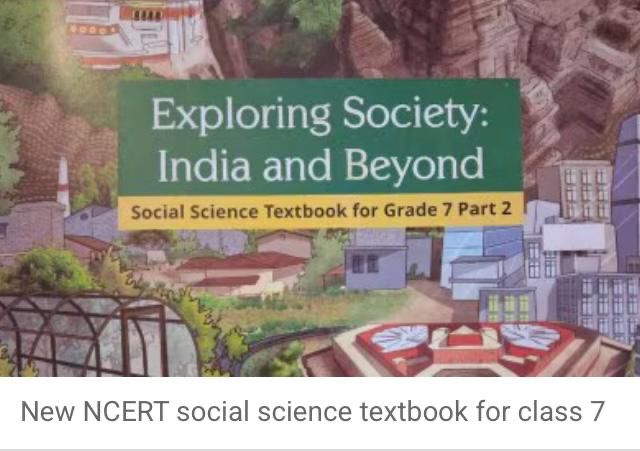
A quiet but seismic change has slipped into India’s classrooms. The new Class 7 NCERT social science textbook, Exploring Society: India and Beyond, devotes six pages to the “Ghaznavid Invasions,” recasting Mahmud of Ghazni as a fanatical iconoclast bent on forcing his version of Islam on “infidels.” Gone is the single paragraph in the previous edition that framed his raids as calculated seizures of temple treasuries. In its place is a lurid narrative of religious slaughter, drawn almost entirely from Mahmud’s own court panegyrists.
This is not education; it is the resurrection of a colonial caricature, dressed up as candour.
When Classrooms Become Ideological Frontlines
History has always been contested terrain. But school textbooks are where nations forge—or fracture—their collective memory. By elevating religious zealotry over the economic and political drivers that serious historians have long established, NCERT risks injecting a toxic Hindu–Muslim binary into the minds of twelve-year-olds.
The move is akin to claiming that Donald Trump’s loud threats to “take the oil” in Venezuela—or earlier in Iraq—were really about spreading democracy rather than securing hydrocarbons for American interests. Everyone understood the real motive was resources and power; only propaganda insisted otherwise. Mahmud’s chroniclers did much the same: they wrapped plunder in the rhetoric of jihad to impress the Abbasid Caliph and keep subsidies flowing. The parallel is uncomfortably close—then and now, the loudest religious banners often conceal the coldest economic calculations.
What the Scholarship Actually Shows
The evidence against the fanatic thesis is overwhelming and long settled. Romila Thapar’s Somanatha: The Many Voices of a History (2004) demonstrates that contemporary Indian sources—Sanskrit, Prakrit, and Jain—treated the sack of Somnath as a political and financial disaster, not a metaphysical apocalypse. Mohammad Habib’s classic Sultan Mahmud of Ghaznin (1927; repr. 1951) concluded bluntly that “Islam sanctions neither vandalism nor plundering,” and that Mahmud’s overriding concern was financing a fragile empire threatened by the Seljuks and Qarakhanids. Satish Chandra’s standard works similarly present the raids as hit-and-run extractions in a subcontinent too fractured for conquest.
Temples were targeted not because they were Hindu, but because they functioned as the safest banks of eleventh-century India.
Reading the Sources—Not Worshipping Them
Even the very sources the new textbook leans on undermine the fanatic narrative when read critically. Al-Utbi was a paid court poet, inflating casualty figures and moral drama to secure patronage. Al-Biruni, the polymath scholar, observed events with the detachment of an anthropologist, not the fury of a crusader. To treat courtly boast and critical observation as equivalent historical truth is to abandon historiography for hagiography.
Erasing Context, Inventing Rupture
The revised chapter ignores counter-evidence, omits context, and erases a basic fact: Indian kingdoms—from the Cholas to the Rashtrakutas—repeatedly repelled Central Asian raiders through diplomacy and warfare long before and after Mahmud. There was no “civilisational rupture” in 1025. That idea was manufactured in the nineteenth century by James Mill and others to justify British rule as salvation from “Muslim tyranny.”
When the NCERT director describes the chapter as “self-explanatory,” one is compelled to ask what, precisely, it explains—other than the dangers of letting ideology, rather than historiography, write the past. If the National Education Policy genuinely seeks to recover India’s knowledge traditions, it should begin by trusting the rigorous, multivocal scholarship produced within those traditions, instead of recycling discredited communal tropes.
The Lesson Children Actually Need
Children deserve better than propaganda masquerading as history. They deserve to learn that Mahmud of Ghazni, like conquerors before and since, was driven by the same mundane imperatives that still move nations and strongmen today: money, power, and the need to pay the army. Dressing those motives in holy war was merely the medieval version of “taking the oil.”
That is the real lesson—one that might actually prepare young Indians for the world they will inherit.
Hasnain Naqvi is a former member of the history faculty at St. Xavier’s College, Mumbai
References:
•Thapar, Romila. Somanatha: The Many Voices of a History. Penguin India, 2004.
•Habib, Mohammad. Sultan Mahmud of Ghaznin. Aligarh, 1927; repr. 1951.
•Chandra, Satish. Medieval India: From Sultanat to the Mughals. Har-Anand, various editions.
•”NCERT’s new Class 7 textbook gives 6 pages to Ghazni, had 1 para earlier.” The Indian Express, 6 December 2025

~Hasnain Naqvi is a former member of the history faculty at St. Xavier’s College, Mumbai