

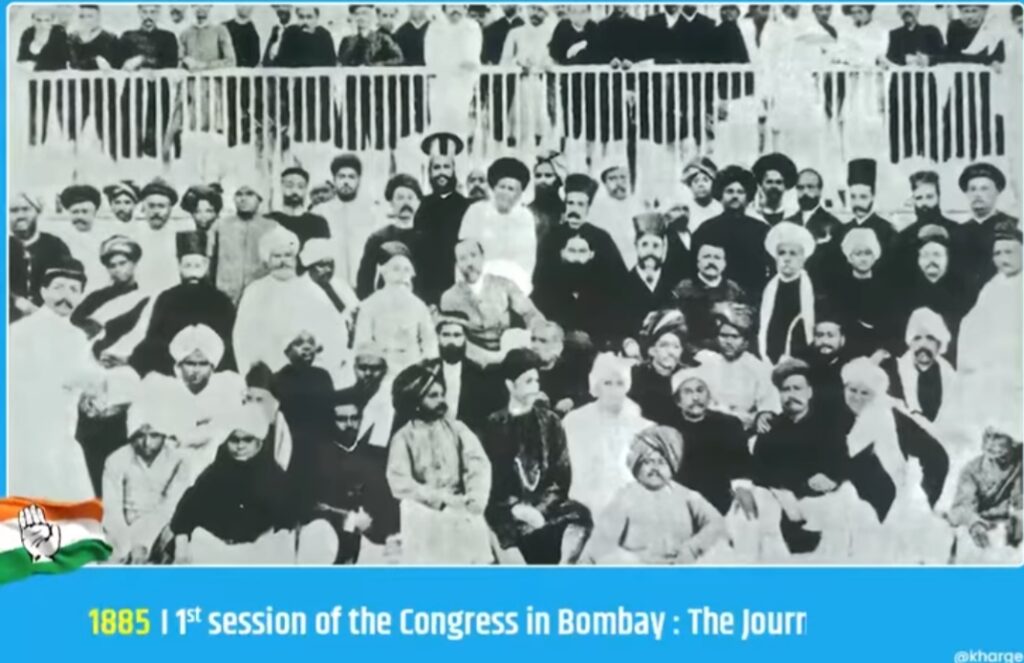
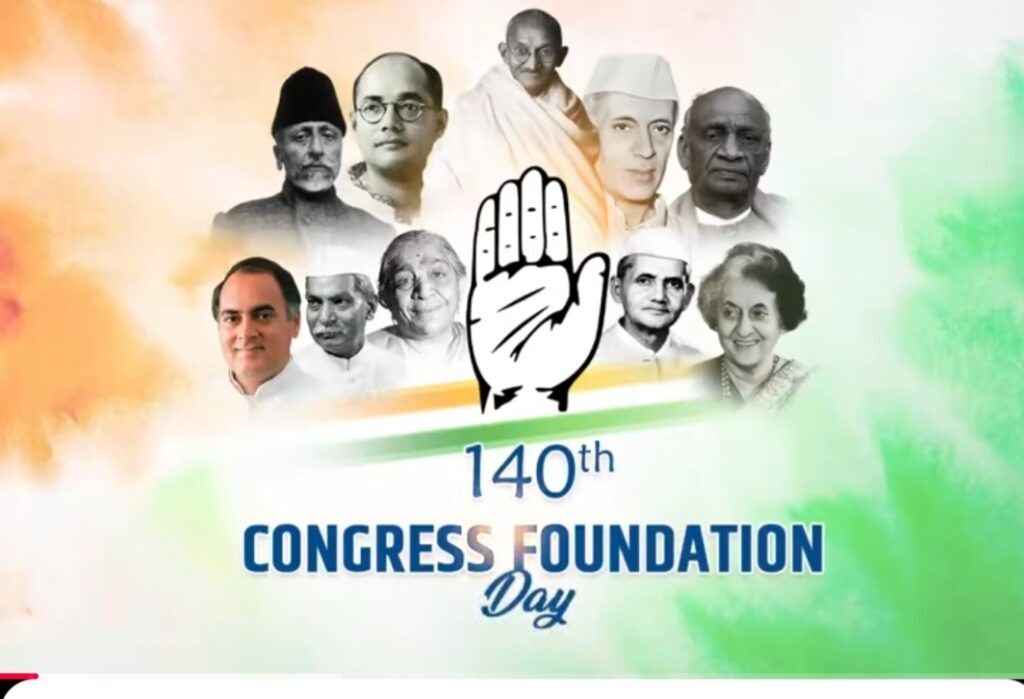
On this day, December 28, 2025, we look back exactly fourteen decades to a crisp winter morning in Bombay. The setting was the Gokuldas Tejpal Sanskrit College and Boarding House at Gwalia Tank. There, 72 individuals—lawyers, journalists, and scholars—gathered to birth an organization that would eventually dismantle the most formidable empire in human history.
As noted by the official historian of the Congress, Dr. Pattabhi Sitaramayya, the founding of the Indian National Congress (INC) was not a mere accident of history but the “culmination of a process” of national awakening.
The Inaugural Spark: December 28, 1885
The atmosphere in Bombay was one of quiet solemnity. Originally planned for Poona, the venue was shifted at the last minute due to an outbreak of cholera. Under the high ceilings of the Gokuldas Tejpal Hall, the delegates represented a microcosm of an emerging Indian intelligentsia.
The Role of A.O. Hume: Architect or Catalyst?
The presence of Allan Octavian Hume, a retired British civil servant, has long been a subject of historical debate. While some, like Rafiq Zakaria, emphasize Hume’s genuine liberal sympathies for Indian grievances, others point to the “Safety Valve” theory—the idea that the British encouraged the Congress to prevent a second 1857-style violent uprising. Regardless of the motive, Hume was the “General Secretary” who provided the organizational scaffolding, traveling across the subcontinent to bring disparate provincial leaders together.
The Naming and the Presidency
It was Womesh Chandra Bannerjee, a distinguished standing counsel from Calcutta, who took the chair as the first President. His address was characterized by profound loyalty to the British Crown, yet it was laced with a firm demand for political justice.
Interestingly, the organization was initially proposed as the “Indian National Union.” It was Dadabhai Naoroji, the “Grand Old Man of India,” who suggested the name “Indian National Congress.” Borrowing from North American political terminology, Naoroji felt that “Congress” better represented a “coming together” of people with a shared national purpose.
Aims and Objectives: The First Manifesto
The inaugural session was not about revolution; it was about constitutionalism. The resolutions passed in 1885, as documented by Sitaramayya, focused on:
* National Unity: Eradicating prejudices of race, creed, and province to foster a sense of national unity.
* Political Education: Discussing the social and political problems of the day.
* Reform of Councils: A demand for the expansion of the Legislative Councils and the inclusion of Indians in the administration.
* Economic Grievances: Protesting the drain of wealth and the rising military expenditure of the British Raj.
Prominent delegates like Pherozeshah Mehta, Justice Telang, and Dinshaw Wacha spoke with a mastery of English constitutional law, believing that if the British “sense of fair play” were appealed to, India’s grievances would be redressed.
The Evolutionary Arc: From Petitions to Purna Swaraj
The journey of the Congress from 1885 to 1947 is a study in political metamorphosis. Historians often divide this trajectory into three distinct phases that saw the organization evolve from an elite debating club into a mass movement.
1. The Moderate Phase (1885–1905)
The “Liberals” or Moderates, led by Naoroji, G.K. Gokhale, and S.N. Banerjea, believed in “Prayer, Petition, and Protest.” While critics later called this “political mendicancy,” Rafiq Zakaria argued that this period was essential for building a legal and intellectual framework for Indian nationalism. It was during this time that Naoroji’s Drain Theory exposed the economic exploitation of India, providing a moral basis for the struggle.
2. The Extremist Phase (1905–1919)
The 1905 Partition of Bengal acted as a catalyst. The “Lal-Bal-Pal” trio (Lala Lajpat Rai, Bal Gangadhar Tilak, and Bipin Chandra Pal) challenged the Moderate methods. Tilak’s thunderous declaration—”Swaraj is my birthright and I shall have it”—shifted the goalpost from administrative reform to self-rule. The Congress became a vehicle for Swadeshi (indigenous goods) and boycotts, bringing the movement to the urban middle class.
3. The Gandhian Era (1919–1947)
The entry of Mahatma Gandhi transformed the Congress into a revolutionary mass organization. Gandhi bridged the gap between the sophisticated lawyer and the impoverished peasant. Through the Non-Cooperation Movement (1920), the Civil Disobedience Movement (1930), and finally the Quit India Movement (1942), the Congress galvanized millions.
Under the leadership of Jawaharlal Nehru and Sardar Vallabhbhai Patel, the party integrated the aspirations of diverse social groups—youth, women, workers, and farmers. The 1929 Lahore Session, where Nehru declared “Purna Swaraj” (Complete Independence) as the goal, marked the point of no return for British rule.
The Legacy of 1885
As we mark 140 years, the significance of that first meeting in Gwalia Tank cannot be overstated. The 72 delegates of 1885 did not have a roadmap for independence, but they had the courage to imagine India as a single political entity.
Scholars like Rafiq Zakaria have noted that the Congress’s greatest achievement was not just the removal of the British, but the creation of a secular and democratic consciousness in a land of immense diversity. It provided the platform where the idea of India was debated, refined, and eventually codified into a Constitution.
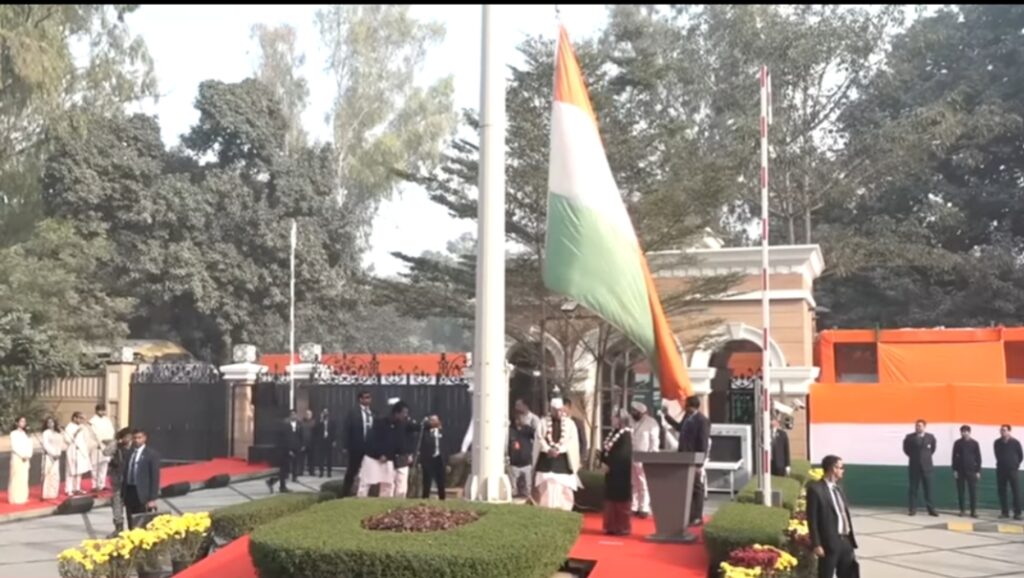
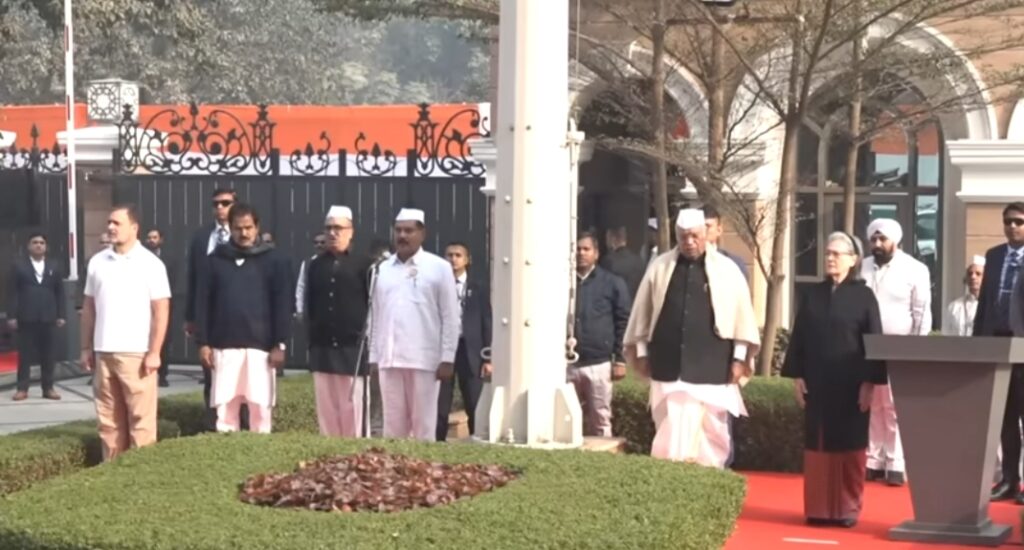
Today, as the tricolour flies high, it remains a tribute to those 72 “pioneers of freedom” who, 140 years ago, stood up in a hall in Bombay and dared to speak for a nation that was yet to be born.
~Hasnain Naqvi is a former member of the history faculty at St. Xaviers College, Mumbai

~Hasnain Naqvi is a former member of the history faculty at St. Xavier’s College, Mumbai