

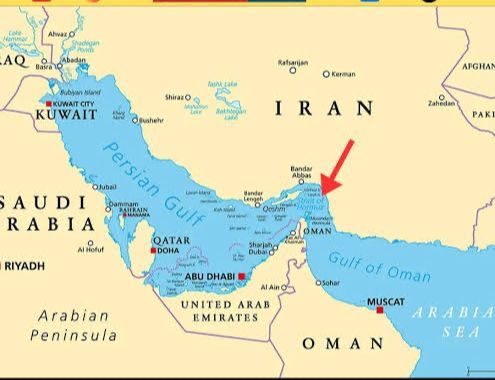
The events of February 28, 2026, will likely be recorded as a watershed moment in Indian diplomacy—not for what was said, but for what was not. As news broke of a joint United States–Israel strike in Tehran resulting in the assassination of Iran’s Supreme Leader, Ali Khamenei, and the tragic deaths of civilians, including more than 165 schoolgirls at the “Shajareh Tayyebeh” (The Good Tree) school in the city of Minab in southern Iran, the global community reacted with a mixture of condemnation and formal condolence. From Moscow to Islamabad, and even in a measured capacity from Washington, statements were issued. Yet, from New Delhi, there was a deafening, strategic silence.
This reticence is more than a diplomatic choice; it represents a profound departure from India’s historical identity and its civilisational bond with Iran. For a nation that frequently invokes its Vishwa Mitra (friend of the world) status and its ancient heritage, the current “moral hesitation” signals a troubling pivot from strategic autonomy toward a perceived kowtowing to external pressures.
A Bond Forged in Antiquity
To understand the weight of this silence, one must look beyond the immediate geopolitics to the foundational DNA of Indian identity. The connection between India and Iran is not merely political; it is visceral. The very word “Hindu” is a Persian gift, derived from the Old Persian pronunciation of the Sanskrit Sindhu. Similarly, “Iran” finds its roots in the Middle Persian Ērān, or the “Land of the Aryans,” sharing a common etymological and ancestral lineage with the Vedic peoples of the subcontinent.
This is a relationship that survived the rise and fall of empires. From the Achaemenid satrapies in Sindh and Punjab to the Mughal era, where Persian served as the language of high culture, administration, and poetry, the two regions have functioned as a single cultural ecosystem. Our everyday vocabulary—words like rang, sabzi, and kitaab—are linguistic echoes of this intimacy. When we look at the Taj Mahal, we see a Persian soul in an Indian body.
Furthermore, Iran has long been a sanctuary and a source of spiritual enrichment for India. It gave refuge to the Zoroastrian community, who became the integral Parsi thread in India’s social fabric. Today, gurdwaras in Tehran and Hindu temples in Bandar Abbas stand as quiet sentinels of a shared history that New Delhi now seems hesitant to acknowledge.
The Rise of the Opposition and the Failure of Diplomacy
In the vacuum left by the government’s inaction, the Indian National Congress (INC) has stepped forward to reclaim the “spine” of Indian foreign policy. By unequivocally condemning the assassination and asserting that no external power has the right to engineer regime change in a sovereign nation, the opposition has aligned itself with the traditional principles of the Non-Aligned Movement—principles that once defined India’s global leadership.
The contrast is stark. While Prime Minister Modi held “vague” calls with UAE leadership and met with Israeli Prime Minister Benjamin Netanyahu just twenty-four hours prior to the strike, the lack of a formal condolence to the Iranian people feels like a betrayal of a historic ally. Iran has been more than a friend; it has been a strategic pillar, providing energy security and the vital gateway of the Chabahar port to Central Asia. By failing to balance these contemporary alliances with historical loyalties, the current administration risks isolating India within the Global South.
The Erosion of Strategic Autonomy
The current trajectory suggests that short-term geopolitical calculations are being allowed to eclipse millennia of shared history. Under the leadership of Nehru, Indira Gandhi, and even Vajpayee, India navigated similar crises with a “historical conscience.” These leaders understood that while strategic partnerships with the West and Israel are essential for modern defense and technology, they must not come at the cost of abandoning regional principles.
Today’s policy of “cautious silence” is interpreted by many—both domestically and internationally—as a sign of weakness. If India aspires to be a genuine global power, it cannot afford to be seen as a subservient actor in the Middle East’s theatre of conflict. A superpower is defined by its ability to speak truth to power, especially when the sovereignty of a civilisational peer is at stake.
A Test of Historical Conscience
The relationship between India and Iran transcends the lifespan of modern nation-states. It is a dialogue that has lasted for five thousand years, surviving wars, migrations, and colonial interventions. However, the events of February 2026 suggest that this dialogue is being muted by the roar of 21st-century military hardware and shifting loyalties.
New Delhi’s muted response to the assassination of an Iranian head of state is not just a diplomatic “falter”; it is a test of historical conscience. In our rush to embrace new allies, we must ask ourselves what remains of our credibility if we abandon those who have stood by us through thick and thin.
Strategic autonomy is not just a policy of “non-alignment”; it is a policy of self-respect. If we allow civilisational memory to be erased by the immediate demands of geopolitics, we lose the very essence of what makes India a unique and independent leader on the world stage. It is time for the government to remember that while alliances are made in the war room, friendships are forged in history. To remain silent now is to forfeit our voice in the future.
~Hasnain Naqvi is a former member of the history faculty at St. Xavier’s College, Mumbai

~Hasnain Naqvi is a former member of the history faculty at St. Xavier’s College, Mumbai

