

The narrow streets of Jerusalem have long been the world’s most contested real estate, but today, the friction radiating from the Holy City feels different. It is no longer just about borders or sovereignty; it is about the collision of ancient prophecy and modern geopolitics. To understand the current volatility of the Middle East, one must look beyond the daily news cycle and into the ideological heart of the Zionist movement—a movement that began in the 19th-century salons of Europe and now finds itself at the centre of a regional transformation.
The Vision of “Greater Israel” and the 1967 Catalyst
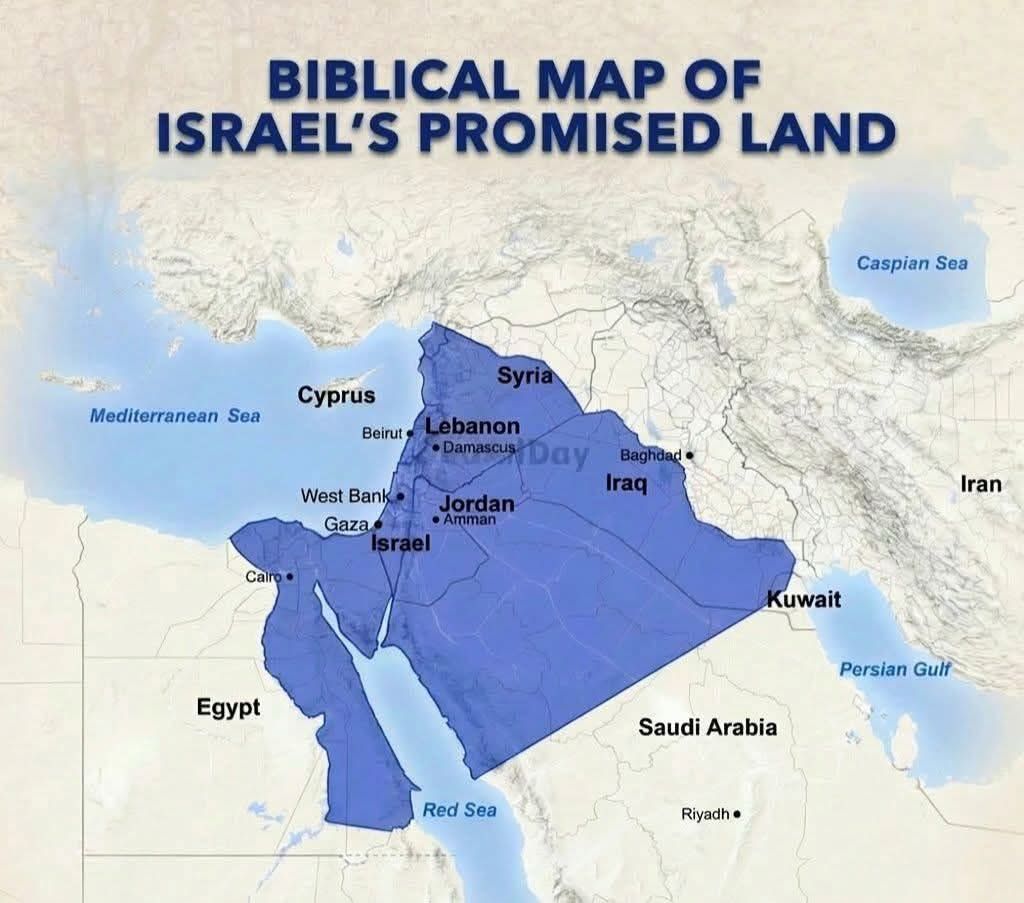
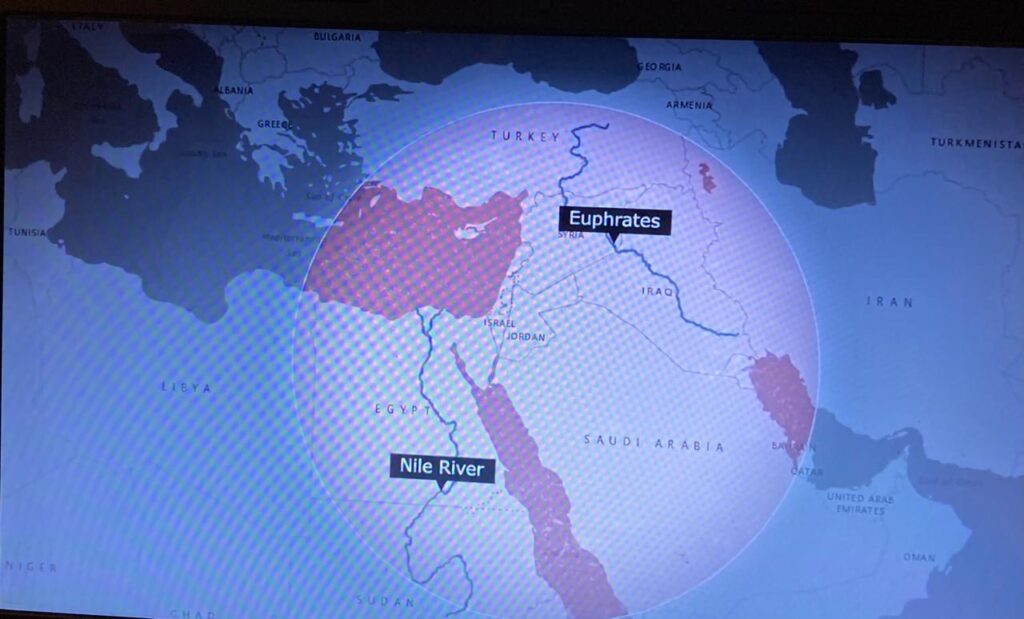
The concept of Eretz Yisrael Hashlema—Greater Israel—is a term that evokes both deep religious yearning and intense political anxiety. Geographically, its definitions vary depending on the interpreter’s ideological lens. In its most expansive, biblical interpretation, proponents point to verses in Genesis 15:18, which describe a covenantal land grant: “From the river of Egypt to the great river, the Euphrates.” This vast territory would theoretically encompass parts of modern-day Egypt, Jordan, Syria, Lebanon, and Iraq. However, in modern political discourse, “Greater Israel” usually refers to the entirety of Mandatory Palestine—the land between the Jordan River and the Mediterranean Sea, including the West Bank (Judea and Samaria) and Gaza. While the mainstream Israeli government has historically navigated partition plans, the ideological right-wing views the retention of these territories as a non-negotiable historical and religious necessity.
This ideological shift toward “Greater Israel” found its ultimate catalyst in the 1967 Six-Day War. Before this conflict, the Zionist movement was largely focused on the survival of a state within the 1949 Armistice lines. However, the lightning-fast capture of East Jerusalem, the West Bank, Gaza, and the Golan Heights transformed the Israeli psyche overnight. For the secular establishment, it was a strategic masterstroke; for the religious-nationalist wing, it was nothing short of divine intervention. The “miraculous” reunification of Jerusalem and the return to biblical sites like Hebron and Shechem (Nablus) breathed life into the dormant movement, shifting the focus from mere statehood to territorial restoration. This victory emboldened the Gush Emunim (Bloc of the Faithful) movement, which argued that settling the newly acquired land was a religious obligation that superseded secular political compromise. By integrating these territories into the national consciousness, the 1967 war effectively blurred the “Green Line,” making the prospect of a Palestinian state increasingly incompatible with the vision of a unified, biblical homeland.
Prophecy, Al-Aqsa, and the Nature of the Conflict
Central to the eschatological vision of certain Jewish groups is the Third Temple. According to Jewish tradition, the first two Temples—the centers of Israelite worship—were destroyed by the Babylonians and Romans, respectively. Prophecy suggests that a Third Temple will be rebuilt on the Temple Mount during the Messianic age. For most of the last two millennia, this remained a distant, spiritual hope. However, in recent decades, organizations like the Temple Institute have begun physical preparations, creating ritual vessels and garments according to biblical specifications. The restoration of the Temple is not merely a construction project; for believers, it represents the restoration of divine presence in the world and the ultimate fulfillment of the Zionist return to the land.
This brings us to why the Al-Aqsa Mosque is the undisputed epicentre of the Jewish-Muslim conflict. The mosque sits atop the Temple Mount (Haram al-Sharif), the very site where the Third Temple is envisioned to stand. For Muslims, Al-Aqsa is the third holiest site in Islam, the place where the Prophet Muhammad is believed to have ascended to heaven during the Night Journey. For Jews, the Mount is the holiest site in Judaism, the location of the ancient Holy of Holies. Because these two sacred claims occupy the exact same physical footprint, any perceived change to the “status quo”—the delicate set of rules governing worship and access—is viewed by the Muslim world as an existential threat to Al-Aqsa, and by Jewish activists as a denial of their fundamental rights to pray at their holiest site.
While the conflict is often analyzed through the lens of secular nationalism, the religious dimension is increasingly impossible to ignore. For decades, the conflict was framed as a dispute between two national movements (Zionism vs. Palestinian Nationalism) over the same piece of land. Today, however, the rhetoric on both sides has taken a “sacralized” turn. When political goals are framed as divine mandates, compromise becomes viewed as apostasy. While the core issues—land, water, and security—are material, the motivation for many combatants is rooted in a belief that they are actors in a divinely ordained drama. The struggle is no longer just over where a border sits, but over whose God is honoured on the mountain.
Modern Strategy and the Shadow of Regional War
Israel’s preparation for the long-term realization of these ideological goals is not happening through a single master plan, but through a series of incremental, systemic steps. Settlement expansion continues to create “facts on the ground” that make a two-state solution geographically difficult, while legislative shifts, such as the 2018 Nation-State Law, reinforce the Jewish character of the state. Furthermore, the growing influence of National Religious education ensures that the connection between modern Zionism and biblical prophecy is taught as a unified historical arc to future generations.
In this context, the ongoing confrontation with Iran is often viewed through the prism of security—stopping a nuclear threat. However, some analysts argue it fits into the broader “Greater Israel” framework by neutralizing the only regional power capable of challenging Israeli hegemony. While the Israeli government frames the conflict with Iran as a defensive necessity against the “Axis of Resistance,” regional neighbors often fear that the destabilization of proxies like Hezbollah or Hamas is intended to clear the path for undisputed Israeli dominance across the Levant. Whether this is an intentional project or a strategic byproduct of security needs remains a point of fierce debate in international relations.
The Legacy of the Visionary: Theodor Herzl
To understand where Israel is going, we must remember where it began. Theodor Herzl (1860–1904), an Austro-Hungarian journalist, did not start with a religious mandate. Moved by the rampant antisemitism of the Dreyfus Affair, Herzl concluded in his 1896 pamphlet Der Judenstaat (The Jewish State) that Jews would never be safe until they had a land of their own. Herzl was a pragmatist; he organized the first Zionist Congress in Basel in 1897, transforming a scattered dream into a disciplined political movement. He is commonly known as the “Visionary of the State” (Chozeh HaMedinah). While Herzl’s original vision was largely secular and political—a refuge for a persecuted people—the movement he founded has since married his political machinery with ancient religious longing.
The Zionist movement stands at a crossroads. The secular, democratic ideals of its European founders are increasingly in tension with the messianic and territorial aspirations of its religious wings. As the world watches the shifting borders and escalating tensions in the Middle East, it is clear that the “Greater Israel” debate is no longer confined to theology books—it is the pulse of the region’s geopolitical future.

~Hasnain Naqvi is a former member of the history faculty at St. Xavier’s College, Mumbai

