

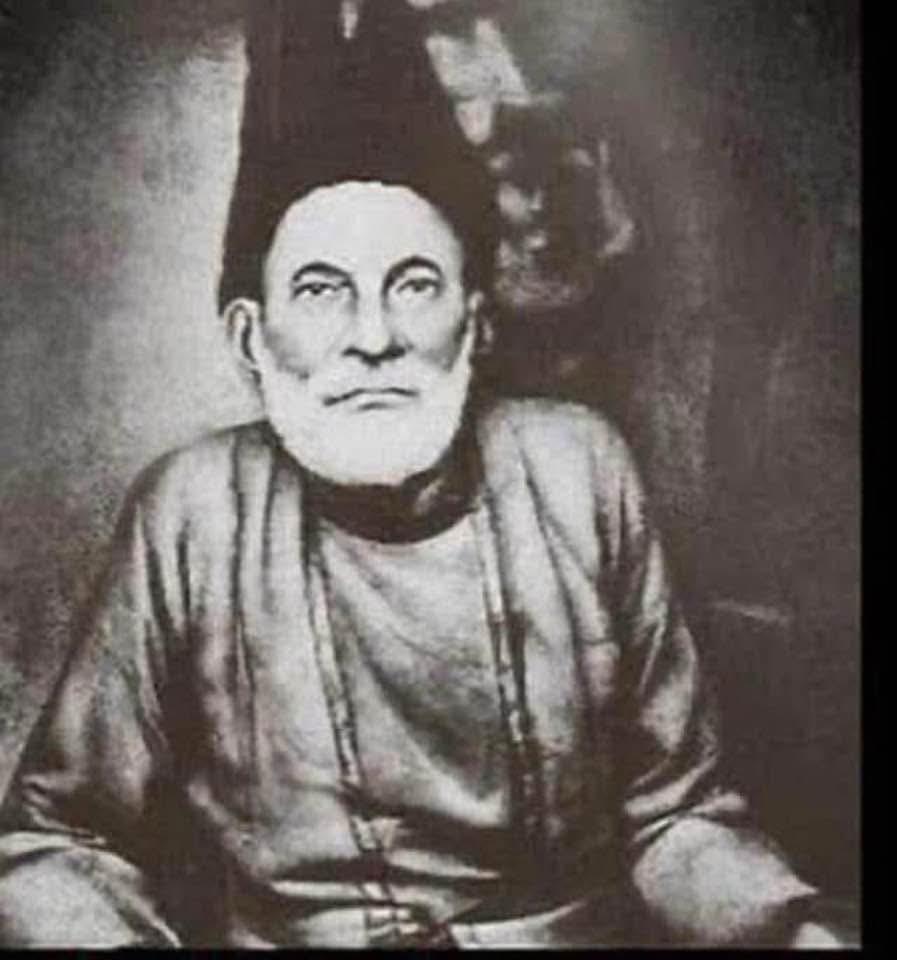
February 15 marked the 157th death anniversary of Mirza Asadullah Khan Ghalib (1797–1869), the crowning jewel of Urdu and Persian literature. A nobleman of the fading Mughal court and a witness to the seismic shifts of 1857, Ghalib was more than a poet; he was a philosopher of the human condition whose relevance has only sharpened with time.
While his contemporaries often leaned toward the accessible, Ghalib’s verses were intricate labyrinths of thought. He famously took pride in his singular voice:
*Hain aur bhi duniya mein sukhan-war bahut achhe*
*Kehte hain ki Ghalib ka hai andaz-e-bayaan aur*
(There are many excellent poets in the world,
but they say Ghalib’s style of expression is something else entirely.)
*Har ek baat pe kehte ho tum ki too kya hai*
(On every matter you ask me, “What are you?”)
Ghalib’s life was a study in contrasts. Born in Agra and later settling in Delhi’s Ballimaran, he served as the poetic mentor to the last Mughal Emperor, Bahadur Shah Zafar. Yet, despite his proximity to royalty and his titles of Dabir-ul-Mulk and Najm-ud-Daula, he was perpetually haunted by financial instability. He possessed a “combustible combination” of expensive tastes—including a legendary fondness for French wine—and a meager income.
His wit, however, remained unscathed by his poverty. He was a non-conformist who openly mocked the hypocrisy of the orthodox. When questioned about his lifestyle, he famously retorted that a true poet must experience the world’s tribulations, from the inside of a jail to the sting of a lover’s slipper.
Dil-e-nadaan tujhe hua kya hai?
(O crazy heart, what has happened to you?)
The depth of Ghalib’s poetry lies in its ability to capture the duality of existence—the pain that becomes its own remedy and the desires that are never-ending. He wrote:
*Hazaaron khwahishein aisi ke har khwahish pe dum nikle*
*Bahut nikle mere armaan lekin phir bhi kam nikle*
(Thousands of desires, each so strong they take one’s breath away; many were fulfilled, yet they feel so few.)
*Ranj se khugar hua insan to mit jata hai ranj*
*Mushkilen mujh par padin itni ke aasan ho gayin*
(When one becomes accustomed to sorrow, sorrow vanishes; so many hardships fell upon me that they became easy to bear.)
Gooya dabistaan khul gaya
(As if a school of thought has opened)
Beyond the ghazal, Ghalib revolutionized Urdu prose through his letters. He abandoned the flowery, artificial style of his era for a conversational tone that “turned correspondence into a conversation.” His letters serve as a poignant historical record of Delhi’s devastation after the 1857 Revolt. He mourned his beloved city, writing that Delhi was no longer a city but a desert, a camp where the vibrant culture of the fort and the Yamuna had vanished.
Poochhte hain woh ki ‘Ghalib’ kaun hai
(They ask, “Who is Ghalib?”)
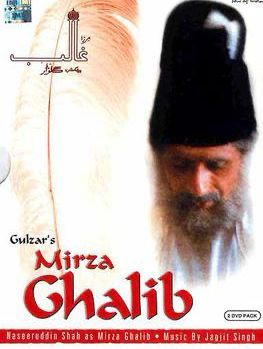
Today, Ghalib is a global cultural icon, his verses woven into the fabric of the Hindustani diaspora. From Sohrab Modi’s 1950s biopic starring Bharat Bhushan to Gulzar’s definitive 1980s television series featuring Naseeruddin Shah and the soulful compositions of Jagjit Singh, Ghalib has been immortalized for every generation.
157 years after his death, Mirza Ghalib remains the “brightest beacon” of Urdu and Persian literature, a poet who looked at the Divine, the beloved, and the self with equal parts skepticism and devotion. Perhaps his own epitaph is best found in his most humble yet haunting realization:
*Na tha kuchh toh Khuda tha, kuchh na hota toh Khuda hota*
*Duboyaa mujh ko hone ne, na hota main toh kya hota!*
(When nothing was, God was; had nothing been, God would be. My own existence has been my undoing; had I not been, what would it have mattered?)
~Hasnain Naqvi is a former member of the history faculty at St. Xavier’s College, Mumbai

~Hasnain Naqvi is a former member of the history faculty at St. Xavier’s College, Mumbai