

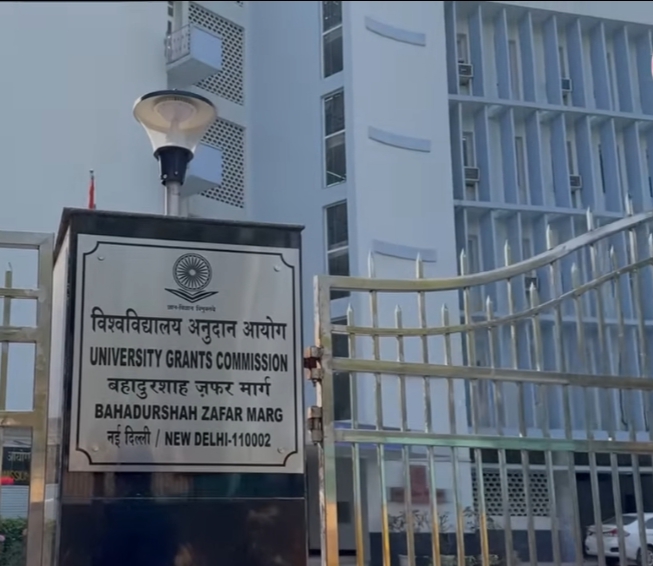
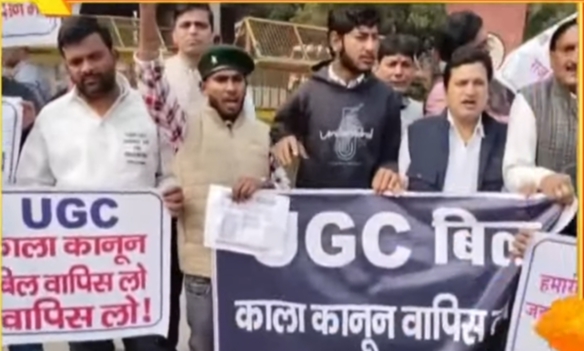
The recent intervention by the Supreme Court to stay the UGC (Promotion of Equity in Higher Education Institutions) Regulations, 2026, has pulled back the curtain on what many seasoned observers are calling a masterclass in political performance. While the Centre framed these regulations as a long-overdue panacea for campus bias, the swift judicial halt suggests that the script was flawed from the start. What we are witnessing is not a breakthrough in civil rights, but a well-orchestrated drama where the optics of “equity” are prioritized over the agonizing reality of institutional exclusion.
A Distractionary Ploy with an Invisible Aim
There is a pervasive sense in the capital that the 2026 Regulations were a distractionary ploy, a shiny object dangled to divert public attention from more pressing academic crises—be it the staggering unemployment rates among postgraduates or the shrinking autonomy of state universities.
Yet, to what avail this diversion was staged remains a mystery. If the goal was to consolidate a progressive vote bank, the clumsiness of the draft has only alienated stakeholders. If the intent was to provoke a debate on “merit vs. equity,” it has succeeded only in creating a legal vacuum. The Centre’s insistence on pushing a half-baked mandate suggests a strategy of “performative governance”: the act of announcing a radical change is treated as more important than the actual implementation of it.
The Paradox of Protest and the Judicial Pause
The public reaction to the regulations has been a study in the surreal. To several onlookers, the massive protests by certain student factions make no sense; they are decrying a framework that, on paper, simply asks for fairness. Simultaneously, the Supreme Court’s stay—though legally grounded in the “procedural haste” of the Centre—makes even less sense to those who witness the daily humiliation of marginalized students.
This deadlock has created a peculiar irony: the very groups the law was supposed to protect are left without a safety net, while those who opposed it are emboldened by a judicial stay that was likely prompted by the government’s own legislative incompetence. In the crossfire of these “nonsensical” developments, the student body remains more polarized than ever.
Beyond the ‘Committee Raj’: Why Administrators are in Dread
One cannot blame Vice-Chancellors and principals for viewing these regulations with a sense of impending doom. The mandate to establish Equal Opportunity Centres (EOCs) and various “Equity Squads” feels less like a social reform and more like the birth of a new “Committee Raj.”
Discrimination will not stop by forming one more committee. To think that a bureaucratic office can dismantle centuries of social hierarchy is a naive, if not cynical, assumption. For university heads, these provisions are impossible to administer. They turn educators into adjudicators and campus spaces into zones of constant litigation. The dread is real: VCs now face the impossible task of policing human behavior through a labyrinth of vague rules that offer no clear definitions of what constitutes a “violation.”
The Rot Beneath: The Extent of the Crisis
To understand why these regulations failed, one must look at the extent and forms of discrimination that actually plague Indian higher education—realities the 2026 draft barely scratched.
*Linguistic Elitism*: Discrimination often begins at the tongue. Students from vernacular backgrounds are frequently sidelined in seminars and laboratories, facing a “soft exclusion” that no committee can easily track.
*The ‘Merit’ Weapon*: “Merit” is frequently used as a gatekeeping tool. Marginalized students often face microaggressions in the form of subtle remarks about their “entry route,” creating a psychological burden that leads to high dropout rates.
*Institutionalised Isolation*: From the segregation of hostel mess tables to the exclusion from informal research networks and study groups, discrimination is a ghost that haunts the hallways.
*Faculty Gatekeeping*: The lack of representation in faculty and selection committees ensures that the bias is top-down, making it nearly impossible for a student to seek redress from the very system that excludes them.
The Path Forward: From Drama to Dialogue
What is needed is not a well-timed notification or a dramatic court battle, but a fundamental addressal of these systemic rot points. The outsized protests and the revised regulations are two sides of the same coin: a refusal to have an honest conversation about how power is distributed in our universities.
Until the Centre moves beyond “orchestrated drama” and begins the hard, quiet work of cultural sensitization and structural reform, equity will remain a mirage on the horizon of Indian academia.
~Hasnain Naqvi is a former member of the history faculty at St. Xavier’s College, Mumbai

~Hasnain Naqvi is a former member of the history faculty at St. Xavier’s College, Mumbai