



In modern warfare, victory is often assumed to belong to the side with superior technology, air power, and intelligence dominance. Yet the ongoing conflict involving Iran, the United States, and Israel has challenged that assumption. At the centre of this strategic shift lies Iran’s so-called “Mosaic” security doctrine — a decentralised military strategy designed not to win wars quickly, but to ensure that Iran cannot be defeated quickly.
The doctrine has reshaped the battlefield by turning what might have been a short, high-intensity war into a prolonged conflict of attrition, complicating the military objectives of both the United States and Israel and altering the strategic calculations of the region.
The Logic Behind the Mosaic Doctrine
Iran’s Mosaic doctrine is fundamentally a strategy of survival under overwhelming military pressure. Iranian military planners long assumed that in any major war, especially against the United States or Israel, the country’s central command structure, air defences, leadership hierarchy, and communication networks would be targeted in the opening hours of the conflict. Therefore, instead of relying on a traditional centralised command structure, Iran developed a decentralised model in which military authority is distributed across multiple regional commands capable of operating independently.
The doctrine is largely implemented through the structure of the Islamic Revolutionary Guard Corps, or Islamic Revolutionary Guard Corps (IRGC), which has divided the country into numerous provincial military zones. Each of these units is trained and authorised to operate autonomously if central command is destroyed or communications are severed. In effect, the country’s defence system is broken into “tiles” of a mosaic — each tile capable of functioning independently while still contributing to the broader war effort.
This decentralisation ensures that even if Tehran is cut off, bombed, or leadership figures are eliminated, military operations can continue without interruption. In strategic terms, the doctrine is designed to defeat the enemy’s opening strategy — the decapitation strike.
Decapitation Without Collapse
Modern American and Israeli military doctrine often relies on what is known as “decapitation strategy” — the elimination of leadership, command structures, and key military infrastructure in the early phase of war to cause rapid systemic collapse. This approach was used in Iraq in 2003 and has been used in targeted assassinations and leadership strikes across the Middle East.
However, Iran’s decentralised system is specifically designed to withstand such attacks. Even if senior commanders are killed, a layered succession structure ensures immediate replacement. Iranian planners reportedly developed deep leadership hierarchies in which multiple successors are pre-designated for key positions, sometimes referred to informally as a multi-layer or “successor chain” system.
As a result, leadership losses do not necessarily translate into operational paralysis. Military operations continue through provincial commands with pre-authorised operational plans.
This has been one of the defining features of the current conflict: strikes on leadership or infrastructure have not resulted in a collapse of Iranian military response.
Asymmetric Warfare and Cost Imposition
Another core component of the Mosaic doctrine is asymmetric warfare — not matching the enemy weapon for weapon, but imposing costs in a way that makes war economically and politically unsustainable for the adversary.
Iran has invested heavily in relatively inexpensive drones and missiles, particularly systems like the Shahed drone series. These drones cost tens of thousands of dollars, while intercepting them using advanced missile defence systems can cost hundreds of thousands or even millions of dollars per interception. This creates a cost imbalance where the defending side spends far more money than the attacking side.
By launching large numbers of drones and missiles in waves, Iran does not need all of them to penetrate air defences. Even if most are intercepted, the economic cost of interception itself becomes part of the strategy. Over time, this becomes a war of economic attrition rather than purely military confrontation.
This strategy is not designed for dramatic battlefield victories. Instead, it is designed to exhaust the enemy — financially, politically, and militarily.
Decentralisation in Practice During the War
The most significant impact of the Mosaic doctrine has been visible in how Iranian military responses have continued despite heavy strikes on infrastructure and command facilities. Provincial units and regional commanders operate based on pre-planned retaliation frameworks rather than waiting for real-time instructions from central command.
This means that military responses can continue even when communication lines are disrupted. Missile launches, drone attacks, cyber operations, and maritime disruption tactics can be initiated at regional levels based on strategic guidelines already approved before the conflict.
In military terms, this creates what analysts call a “headless but functioning system” — a structure that does not collapse even when its central leadership is targeted.
This decentralised warfare model makes it extremely difficult for technologically superior militaries to achieve a decisive victory quickly.
Regional Forward Defence Network
The Mosaic doctrine is also linked to Iran’s broader regional strategy often described as “forward defence.” Instead of fighting wars only on Iranian territory, Iran has built alliances and relationships with regional non-state and allied forces across the Middle East.
Groups such as Hezbollah in Lebanon, the Houthis in Yemen, and various Iraqi militia groups aligned with the Popular Mobilization Forces form part of a broader network that can exert pressure on Israel, U.S. bases, and maritime routes across the region.
This network expands the battlefield geographically, meaning any war with Iran is not confined to Iranian territory. Instead, it becomes a regional conflict affecting shipping lanes, oil infrastructure, and military bases across West Asia.
From a strategic perspective, this makes war far more complicated for Iran’s adversaries, who must defend multiple fronts simultaneously.
Maritime Strategy and Energy Leverage
Another important element of Iran’s doctrine is anti-access and area denial strategy in the Persian Gulf, particularly around the Strait of Hormuz — one of the world’s most important oil shipping routes.
Iran has developed naval tactics involving fast attack boats, sea mines, anti-ship missiles, and drones designed not necessarily to dominate the sea, but to make shipping risky and expensive. Even the threat of disruption in the Strait of Hormuz can cause global oil prices to rise, which creates international pressure to end the conflict.
This turns global energy markets into a strategic lever.
In effect, Iran cannot match the United States Navy in open sea warfare, but it does not need to. It only needs to make the cost of keeping the sea lanes open extremely high.
Denying Victory Rather Than Seeking Victory
The most important aspect of the Mosaic doctrine is that it is not designed to win wars in the conventional sense. It is designed to deny victory to the enemy.
Military strategists often note that weaker powers rarely defeat stronger powers through direct confrontation. Instead, they succeed by making wars too long, too expensive, and politically unpopular.
The Mosaic doctrine essentially transforms war into a prolonged conflict of attrition where time becomes Iran’s greatest weapon. Democracies and coalition governments often face domestic political pressure during long wars, rising military costs, and economic disruptions. By prolonging conflict and raising costs, Iran aims to create political pressure on its adversaries to end the war without achieving decisive victory.
A Strategy Built on Survival
Ultimately, the Mosaic doctrine reflects Iran’s strategic mindset shaped by decades of sanctions, isolation, and the experience of the Iran-Iraq War in the 1980s. Iranian military planners concluded long ago that they could not defeat major powers through conventional warfare. Instead, they developed a system designed to ensure regime survival, maintain military capability under attack, and impose costs on adversaries over time.
In strategic terms, the doctrine shifts the objective of war from battlefield victory to strategic endurance.
This is why the doctrine has attracted global attention. It represents a different model of warfare — decentralised, networked, asymmetric, and endurance-based rather than decisive-battle based.
The Mosaic doctrine has demonstrated that in modern warfare, resilience can be more important than firepower. By decentralising command, investing in asymmetric weapons, building regional alliances, and preparing for long wars of attrition, Iran has created a military strategy designed not to dominate the battlefield but to make domination impossible.
The doctrine does not promise quick victories or dramatic battlefield successes. Instead, it aims for something far more modest but strategically powerful: survival, endurance, and the denial of decisive victory to stronger adversaries.
In the evolving nature of 21st-century warfare, that may prove to be one of the most effective strategies of all.
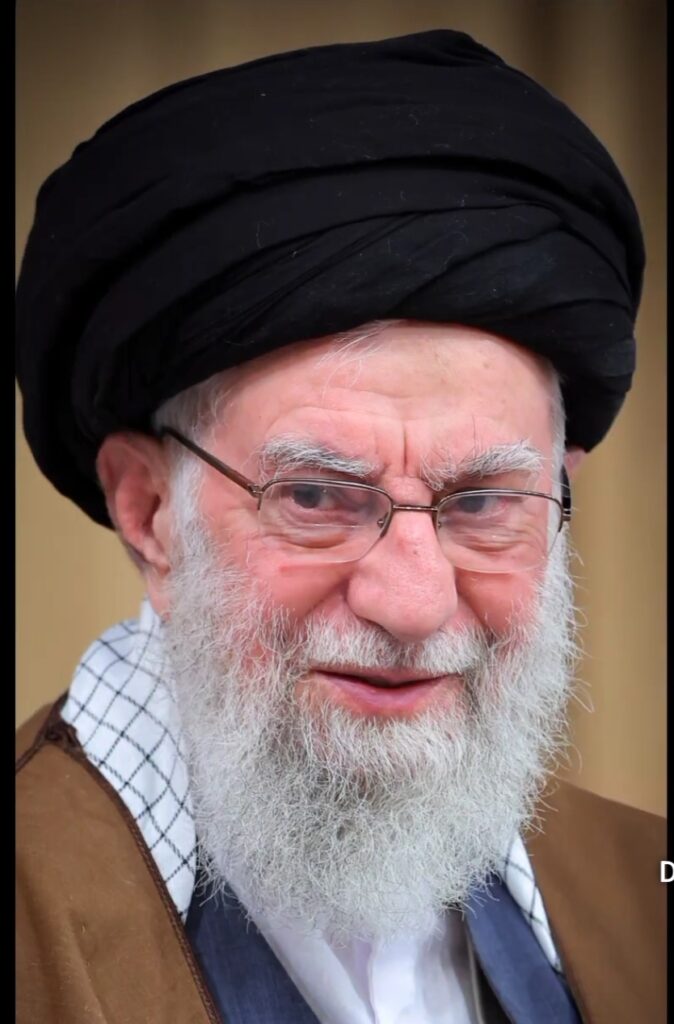
Picture credit social media

~Hasnain Naqvi is a former member of the history faculty at St. Xavier’s College, Mumbai

