

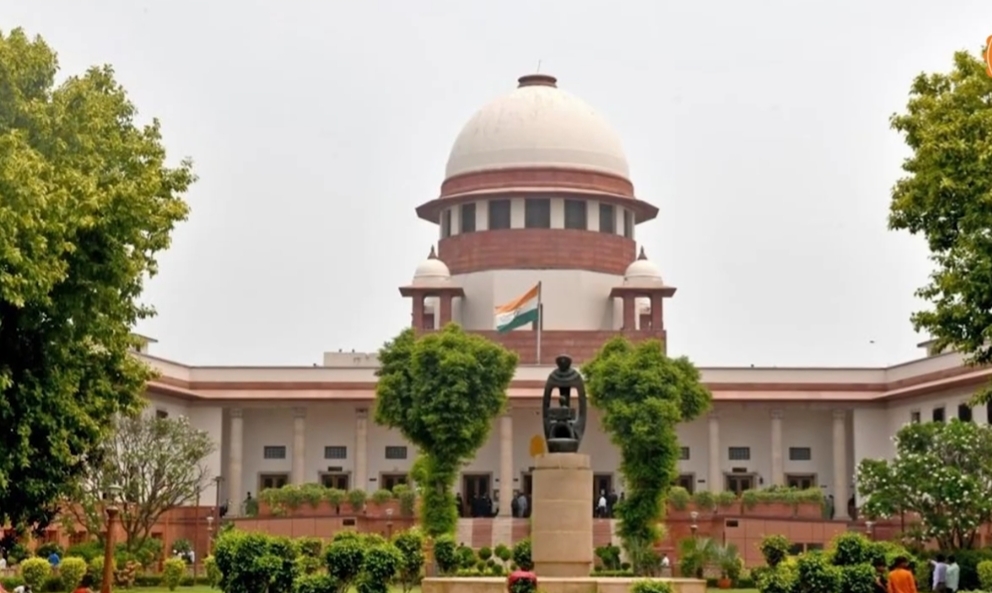
In India’s fractious democracy, hate speech has morphed from fringe rhetoric into mainstream political currency, often amplified by those in power. Leaders from the Bharatiya Janata Party (BJP) and affiliated right-wing groups like the Rashtriya Swayamsevak Sangh (RSS) and Vishwa Hindu Parishad (VHP) have repeatedly crossed lines, targeting minorities—particularly Muslims—with inflammatory language that stokes division. This trend raises profound questions about accountability, especially as the Supreme Court, once a bulwark against such toxins, appears to be tempering its interventions.
A Pattern of Provocative Rhetoric from Top Leaders
Consider the litany of recent provocations. Uttar Pradesh Chief Minister Yogi Adityanath, a saffron-robed monk-turned-politician, has a long record of incendiary remarks. In a 2014 video, he declared, “If [Muslims] take one Hindu girl, we’ll take 100 Muslim girls,” escalating fears of communal retribution. He has advocated for India to become a Hindu state, promoted conspiracy theories like ‘love jihad’—alleging Muslim men seduce Hindu women for conversion—and suggested regulating Muslim population growth to curb riots, implying it fuels unrest. In 2015, at a VHP event in Varanasi, he vowed, “If given a chance, we will install statues of Goddess Gauri, Ganesh and Nandi in every mosque.” More recently, during election campaigns, Adityanath has accused Muslims of supporting Pakistan, consuming beef to insult Hindus, and plotting to impose sharia law, while brandishing bulldozers at rallies as symbols of forceful action against them—earning him the moniker “Bulldozer Baba.” Reports document over 73 such instances from him alone, blending Hindutva supremacy with threats of violence.
Assam Chief Minister Himanta Biswa Sarma, another BJP figure, has drawn ire for statements branding Muslims as infiltrators and encroachers, culminating in a now-deleted AI-generated video shared by the party’s state unit. The clip depicted Sarma firing an automatic weapon at animated figures clearly identifiable as Muslims—wearing skull caps and beards—under captions like “point blank shot” and “no mercy.” Intended as campaign fodder ahead of elections, it was pulled amid outrage, but not before fueling accusations of genocidal incitement.
Union Home Minister Giriraj Singh has a history of venomous barbs, once suggesting that critics of Prime Minister Narendra Modi should “go to Pakistan” and labeling Muslims as a demographic threat. BJP MP Nishikant Dubey has echoed similar sentiments, defending controversial remarks while accusing opponents of bias. Former BJP MP Ramesh Bidhuri’s 2023 parliamentary outburst remains infamous: he hurled slurs like “mullah terrorist” and “pimp” at Muslim colleague Danish Ali during a Lok Sabha debate on the Chandrayaan mission, an episode that exposed the normalization of bigotry in the highest forums.
These are not isolated lapses. Leaders from RSS and VHP offshoots routinely peddle narratives of Hindu victimhood, portraying Muslims as invaders or threats to cultural purity. Such discourse, often laced with calls for economic boycotts or vigilante action, erodes the secular fabric enshrined in the Constitution.
The Court’s Historical Stance: From Condemnation to Directives
The Supreme Court has not been silent historically. In 2018, amid rising mob lynchings, it condemned “mobocracy” as antithetical to the rule of law, mandating nodal officers, fast-track courts, and preventive measures while urging Parliament to legislate. By 2021-2022, its tone sharpened: hate crimes were deemed intolerable, with orders for impartial action regardless of the offender’s identity, including suo motu cognizance and contempt threats for non-compliance. These rulings positioned the court as a guardian of constitutional morality.
The Enforcement Gap and Judicial Shift in 2026
Yet, enforcement has faltered. Petitions highlight systemic failures—delayed FIRs, diluted charges, and impunity for the powerful. States submitted compliance reports, noting appointments of oversight mechanisms, but incidents persist, revealing a chasm between judicial intent and executive action.
This gap widened in 2026, exemplified by the court’s handling of a writ petition against Sarma’s video and alleged hate speeches. Chief Justice of India Surya Kant, heading a three-judge bench, declined to entertain the pleas from groups including the Communist Party of India (Marxist), deeming them premature. Petitioners argued that Sarma’s influence as Assam’s “boss” would compromise local remedies, but the CJI rebuffed this, insisting on approaching the Gauhati High Court first. He cautioned against turning the apex court into a “political playground,” especially during election seasons, and emphasized judicial hierarchy over direct intervention under Article 32.
This stance marks a pivot from earlier activism. Where the court once issued sweeping directives, it now cites practicality—avoiding “unmanageable” orders that strain implementation. In another hearing on a public interest litigation targeting hate speeches by BJP leaders like Sarma, Adityanath, and Maharashtra’s Devendra Fadnavis, the bench questioned the petitioners’ selectivity: “Why only from one side?” Such queries suggest a quest for balance, but they risk equating sporadic opposition lapses with the ruling party’s systemic amplification of hate.
Institutional Constraints and Broader Implications
The judiciary’s dilemma is evident. It can pronounce principles but lacks enforcement arms, leaving compliance to politically motivated administrations. Intervening in partisan rhetoric invites charges of overreach, while restraint might signal fatigue amid relentless petitions. Media narratives have shifted too—from lauding the court’s boldness to scrutinizing its caution—mirroring a broader erosion of institutional vigour.
At its core, the issue transcends law: India boasts robust statutes like the Indian Penal Code, election codes, and court guidelines. The shortfall lies in political will. When hatred fuels electoral gains and leaders face no repercussions, democracy suffers. If the Supreme Court, the ultimate arbiter, begins viewing its role through the lens of manageability rather than moral imperative, who safeguards the marginalized?
This evolution—from interventionist zeal to measured withdrawal—signals not just judicial realism but a deeper malaise. In a nation where hate speech is wielded by those sworn to uphold unity, the court’s restraint risks emboldening division. The true crisis is cultural: without collective resolve, legal edicts remain hollow echoes in a polarized polity.
~Hasnain Naqvi is a former member of the history faculty at St. Xavier’s College, Mumbai

~Hasnain Naqvi is a former member of the history faculty at St. Xavier’s College, Mumbai