

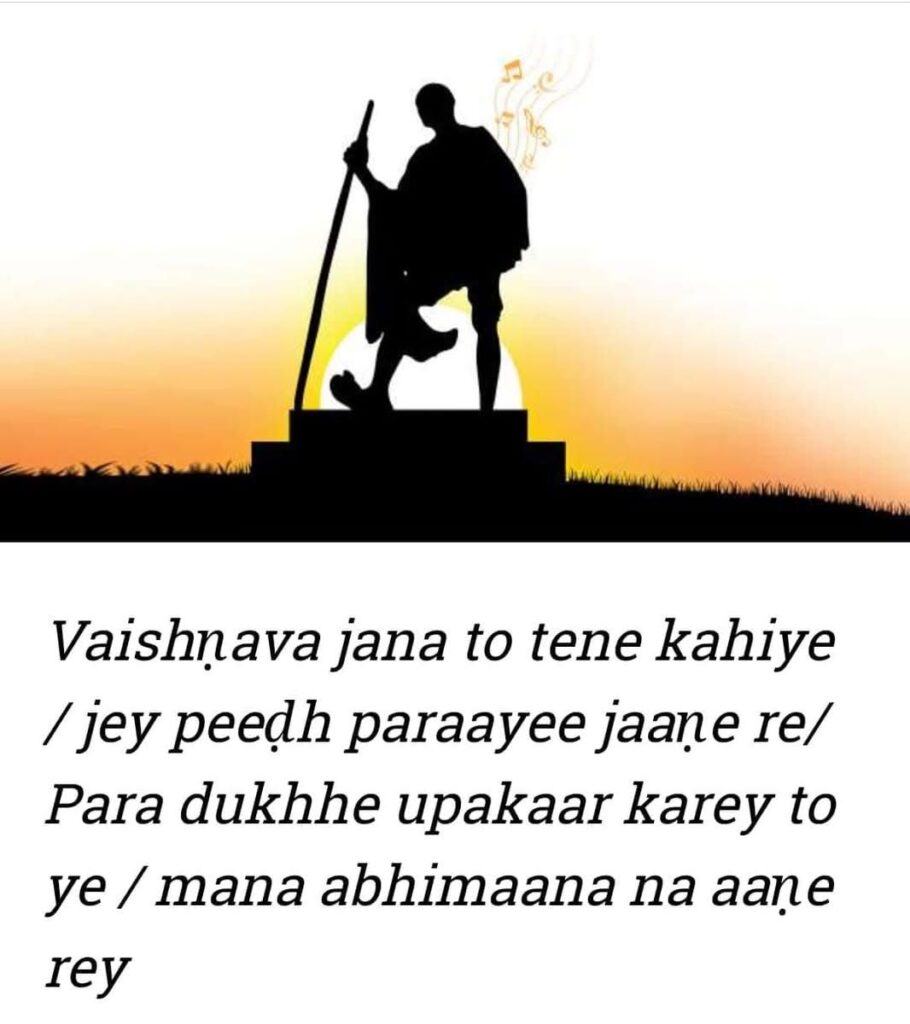

The evening of January 30, 1948, began with a prayer meeting and ended with a global trauma. As Mohandas Karamchand Gandhi—the man known to millions as the Mahatma—walked toward his prayer dais at Birla House in New Delhi, three bullets from a Beretta pistol ended his life.
The assassin, Nathuram Vinayak Godse, did not flee. He stood his ground, surrendered, and later used his trial as a platform to articulate a grievance that still echoes in the chambers of Indian political discourse.
To understand why Gandhi was killed is to understand the violent birth of two nations and the collision of two irreconcilable visions for India’s soul.
The Ideological Schism
At the heart of the assassination lay a profound disagreement over what the newly independent India should be. Gandhi, a staunch proponent of secular pluralism, envisioned a nation where Hindus and Muslims lived as equals.
His assassin, a member of the Hindu Mahasabha and a former member of the Rashtriya Swayamsevak Sangh (RSS), viewed this pluralism as a betrayal. To Godse and his co-conspirators, Gandhi’s philosophy of non-violence was “emasculating,” and his perceived “appeasement” of the Muslim minority was seen as a threat to the sovereignty of a Hindu nation.
The Immediate Catalyst: The 55 Crores
While the ideological rift had been brewing for decades, the immediate spark was the post-Partition financial settlement. Following the bloody division of the subcontinent in 1947, India had agreed to pay Pakistan 550 million rupees (55 crores) as part of the asset division.
Amidst the brewing conflict over Kashmir, the Indian government initially withheld the payment. Gandhi, fearing that such a move would lead to total war and further communal slaughter, went on a hunger strike to demand the payment be honoured. The government capitulated to Gandhi’s moral pressure. For Godse, this was the final straw—a sign that Gandhi’s influence was “anti-national” and detrimental to India’s interests.
> “I thought to myself and foresaw I shall be totally ruined, and the only thing I could expect from the people would be nothing but hatred… if I were to kill Gandhiji. But at the same time I felt that the Indian politics in the absence of Gandhiji would surely be proved practical, able to retaliate, and would be powerful with armed forces.”
> — Nathuram Godse, during his trial.
A Trial of Two Indias
The trial of Godse and his seven co-conspirators, including Narayan Apte, revealed a meticulously planned plot. Godse’s defence was not a plea for mercy but an exhaustive political manifesto. He argued that by championing the rights of Muslims and accepting the Partition—despite Gandhi’s initial vow that India would be divided “over his dead body”—the Mahatma had essentially sanctioned the vivisection of the “Motherland.”
The court eventually sentenced Godse and Apte to death. They were executed in November 1949. However, the assassination did not resolve the tension Godse sought to end; instead, it shocked a riot-torn nation into a temporary, somber peace, arguably saving India from a total descent into civil war in the months following the tragedy.
The Paradox of the Mahatma
The killing of Gandhi remains one of history’s greatest ironies. The man who dedicated his life to Ahimsa (non-violence) died a violent death. Yet, in his martyrdom, Gandhi’s vision of a secular India was cemented into the constitution of the young Republic.
Today, as India continues to navigate its identity, the three bullets fired in 1948 serve as a grim reminder of the cost of ideological extremism. Gandhi was killed not because he was a weak politician, but because his moral authority was perceived as an insurmountable obstacle to a more militant brand of nationalism.
~Hasnain Naqvi is a former member of the history faculty at St. Xavier’s College, Mumbai

~Hasnain Naqvi is a former member of the history faculty at St. Xavier’s College, Mumbai

