

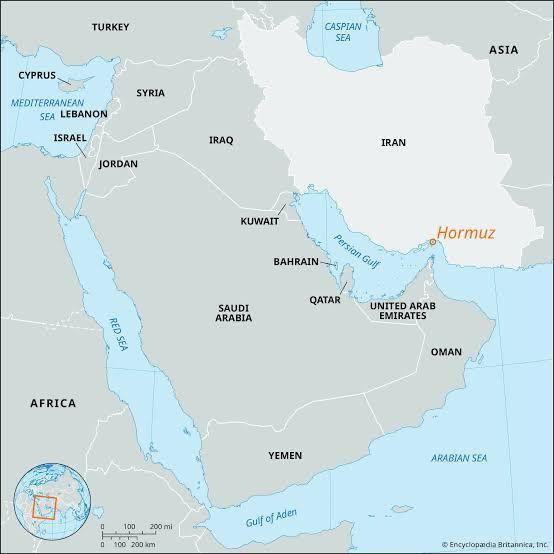
For decades, the geopolitical architecture of West Asia was built upon a singular, foundational pillar: the engineered estrangement of its inhabitants. By leveraging historical theological differences and fostering a perpetual state of insecurity, the United States, in tandem with Israel, maintained a “Divide and Rule” policy designed to ensure regional powers remained too fractured to challenge Western hegemony. This strategy relied on the assumption that religious and ethnic identity would forever supersede shared economic and security interests. However, this era of externally managed chaos is reaching its end, replaced by a “post-American” order defined by strategic autonomy and regional solidarity.
The Anatomy of a Failed Psy-Op: Beyond the Sectarian Lens
The recent flurry of reports alleging Iranian sabotage against water infrastructure in the UAE and Bahrain represents the dying gasps of a traditional Western playbook. Regional experts increasingly view these narratives not as intelligence disclosures, but as strategic psychological warfare. The objective is transparent: to reignite the embers of Shia-Sunni tension just as they are being extinguished by pragmatic diplomacy. By painting Tehran as an existential threat to its neighbors’ basic survival, Washington and Tel Aviv hoped to force the Gulf monarchies back into a defensive alliance.
Similarly, the desperate rumours painting General Esmail Qaani as an “Israeli agent” reflect a failed attempt to decapitate the morale of the “Axis of Resistance” from within. By sowing seeds of internal suspicion, Western intelligence hoped to trigger a purge or a breakdown in command. Instead, these efforts have been met with a sophisticated indifference. The Gulf monarchies, once quick to echo Washington’s alarms, have pointedly refrained from officially blaming Tehran, choosing instead to protect the fragile but burgeoning diplomatic ties that prioritize regional stability over external agendas.
The Collapse of the ‘Sectarian Card’
The most significant miscalculation in the U.S.-Israeli strategy has been the overestimation of the “sectarian card.” For years, the narrative of a “Shia Crescent” was used to frighten Sunni-majority states into the arms of Western “protectors.” This historic reconciliation between Saudi Arabia and Iran—facilitated by non-Western intermediaries—has rendered the “Divide and Rule” policy functionally obsolete. High-level military and diplomatic contacts between Riyadh and Tehran are no longer anomalies; they are the new standard. Saudi Arabia’s recent indications that its territory will not be used as a launchpad for strikes against Iran signal a revolutionary shift. The “Arab card” can no longer be played by Washington to isolate the Persians.
Internal
Resilience: The Failure of Ethnic Subversion
Parallel to international efforts, Western intelligence agencies have long sought to exploit Iran’s internal diversity. By attempting to incite ethnic divisions among Ahwazi Arabs, Kurds, and Baloch populations, the goal was to create a “fifth column” that would destabilize the Iranian state from the periphery. This strategy has faced a total systemic failure. Reports from the region indicate that Sunni populations and ethnic minorities within Iran increasingly view the current geopolitical friction not through an ethnic lens, but as a broader anti-imperialist struggle.
A major setback for Western agencies occurred when prominent Kurdish leaders in both Iraq and Iran flatly refused to act as proxies for Israeli interests. These leaders have recognized a hard truth: being a pawn in a Western-led war offers only temporary leverage and long-term ruin. Their security, they have concluded, lies in the integrity of the regional fabric, not in its dissolution.
The Evolution of Regional Power Dynamics
The transition from a landscape defined by external intervention to one of local agency can be best understood by comparing the fading frameworks of the past with the emerging realities of the present. Under the Old Order of Hegemony, security was a commodity bought from Washington, and sectarianism served as the primary driver of all political movement. In this environment, Israel acted as the regional policeman, while the constant threat of “Divide and Rule” kept neighbors in a state of mutual suspicion.
Conversely, the New Order of Solidarity sees security negotiated directly between regional capitals, driven by pragmatism and economic integration. In this new landscape, Israel finds itself strategically isolated as an “Axis of Stability” emerges. The U.S. military presence, while still physically formidable, is becoming politically hollow. Bases in the region are increasingly viewed as liabilities rather than assets, especially as host nations distance themselves from American offensive posturing.
The Axis of Resistance and the New Maritime Reality
While the U.S. and Israel find themselves in a defensive posture, the “Axis of Resistance” has demonstrated a level of strategic restraint that is arguably more unnerving to the West than an all-out offensive. Hezbollah is successfully pinning down a massive portion of the Israeli military using a cost-effective combination of high-tech drones and guided missiles. By maintaining a posture of “active defence,” they exert maximum pressure without triggering the total war that Western hawks might use to justify a broader intervention.
In the Red Sea and the Persian Gulf, Iraqi factions and Yemen’s Ansar Allah (Houthis) have effectively altered the laws of maritime transit. Their control over these vital sea routes serves as a dormant volcano. The message to the West is clear: any transgression of “red lines”—specifically an escalation against Iran—will result in the immediate disruption of the global energy supply. This is no longer a region of disparate militias; it is a coordinated front that understands the global economy’s dependence on West Asian stability.
A Future Forged in the East
The implications of this shift are profound and likely irreversible. We are moving toward a multipolar West Asia where local powers—Iran, Saudi Arabia, and Oman—have discovered that negotiation is more profitable than proxy warfare. The narrative of an inherently fractured West Asia was a convenient fiction that served external interests for a century. As the “Divide and Rule” strategy collapses, it is being replaced by a sophisticated regionalism.
The failure of U.S.-Israeli psychological and ethnic subversion has not only strengthened Iran’s position but has also emboldened its neighbors to seek a destiny independent of Western dictates. The era of American hegemony in West Asia is not merely ending; it is being actively replaced by a collective realization that the region’s greatest strength lies in its refusal to be divided. As the dust settles, the new map of West Asia will not be drawn in Washington or Tel Aviv, but in the meeting rooms of Riyadh, Tehran, and Muscat.

~Hasnain Naqvi is a former member of the history faculty at St. Xavier’s College, Mumbai