

Trump Administration Tells Venezuela to Expel China, Russia, Iran & Cuba Before Oil Production Can Expand
NEW DELHI, The United States, under President Donald Trump, has issued an unprecedented demand to Venezuela’s new interim government: dismantle economic and strategic ties with China, Russia, Iran and Cuba, and agree to an exclusive oil partnership with the U.S. before Caracas is allowed to expand oil production and export crude.
According to sources familiar with the matter and first reported by ABC News, the Trump administration conveyed the conditions to Interim President Delcy Rodríguez, who assumed control after U.S. military forces captured long-time leader Nicolás Maduro earlier this month. �
The reported demands represent a significant tightening of U.S. leverage over Venezuela — a nation sitting atop the world’s largest proven oil reserves. Washington insists Venezuela must “kick out China, Russia, Iran and Cuba and sever economic ties” before any further oil production is permitted. Beyond severing these historic alliances, the U.S. wants Caracas to partner exclusively with Washington on oil output and give preference to American buyers for its heavy crude.
Senior U.S. officials privately briefed lawmakers that they believe they can force compliance because Venezuelan oil tankers are currently full and the country may soon face financial distress if it is unable to sell crude. This economic pressure, they argue, gives the U.S. leverage to shape Caracas’s decisions. �
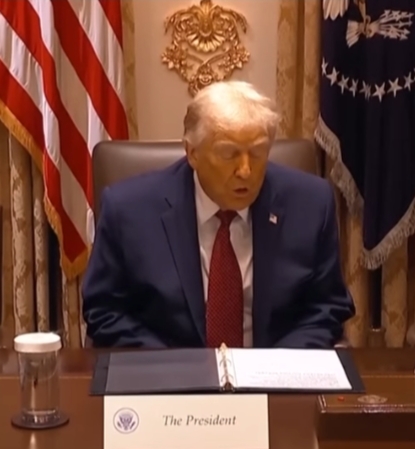
In a social media statement, President Trump wrote that Venezuela would begin transferring 30–50 million barrels of oil to the United States, to be sold at market price with proceeds “controlled” by Washington to benefit both countries — a move that could potentially redirect supplies previously destined for China and others.
A story in the mint reported that China swiftly condemned the U.S. demands as a violation of Venezuela’s sovereignty and international law. A spokesperson for the Chinese Foreign Ministry denounced them as “typical bullying,” stressing that economic cooperation agreements between Beijing and Caracas are legitimate and should be respected. �
Anadolu Ajansı
Venezuela’s interim president has publicly rejected claims that the U.S. is “in control” of the country, asserting sovereign authority and even declaring days of national mourning for those killed in recent clashes following the U.S. military operation.
A story in The Times reported that Russia has similarly criticized what it terms “neocolonial threats” against Venezuela, framing the issue as another front in the great-power competition with the U.S. and accusing Washington of undermining Venezuelan sovereignty in pursuit of energy dominance. As per the Reuters
Broader Implications
Analysts warn that the U.S. ultimatum could trigger a full geopolitical realignment in Caracas. Venezuela has relied on China and Russia for decades — not only as oil buyers, but also as financial backers and strategic allies during years of sanctions and international isolation. Severing those ties would represent one of the most dramatic shifts in Latin American politics in modern history.
Critics argue the U.S. approach, framed as an attempt to modernize Venezuela’s oil industry and stabilize the region, may instead deepen local instability and provoke wider international backlash. Proponents counter that the move is a long-overdue assertion of U.S. influence in its own hemisphere.
Picture credit social media