

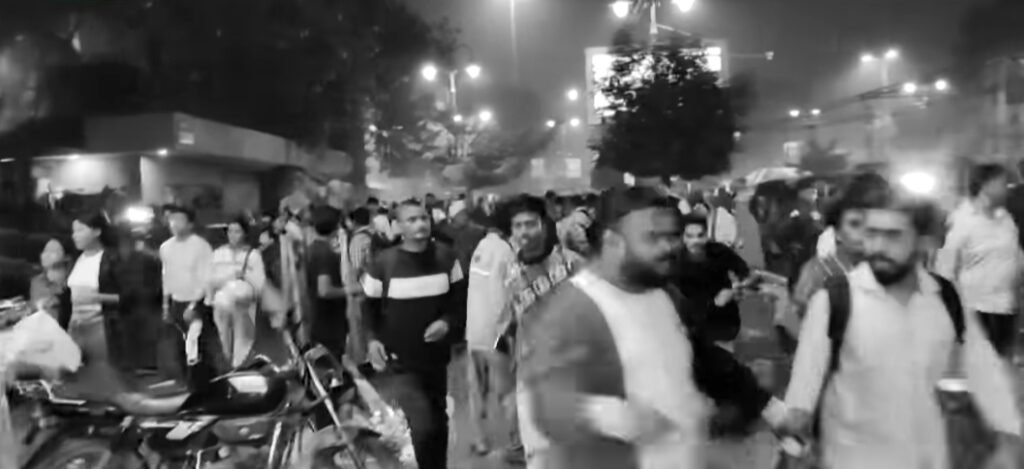
NEW DELHI: The Modi government’s reaction to the bomb blast near the Red Fort which killed 13 people in Delhi on Monday is muted – the Union cabinet met on Tuesday and passed a humdrum resolution that refrained from pointing fingers at any organisation or country – and is a far cry from the response the Prime Minister threatened soon after ‘pausing’ Operation Sindoor on May 12:
“First, If there is a terrorist attack on India, a fitting reply will be given…
“Secondly, India will not tolerate any nuclear blackmail. India will strike precisely and decisively at the terrorist hideouts developing under the cover of nuclear blackmail…
“Thirdly, we will not differentiate between the government sponsoring terrorism and the masterminds of terrorism.”
The restraint observed following the Delhi blast may be because the picture is not clear, writes Siddharth Varadarajan, editor of The Wire. He writes that though that raises the question of why Modi laid out the above, improbable template in the first place. Or it may also be because he knows how the world — and especially the United States and its President — responded to the use of force by India following Pahalgam.
The government’s silence has, of course, not stopped the usual suspects in the media from speculating about a ‘Turkish’ angle to the blast. Prompting a strong response from Ankara denouncing the “malicious disinformation campaign aimed at damaging bilateral relations between the two countries.”
The eighth person to be arrested by the Jammu and Kashmir police in connection with the ‘terror module’ they are investigating is 40-year-old Shaheen Saeed, a woman doctor working at the Al Falah University near Faridabad, Vijaita Singh reports. She cites a government source as alleging that an assault rifle was seized from Saeed’s car, that “she knew her car was being used to ferry explosives” and that she was part of an effort to “create a base for the terror group outside of the Kashmir valley”.

