

NEW DELHI,10 Jan 2026: Maharashtra’s political landscape is witnessing unprecedented realignments as the state prepares for municipal corporation elections across 29 bodies, a poll that comes four years behind schedule.
The most significant of these changes involves the coming together of estranged Thackeray cousins and tentative steps toward reconciliation between the rival Pawar factions.
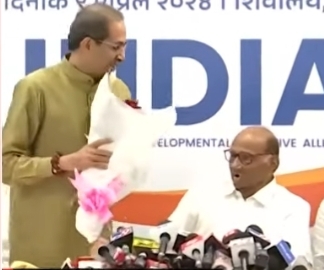
In a development that few saw coming, Uddhav Thackeray’s Shiv Sena (Uddhav Balasaheb Thackeray) has broken away from the Maha Vikas Aghadi (MVA) alliance to join hands with cousin Raj Thackeray’s Maharashtra Navnirman Sena for the elections to the Mumbai municipal corporation.
This partnership represents more than mere electoral convenience; it is a strategic attempt by both cousins to reclaim the legacy of the legendary Balasaheb Thackeray, whose towering personality once dominated Maharashtra politics.
In a development that few saw coming, Uddhav Thackeray’s Shiv Sena (Uddhav Balasaheb Thackeray) has broken away from the Maha Vikas Aghadi (MVA) alliance to join hands with cousin Raj Thackeray’s Maharashtra Navnirman Sena for the elections to the Brihanmumbai Municipal Corporation (BMC).
This partnership represents more than mere electoral convenience; it is a strategic attempt by both cousins to reclaim the legacy of the legendary Balasaheb Thackeray, whose towering personality once dominated Maharashtra politics.
The alliance is built on carefully calculated electoral arithmetic. Together, the Thackerays are wooing the Marathi Manoos, who constitute approximately 40% of Mumbai’s population, while also banking on support from the Muslim community, which makes up about 20%.
The reasoning behind this strategy is straightforward: the united Thackeray front believes it is better positioned to defeat the Bharatiya Janata Party than the Congress, hence leaving no option for the Muslim community but to back them.
The seat-sharing arrangement reflects the relative strengths of the partners. Shiv Sena (UBT) will contest 165 seats, MNS will field candidates in 52 constituencies, while the Nationalist Congress Party (Sharadchandra Pawar faction) will contest just 10 seats as part of this new coalition.
At a joint press conference announcing the tie-up, the Thackeray brothers invoked a potent warning to the Marathi Manoos: “batenge to katenge” – divided we fall, united we stand, taking cue from the BJP’s slogan in the 2024 state elections.
The BJP-Shiv Sena (Shinde faction) alliance has made significant inroads among the Marathi Manoos, with the community’s vote now split 44-42%, according to an Ascendia Strategies survey. The Muslim vote, which Uddhav’s party enjoyed due to its alliance with Congress in state elections, may not automatically transfer to the Thackerays now that the alliance has been broken.
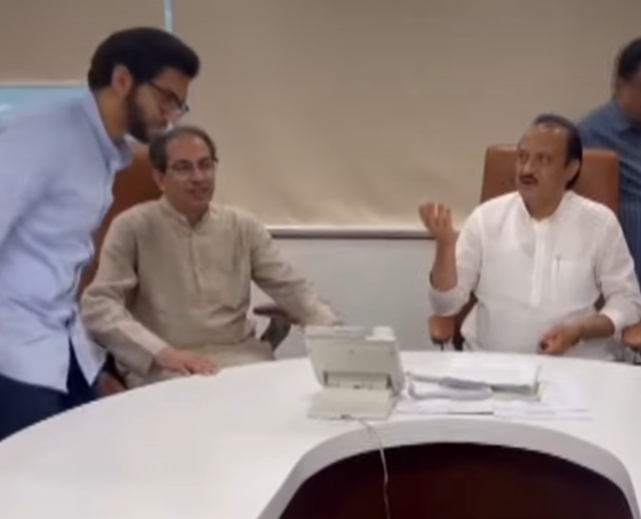
While the Thackerays attempt reunion, the rival Pawar factions are taking tentative steps toward rapprochement. The NCP (Ajit Pawar faction) and NCP (Sharadchandra Pawar faction) have joined hands to contest the Pune Municipal Corporation and Pimpri-Chinchwad Municipal Corporation together, signalling that blood ties may prove thicker than political differences.
These developments have only amplified the speculation about broader realignments in Maharashtra. Rumours have circulated for some time about the senior Pawar faction joining the National Democratic Alliance, with Ajit Pawar handling Maharashtra politics and Supriya Sule being given a national role.
Sharad Pawar, in the final phase of his storied political career, may wish to secure his daughter Supriya’s future, particularly since she is not seen as having the mass appeal of Ajit Pawar. Initial talks reportedly explored both factions fighting under the same symbol, but the Sharad Pawar faction refused, indicating that complete reconciliation remains some distance away.
Nevertheless, the joining of hands serves mutual interests, primarily the need to reclaim ground lost in Pune and Pimpri-Chinchwad, parts of Western Maharashtra that were once NCP strongholds.
The BJP wrested control of both corporations in 2017, pushing the NCP to second position. Even in the recent Vidhan Sabha polls, the BJP won maximum seats in these two districts, demonstrating that the NCP’s decline in this region has been sustained and significant. The Pawar alliance represents an attempt to reverse this trend.
Strategic considerations also play a role. The NCP factions may be preparing for a political future without the BJP. There is speculation that the BJP may contest the 2029 elections alone, which could leave Ajit Pawar’s faction in the lurch. By maintaining channels of communication with his uncle’s faction, Ajit Pawar may be hedging his bets against such an eventuality.
These municipal elections will, therefore, serve as a crucial test not just of organisational strength but of political strategies. For the Thackeray’s, it is about survival and legacy. For the Pawar’s, it is about rebuilding lost ground and securing future options. The outcomes will shape Maharashtra politics for years to come.
Picture credit social media