

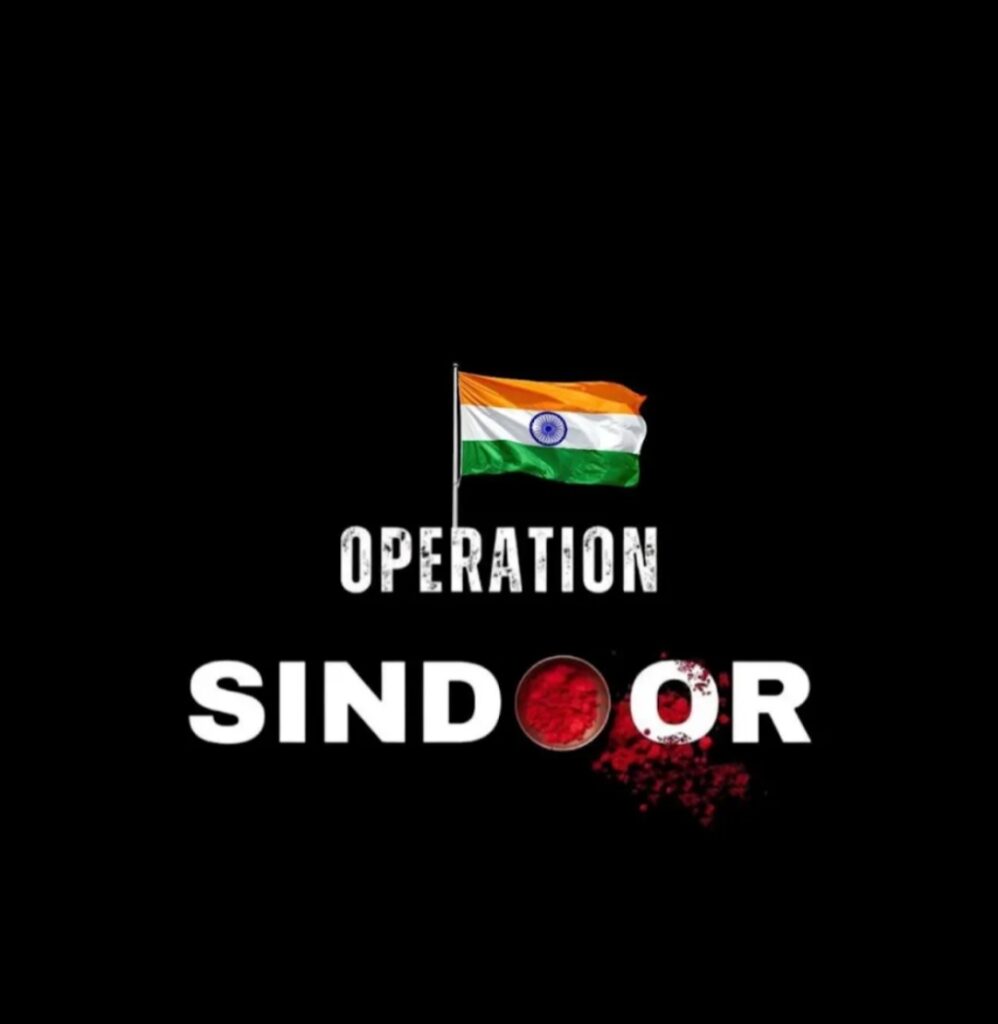
The Legacy of a Four-Day Conflict
On the night of May 7, 2025, India launched what would become one of the most consequential cross-border military operations in South Asia since the Kargil conflict. Codenamed “Operation Sindoor,” the strikes came barely two weeks after the horrific terror attack in Pahalgam in Jammu and Kashmir that killed 26 civilians, most of them tourists. India attributed the attack to Pakistan-based militant networks linked to Lashkar-e-Taiba and its proxy outfit, The Resistance Front (TRF), while Pakistan denied any involvement.
What followed was an intense four-day military confrontation involving missile strikes, aerial engagements, drone warfare, cyber disruptions, artillery shelling along the Line of Control, and unprecedented strategic signalling between two nuclear-armed neighbours. One year later, Operation Sindoor continues to shape India’s military doctrine, Pakistan’s security calculus, and the broader geopolitics of South Asia. 
For the Indian government, the operation marked a new phase in its counter-terror strategy—one that abandoned the older paradigm of “strategic restraint” in favour of calibrated military retaliation. For Pakistan, the strikes reinforced fears that India was willing to raise the threshold of conventional conflict despite the nuclear backdrop. Internationally, the operation triggered renewed anxieties over escalation risks in one of the world’s most volatile regions.
Yet beyond the triumphalism and competing narratives, the first anniversary of Operation Sindoor demands a deeper and more sober assessment: What did the operation actually achieve? Did it make South Asia safer? Or did it merely normalize a new and more dangerous cycle of retaliation?
India’s New Doctrine of Retaliatory Deterrence
Operation Sindoor was presented by New Delhi as a “measured, precise and non-escalatory” military response to terrorism. Indian officials maintained that the strikes targeted militant infrastructure in Pakistan and Pakistan-administered Kashmir rather than Pakistani civilian or military establishments. According to government claims, camps associated with Jaish-e-Mohammed and Lashkar-e-Taiba in locations such as Bahawalpur and Muridke were hit using precision-guided missiles and drones. 
The operation quickly acquired symbolic significance within India. Prime Minister Narendra Modi described it as an example of India’s “courage, precision and resolve,” while Defence Minister Rajnath Singh framed it as proof of India’s evolving technological and strategic capabilities. 
Military analysts argue that the operation altered India’s security doctrine in several important ways. It demonstrated deeper coordination among the Army, Air Force and Navy; expanded the operational role of drones and loitering munitions; and accelerated India’s emphasis on indigenous defence technologies under the “Atmanirbhar Bharat” framework. Several defence studies published over the past year suggest that Operation Sindoor became a catalyst for reforms in air defence systems, underground infrastructure, surveillance networks, and rapid-response capabilities. 
In strategic terms, India sought to establish a “new normal”: that major terror attacks traced to Pakistan-based groups would invite direct military consequences, irrespective of nuclear deterrence. This represented a significant shift from earlier doctrines that often relied more heavily on diplomatic pressure and international mediation.
Pakistan’s Counter-Narrative and the Politics of Denial
Pakistan responded with predictable fury. Islamabad condemned the strikes as a violation of sovereignty and labelled them an “act of war.” Pakistani officials claimed civilian casualties, alleged damage to non-military infrastructure, and asserted that several Indian aircraft had been downed during the confrontation. India rejected these claims as propaganda.
As in earlier India–Pakistan crises—from Kargil in 1999 to Balakot in 2019—the truth became obscured by competing national narratives, selective leaks, media hyper-nationalism, and social media misinformation. The absence of independent access to conflict zones made verification difficult. The fog of war extended beyond the battlefield into digital platforms, where exaggerated casualty figures, recycled videos, and triumphalist propaganda flooded public discourse on both sides. 
Yet Pakistan’s strategic dilemma also became apparent. Economically weakened, diplomatically constrained, and facing internal instability, Islamabad appeared unwilling to permit a prolonged conventional confrontation. The eventual ceasefire of May 10, 2025, reportedly facilitated through quiet international diplomacy, reflected the recognition in both capitals that escalation carried unacceptable risks.
The Nationalist Surge and Its Political Afterlife
Domestically, Operation Sindoor produced a powerful wave of nationalism in India. Television networks portrayed the operation in triumphalist terms, often blurring the distinction between journalism and patriotic spectacle. Social media platforms were flooded with militaristic hashtags, animated battle graphics, and calls for harsher action against Pakistan. Online discourse frequently turned toxic, with dissenting voices accused of being “anti-national.”
The operation also had political consequences. The ruling establishment projected it as evidence of decisive leadership and strategic clarity. Opposition parties broadly supported the armed forces while simultaneously questioning aspects of the government’s diplomatic handling of the crisis. Critics argued that despite military success, Pakistan had not faced the degree of international isolation witnessed after the 2008 Mumbai attacks. 
At another level, the operation intensified concerns over the growing militarisation of public discourse in both countries. The language of permanent hostility increasingly overshadowed the vocabulary of diplomacy, coexistence, and reconciliation.
The Global Dimension: South Asia in an Era of Fragile Stability
Internationally, Operation Sindoor reinforced fears regarding crisis instability between India and Pakistan. Strategic experts across global think tanks warned that future confrontations could escalate more rapidly because of compressed decision-making timelines, social media pressure, drone warfare, and the belief among political elites that escalation can remain controlled. 
Global powers including the United States, China, Russia, and the Gulf states quietly pushed for restraint. Few countries openly criticised India’s right to respond to terrorism, but many remained deeply concerned about the broader implications of repeated military crises between nuclear neighbours.
The operation also highlighted how warfare itself is changing in South Asia. Analysts noted the extensive use of drones, electronic warfare systems, satellite surveillance, AI-assisted targeting, and integrated battlefield communication. Some international assessments described the conflict as South Asia’s first fully network-centric military confrontation. 
However, military modernisation alone cannot provide lasting security in a region burdened by unresolved political disputes and recurring cycles of extremism.
The Human Cost Beyond the Battlefield
Lost amid strategic calculations are the ordinary people who continue to pay the highest price for India–Pakistan hostility. Border communities endured shelling and displacement during the four-day conflict. Families remained separated by visa restrictions and border closures. Cultural exchanges collapsed further. Sporting ties remained frozen. Trade channels continued to shrink.
The suspension of the Indus Waters Treaty mechanisms added another layer of uncertainty to an already fragile relationship.  Meanwhile, decades of hostility have steadily dismantled the social and cultural bridges that once connected the peoples of the subcontinent.
Perhaps the greatest tragedy is that younger generations in both countries are growing up with increasingly limited human contact with one another, shaped more by televised hostility and online propaganda than by lived interaction.
Why Dialogue Remains the Only Sustainable Option
One year after Operation Sindoor, the central lesson should be obvious: military deterrence may manage crises temporarily, but it cannot resolve the deeper political conflict between India and Pakistan.
No military operation—however sophisticated—can substitute for diplomacy. Terrorism cannot be tolerated or rationalised, and credible action against militant networks remains essential for meaningful engagement. Yet perpetual hostility has also failed. Three wars, repeated military crises, diplomatic freezes, and escalating nationalism have brought neither peace nor stability to South Asia.
The history of India–Pakistan relations shows that periods of relative calm emerged not from coercion alone, but from sustained political engagement. The ceasefire agreements of 2003 and 2021, cross-border trade initiatives, visa liberalisation efforts, and cultural exchanges all demonstrated that dialogue, however fragile, can reduce tensions and create constituencies for peace.
What is urgently needed today is not grand romanticism about peace, but pragmatic realism. Backchannel diplomacy must resume. Diplomatic missions should be restored to fuller strength. Trade and humanitarian exchanges should gradually reopen. Academic, cultural, and sporting interactions must be encouraged rather than viewed with suspicion.
For two nations bound by geography, history, language, and shared civilisational memories, perpetual confrontation is neither sustainable nor inevitable.
Beyond the Politics of Permanent Conflict
Operation Sindoor will undoubtedly remain a defining moment in India’s strategic history. It demonstrated India’s willingness to respond militarily to cross-border terrorism and reshaped regional security calculations. But anniversaries should also be moments for introspection.
The real measure of national strength lies not merely in military capability, but in the wisdom to prevent endless cycles of conflict. If South Asia is to escape the shadow of recurring crises, both India and Pakistan must eventually rediscover the political courage to talk—not because they trust each other, but because the costs of not talking have become far too dangerous.
The alternative is a future where every terror attack risks another military confrontation, every crisis unfolds under the nuclear shadow, and every generation inherits deeper hatred than the one before it.
That is not deterrence. That is collective failure.
Picture credit social media

~Hasnain Naqvi is a former member of the history faculty at St. Xavier’s College, Mumbai….
The opinions expressed here are solely those of the author.