

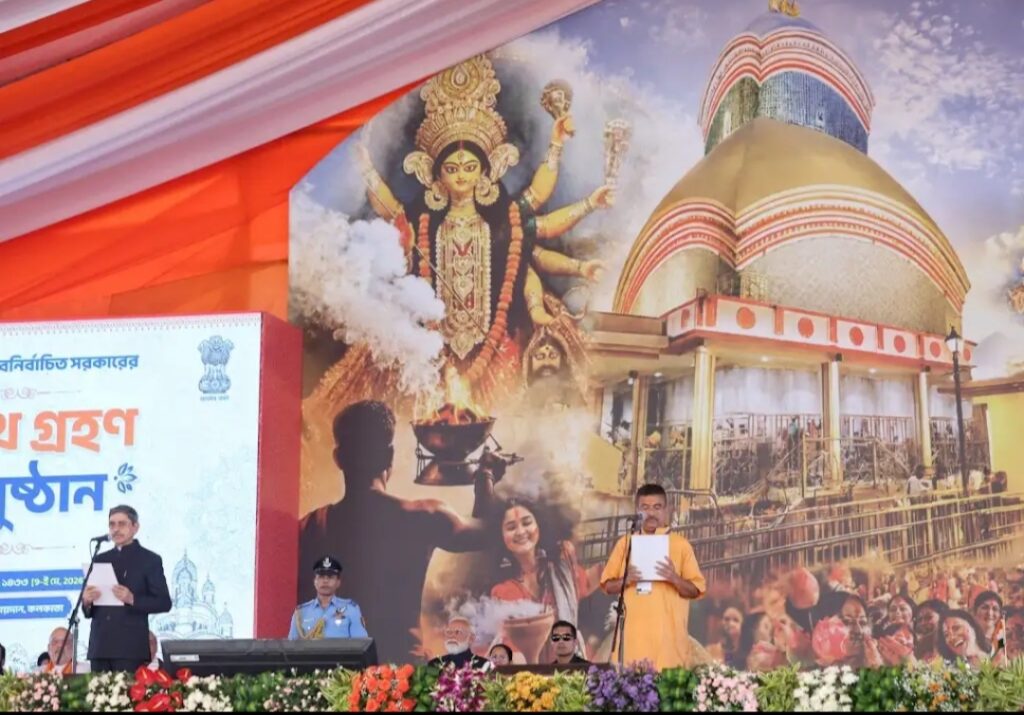
Suvendu Adhikari’s elevation as West Bengal’s ninth Chief Minister on May 9, 2026, marks not merely a change of guard but a seismic shift in the state’s politics. The man who once helped topple the Left’s 34-year citadel now leads the BJP to its first victory in Bengal, ending Mamata Banerjee’s 15-year rule. His journey—from Congress roots to TMC powerhouse to BJP’s face in the East—epitomizes the fluidity, ironies, and transactional nature of Indian politics.
A Career Forged in Agitation and Power
Born in 1970 into a politically active family in Purba Medinipur, Adhikari entered politics young. He began as a Congress councillor in Kanthi Municipality in 1995, following his father Sisir Adhikari. The family switched to the newly formed Trinamool Congress in 1998. Adhikari rose rapidly, winning the Kanthi Dakshin assembly seat in 2006. He served as Lok Sabha MP from Tamluk in 2009 and 2014 before returning to state politics.
His defining moment came during the 2006-07 Nandigram land acquisition protests. Leading the Bhumi Uchhed Pratirodh Committee, Adhikari spearheaded resistance against the Left Front government’s industrial plans. The movement, alongside Singur, eroded the CPI(M)’s dominance and catapulted Mamata Banerjee nationally. Rewarded with the Transport Ministry (later Irrigation and Water Resources) in 2016 after winning from Nandigram, Adhikari became a powerful TMC minister and regional satrap in East Midnapore.
His dramatic resignation from TMC in late 2020 and switch to BJP, followed by defeating Mamata Banerjee herself from Nandigram in 2021, established him as a giant-killer. In 2026, he repeated the feat by winning both Nandigram and Bhabanipur (defeating Banerjee by over 15,000 votes), paving his path to the CM’s chair.
The “Washing Machine” Effect: Yesterday’s Corrupt, Today’s Clean
What makes Adhikari’s ascent particularly noteworthy is the dramatic reversal in the BJP’s own narrative about him. Prior to 2020, the party aggressively targeted him as emblematic of TMC’s alleged venality.
The 2016 Narada sting operation captured several TMC leaders, including Adhikari, allegedly accepting bribes for favours. BJP leaders, including Prime Minister Narendra Modi in rallies, lambasted the footage as proof of “cut-money” culture and demanded arrests. Adhikari was interrogated by the CBI in related probes.
He also faced scrutiny in the Saradha chit fund scam. Saradha’s Sudipta Sen later alleged payments to Adhikari, claims the TMC weaponized post-defection. BJP spokespersons once highlighted “syndicate raj,” political violence in his strongholds, and misuse of relief materials under his influence. Local workers alleged coercion during elections.
Post-2020, the rhetoric evaporated. Sting videos reportedly vanished from BJP channels, prompting “washing machine” jibes from opponents. Adhikari now dismisses past cases as politically motivated. No final convictions materialized in key cases, yet the selective amnesia underscores how party loyalty often trumps earlier outrage in Indian politics. Investigations continue to linger, but the people’s mandate, as Adhikari argues, has provided clearance.
Polarizing Rhetoric and the Communal Question
Adhikari’s tenure as Leader of Opposition was marked by sharp, often controversial, public statements targeting Muslim voters and politics. He has referred to opponents in ways invoking “Begum” and “mini-Pakistan,” highlighted consolidated “Hindu votes” versus “extremist” Muslim voting patterns, and suggested post-poll focus on Hindus. In one instance, he advocated physically removing Muslim MLAs if BJP came to power and drew parallels to Israel’s actions in Gaza for dealing with Bangladesh-related issues, drawing hate speech accusations and assembly suspensions.
Such remarks resonate with a section seeking majoritarian assertion amid perceived TMC appeasement but risk deepening Bengal’s communal fault lines. With Muslims forming around 27% of the population, governance will test whether Adhikari can transcend campaign polarization into inclusive development.
The Road Ahead: Substance Over Spectacle
Adhikari assumes office with formidable challenges: reviving industry, addressing unemployment, curbing violence, and delivering on “poriborton 2.0.” His administrative experience as a TMC minister and grassroots connect in key districts provide assets. Yet, questions about consistency, past shadows, and divisive rhetoric will follow him.
Bengal’s voters have chosen change. Whether Suvendu Adhikari evolves from a master of political survival into a statesman delivering governance for all Bengalis—beyond narratives of washing machines or vote banks—will define his legacy. History watches if this chameleon of Indian politics can finally offer stable, development-focused rule to a state long weary of turmoil.
Picture credit social media

~Hasnain Naqvi is a former member of the history faculty at St. Xavier’s College, Mumbai….
The opinions expressed here are solely those of the author.