

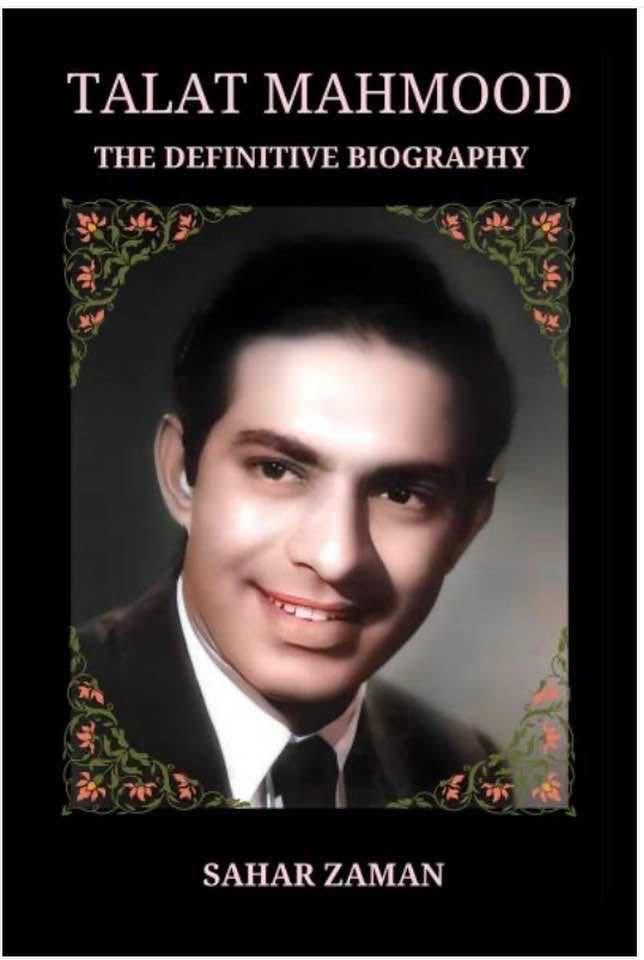
There are singers who dominate an era through power, range and spectacle. And then there are rare voices that enter the listener’s heart like a whisper and remain there for a lifetime. Talat Mahmood belonged to the second category. Even nearly three decades after his passing, his songs continue to float through India’s collective memory with an intimacy that few playback singers have ever achieved. In an age increasingly drawn toward volume and speed, Talat’s voice still reminds listeners of the beauty of restraint, the dignity of sorrow and the elegance of emotional understatement.
Indian cinema’s golden age produced giants in abundance — Mohammed Rafi, Mukesh, Manna Dey and Kishore Kumar among them. Yet Talat Mahmood carved out a space uniquely his own. His voice neither soared dramatically nor thundered with operatic intensity. It trembled softly, carrying with it an ache that sounded deeply human. That delicate vibrato — once considered unconventional — became his signature and eventually redefined modern ghazal singing in India.
Born in Lucknow in 1924, Talat emerged from a city steeped in tehzeeb, Urdu poetry and refined musical culture. The syncretic cultural environment of Lucknow shaped his artistic sensibility. He grew up listening to classical maestros in all-night mehfils and developed an instinctive appreciation for melody and poetry. According to Sahar Zaman’s acclaimed biography, Talat Mahmood: The Definitive Biography, music for Talat was not merely performance; it was a deeply emotional and civilisational inheritance rooted in the Indo-Muslim cultural traditions of North India.
His decision to pursue singing was itself an act of quiet rebellion. Coming from a conservative family where music was not regarded as a respectable profession, Talat chose art over conformity. Trained under Pandit S.C.R. Bhat at Lucknow’s Marris College of Music, he acquired a grounding in classical music that later gave his light compositions extraordinary sophistication. Yet what distinguished him was not technical flamboyance but emotional intelligence. Talat understood the pauses between words as deeply as the words themselves.
His early broadcasts from All India Radio Lucknow introduced audiences to a voice unlike any they had heard before. Soon, HMV recognised his potential and offered him recording opportunities. His non-film ghazal “Tasveer Teri Dil Mera Behela Na Sakegi” became a sensation across the subcontinent and transformed him into a national figure long before Bombay cinema fully embraced him.
Like many artists of his generation, Talat’s journey took him through Calcutta before Bombay. In Calcutta, he recorded Bengali songs under the name “Tapan Kumar” and gained immense popularity. The city’s cosmopolitan artistic culture refined his versatility and broadened his appeal. By the time he arrived in Bombay in 1949, he was already an established star.
The Hindi film industry of the 1950s was entering a transformative phase. Playback singing had become central to cinematic storytelling, and music directors were searching for voices that could embody the emotional interiority of modern characters. Talat Mahmood proved ideal for this moment. Music directors such as Anil Biswas recognised the uniqueness of his trembling voice and wisely resisted attempts to “correct” it. Instead, they built compositions around its emotional fragility.
The result was a series of immortal songs that remain benchmarks of cinematic melancholy. “Ae Dil Mujhe Aisi Jagah Le Chal,” “Jalte Hain Jiske Liye,” “Jayen To Jayen Kahan,” “Tasveer Banata Hoon,” “Phir Wohi Shaam Wohi Gham,” and “Itna Na Mujhse Tu Pyar Badha” were not merely songs; they became emotional landscapes for generations of listeners navigating heartbreak, loneliness and longing.
Talat’s genius lay in making sorrow sound dignified rather than theatrical. In his voice, pain never descended into self-pity. There was always grace, composure and civilisation. His ghazals carried the refinement of Urdu literary culture into popular cinema without diluting either poetry or music. At a time when commercial cinema could easily have reduced the ghazal to decorative nostalgia, Talat preserved its emotional authenticity.
He also became the preferred voice for some of Hindi cinema’s most sensitive male protagonists. Whether singing for Dilip Kumar, Dev Anand or Raj Kapoor, Talat brought introspection to masculinity. His songs allowed male vulnerability to exist on screen without embarrassment. In many ways, he humanised the Hindi film hero.
Yet Talat Mahmood’s career also reflects the brutal transitions of the film industry. By the late 1950s and early 1960s, cinematic tastes were changing. Louder orchestration, energetic romantic numbers and the rise of new male playback styles gradually pushed Talat’s understated ghazal-oriented singing to the margins. His refusal to compromise his artistic identity perhaps limited his adaptability in a rapidly commercialising industry. But it is precisely this refusal that preserved the purity of his legacy.
Unlike many singers who faded into obscurity after their peak years, Talat remained an object of deep reverence among connoisseurs of Urdu poetry and refined film music. His audience may have become smaller over time, but it became intensely loyal and intellectually sophisticated. Writers, poets, academics and lovers of Urdu literature continued to cherish him as the definitive voice of romantic melancholy.
Talat also attempted an acting career and appeared in several films, though cinema ultimately embraced him more as a singer than as a leading man. Yet even this phase reveals his restless artistic ambition. He was unwilling to remain confined within a single identity. Those who knew him often described him as dignified, soft-spoken and exceptionally cultured — qualities that mirrored his singing style.
Beyond Hindi cinema, Talat recorded in Bengali, Punjabi and Bhojpuri, demonstrating his remarkable linguistic adaptability. His Bengali songs in particular remain highly admired. Few singers carried linguistic grace as effortlessly as he did.
In contemporary India, where public discourse is increasingly coarse and cultural memory alarmingly short, revisiting Talat Mahmood acquires renewed significance. He belonged to a generation of Muslim artists who helped shape the emotional and aesthetic foundations of Indian popular culture. Along with figures such as Sahir Ludhianvi, Kaifi Azmi, Shakeel Badayuni and Mehdi Hassan, Talat represented a shared Indo-Muslim cultural heritage that transcended political boundaries and communal identities.
His artistry reminds us that Indian cinema’s golden age was built upon collaboration across languages, religions and regions. The Urdu ghazal, once considered elite literary expression, entered ordinary homes because voices like Talat Mahmood made it emotionally accessible without vulgarising it. He democratised sophistication.
Even today, listening to Talat Mahmood feels like entering another moral and emotional universe — one where love is patient, grief is graceful and language carries dignity. His songs do not demand attention; they quietly inhabit the listener’s inner life. That perhaps is why they have endured for generations.
Talat Mahmood received the Padma Bhushan in 1992, but official honours alone cannot measure his contribution. His true memorial lies in the countless evenings across the subcontinent where his songs continue to play softly in homes, tea houses, radio programmes and solitary memories.
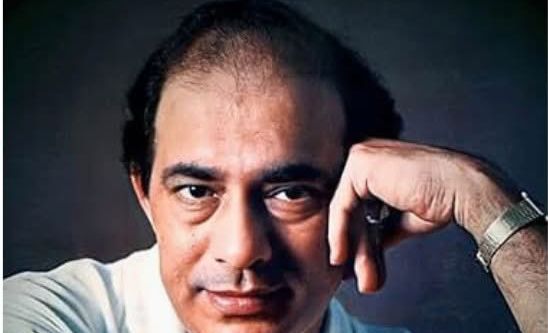
There may never again be another voice quite like his. In the noisy certainties of modern life, Talat Mahmood still sings for the fragile human heart.
Picture credit social media

~Hasnain Naqvi is a former member of the history faculty at St. Xavier’s College, Mumbai….
The opinions expressed here are solely those of the author.