

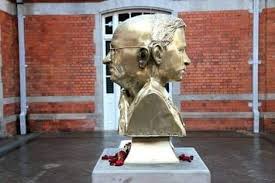
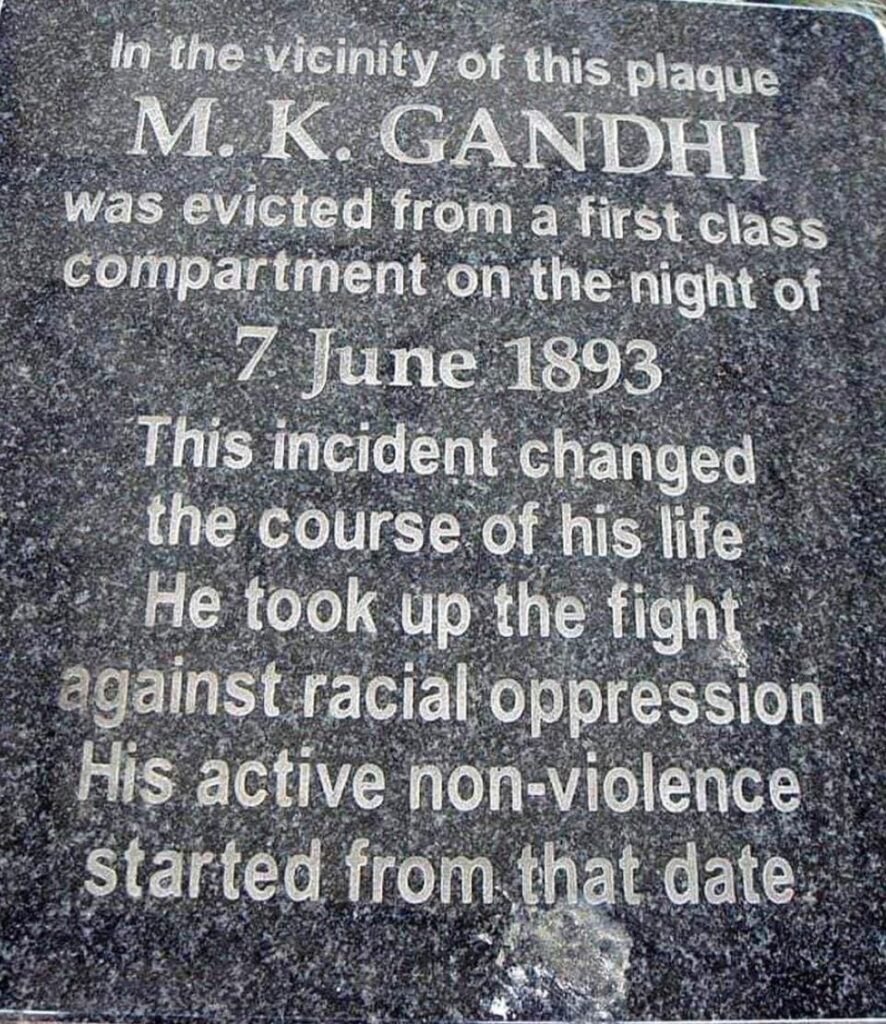
On the night of June 7, 1893, at the Pietermaritzburg railway station in colonial South Africa, a young Indian barrister named Mohandas Karamchand Gandhi faced a raw confrontation with racial bigotry that would redefine not only his destiny but the trajectory of anti-colonial resistance worldwide.
Travelling from Durban to Pretoria on a valid first-class ticket to handle a legal dispute for a Gujarati merchant, the 23-year-old Gandhi was ordered to vacate his compartment by a white passenger who objected to sharing space with a “coolie.” When Gandhi refused, citing his ticket and rights, railway officials summoned police. He was physically ejected onto the platform, his belongings tossed after him. Forced to spend the night in the unheated waiting room amid biting winter cold, Gandhi reflected deeply on the systemic injustice confronting Indians in South Africa.
A Personal Humiliation Becomes a Catalyst
This was not Gandhi’s first brush with prejudice in South Africa. Upon arriving earlier that year, he had encountered restrictions on where Indians could live, travel, and even walk. Yet the Pietermaritzburg incident crystallized something profound. In his autobiography and writings like Satyagraha in South Africa, he later described it as a symptom of the “deep disease of colour prejudice.” Rather than retreat to India when his initial contract ended, Gandhi resolved to stay and fight.
The decision marked the quiet birth of a philosophy that would mature into Satyagraha—truth-force or non-violent resistance. Over the next two decades in South Africa, Gandhi honed this approach through organized campaigns against discriminatory laws, including the Asiatic Registration Act and the £3 poll tax on Indians. He led marches, founded the Natal Indian Congress, established communal settlements like Tolstoy Farm, and endured arrests, all while insisting on moral courage over physical retaliation.
From South African Soil to World Stage
What began as a defence of Indian immigrants’ rights in a distant colony evolved into a universal template for challenging oppression. Gandhi’s South African experiences—marked by the Pietermaritzburg night and subsequent struggles—equipped him with the moral and tactical framework he would bring back to India in 1915. There, he transformed the Indian National Congress and led mass movements such as the Non-Cooperation Movement, the Salt March of 1930, and Quit India, ultimately contributing decisively to the end of British rule in 1947.
The incident’s ripple effects extended far beyond India. Martin Luther King Jr., Nelson Mandela, and countless others drew inspiration from Gandhi’s method of disciplined, non-violent civil disobedience. As biographer Louis Fischer observed in reflecting on Gandhi’s life, the Englishman who had him removed could scarcely have imagined the consequences: a seemingly insignificant lawyer would one day help dismantle empires through the sheer power of ethical conviction.
Enduring Legacy of Moral Resistance
Today, the Pietermaritzburg station stands as a site of pilgrimage, its plaque commemorating the moment a barrister became a Mahatma.
In an era still grappling with racism, inequality, and authoritarianism, Gandhi’s response that night offers a timeless lesson: true power lies not in matching violence with violence, but in confronting injustice with unyielding truth and self-discipline.
The cold platform in Natal did not merely evict a passenger—it ignited a flame of resistance that illuminated the 20th century and continues to guide movements for justice across the globe.
The incident at Pietermaritzburg, on June 7, 1893, became history’s greatest turning points that often arrive not with fanfare, but in the quiet resolve of one individual refusing to accept indignity.

~Hasnain Naqvi is a former member of the history faculty at St. Xavier’s College, Mumbai….
The opinions expressed here are solely those of the author.