
NEW DELHI: The Iran conflict had a quiet end as Donald Trump and Iranian President Masoud Pezeshkian signed an interim peace deal. Trump framed it as a major win for the US. But Iran is still standing, surviving a month-long offensive by two of the world’s largest military powers.
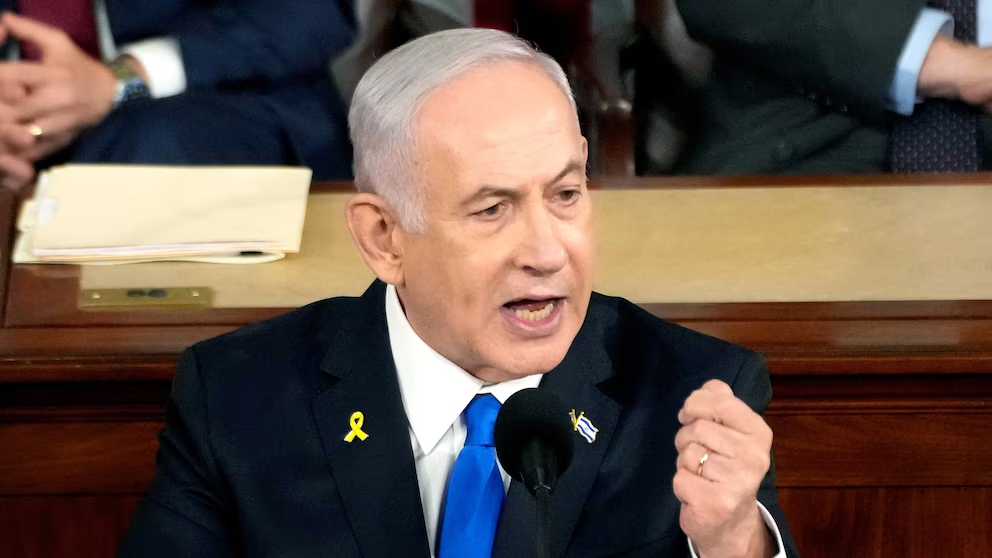
In hindsight, the war yielded no winner. But, for Israeli Prime Minister Netanyahu, the conflict has turned out to be a bust and a political disaster. It raises a pertinent question. Did ‘Bibi’ emerge as the biggest loser?
The reality will be a tough pill to swallow for Netanyahu, who faces a crucial high-stakes election this October. Over the past three years, Netanyahu has entered into conflicts with Iran, Hamas in Gaza and Hezbollah in Lebanon. He promised a “new Middle East”. Three years down the line, while there have been military successes, the conflicts have not brought any lasting victories for Israel.
Instead, the new Middle East looks like this – Hamas still controls a part of Gaza, Hezbollah has survived in Lebanon, and a wounded Iranian regime is still intact with a new Supreme Leader and a more powerful Islamic Revolutionary Guards (IRGC). Moreover, while Israel and the US went to war with Iran together, Tel Aviv was largely sidelined from the peace deal negotiations. That Pakistan was chosen by Trump as the intermediary only made matters worse.
The harsh reality is that Netanyahu gambled everything on this war. The interim deal between the US and Iran leaves several of Israel’s goals unaccomplished and has also alienated Netanyahu from Trump.
The ties are not the same like it was in February when Netanyahu walked into the White House with a plan to attack Iran and readily impressed Trump. The agreement basically leaves the Israeli Prime Minister with no achievements to sell four months before the elections.
Attacking Iran and destroying its proxies like Hezbollah was a decades-old obsession for Netanyahu. He has long portrayed Iran and its proxies as a threat to Israel and the Middle East. However, the Israeli PM lacked a willing partner in the White House. After Trump’s re-election, Netanyahu sensed an opportunity. His bet paid off as Israel and the US pounded Iran on February 28 this year.
However, the tables turned as Iran seized the Strait of Hormuz, choking global energy supplies. Trump faced growing pressure as the prolonged conflict inflicted economic pain at home and his approval ratings dipped ahead of November’s midterm elections. With few options left, Trump hastily cobbled together a deal without taking any input from Israel.
The result – the US and Israel failed to accomplish any of the stated objectives they outlined at the start of the war. The theocratic regime still stands, and Iran’s stockpile of highly enriched uranium (a key ingredient to make nuclear weapons) is still within the country. Moreover, Trump, in a big U-turn, also said that the US would not pressure Tehran to abandon its ballistic missile program.

We are a multimedia news network. Website : www.7xnews.com Based in New Delhi (India)
Youtube : umakantlakheraspeaks@gmail.com