

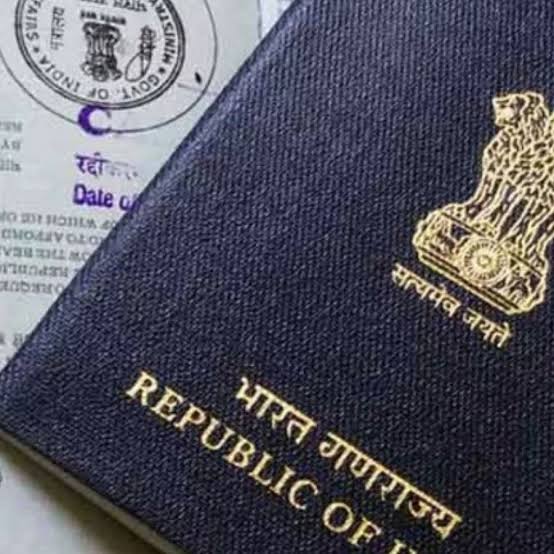
The recent statement by a senior Ministry of External Affairs (MEA) official—that an Indian passport is a “travel document” and not conclusive proof of citizenship—has ignited widespread debate, confusion, and political contention.Coming amid discussions on electoral roll revisions, the statement underscores a deeper, longstanding ambiguity in Indian law between the concepts of nationality and citizenship. While often used interchangeably in everyday discourse, these terms carry distinct legal and sociological weights, leading to persistent controversies over identity, rights, and documentation.
This article examines the constitutional and statutory framework, the practical realities of proof, and the expert perspectives that highlight why such clarifications, though legally sound, expose systemic gaps in public understanding and administrative clarity.
Constitutional Foundations: Citizenship, Not Nationality
India’s Constitution deliberately employs the term “citizen” rather than “nationality” in Part II (Articles 5 to 11), which outlines citizenship at the commencement of the Republic on January 26, 1950. These provisions addressed the immediate challenges of Partition, migration, and domicile. Article 5, for instance, granted citizenship to those domiciled in India who were born there, had parents born in India, or had resided ordinarily for at least five years prior. Articles 6 and 7 dealt with migrants from and to Pakistan, while Article 8 covered persons of Indian origin abroad. Article 9 barred those who voluntarily acquired foreign citizenship, and Article 11 empowered Parliament to regulate citizenship by law.
The Supreme Court has clarified that citizenship under the Constitution applies only to natural persons, distinguishing it from “nationality,” which can extend to juridical entities under international law (as noted in State Trading Corporation of India v. Commercial Tax Officer). India follows a single citizenship model, rejecting dual or state-level variants, reinforcing the indivisible bond between the individual and the Union.
Prominent jurist and former Solicitor General Harish Salve has emphasized that citizenship is a formal legal status governed by specific rules, not merely a passport or identity card. “Rules decide my citizenship,” Salve remarked in recent discussions, underscoring that passports facilitate travel but do not create or conclusively prove the underlying status.
The Citizenship Act, 1955: The Operational Statute
Parliament exercised its Article 11 powers through the Citizenship Act, 1955, which remains the controlling law for acquisition, loss, and determination of citizenship. It provides five modes: by birth, descent, registration, naturalisation, and incorporation of territory. For most Indians, citizenship by birth (with evolving conditions post-1987 and 2003 amendments requiring at least one parent to be a citizen) or descent forms the bedrock.
Loss of citizenship occurs via renunciation, termination, or deprivation (e.g., for fraud). The Act also allows the Central Government (via the Ministry of Home Affairs) to issue certificates in cases of doubt under Section 13, which serve as conclusive evidence. Critically, no single document is statutorily designated as universal proof. Citizenship is a status derived from facts—birth records, parentage, domicile—verified through a combination of evidence, not embodied in one artifact.
Legal experts note that this framework prioritizes substantive criteria over documentary formalism, a deliberate design to handle India’s vast, diverse population and historical migrations. However, it leaves room for administrative discretion and evidentiary disputes.
The Passport’s Limited Role: Travel Document, Not Citizenship Proof
Issued under the Passports Act, 1967, primarily to facilitate international travel, the Indian passport attests to nationality for foreign authorities but does not confer or irrefutably prove citizenship under domestic law. Section 20 even permits issuance to non-citizens in exceptional public interest cases, underscoring its functional, not constitutive, nature.
The MEA’s recent statement reiterated this: “Passport is a travel document, not a document of citizenship… Even though while travelling abroad, passport attests to your nationality, yet it is not a document of your citizenship.” This aligns with judicial precedents. The Bombay High Court in 2013 ruled that (terminated) passports do not conclusively establish citizenship, particularly in immigration violation cases. The Supreme Court has observed in various contexts that while passports undergo verification, they are not immune to challenge if obtained fraudulently or if underlying citizenship is disputed.
Former diplomat Veena Sikri explained: “A passport serves as a travel document and a document of nationality for international travel, but it is not, in itself, a legal document that confers citizenship.” The MHA holds primary authority over citizenship determination.
Common identity documents like Aadhaar, PAN, Voter ID, Driving Licence, and Ration Cards are explicitly not proof of citizenship; they establish identity, residency, or electoral eligibility. Even birth certificates, while primary evidence for jus soli claims (especially pre-1987), require corroboration with parental citizenship details in contested cases.
Ambiguities, Contradictions, and Ongoing Controversies
The disconnect arises from practical usage versus legal theory. Passports are issued only after rigorous checks—including Aadhaar, PAN, police verification, and supporting documents—leading many to view them as de facto citizenship proof. Abroad, they effectively signal Indian nationality and protection. Domestically, however, challenges in electoral rolls, NRC exercises (like in Assam), or Foreigners Tribunals reveal that citizenship can be questioned independently.
This creates contradictions. The Supreme Court has noted in electoral contexts that passports and birth certificates are among stronger indicators, yet not absolute. In Sarbananda Sonowal v. Union of India (2005), the Court placed the burden of proving citizenship on the claimant, highlighting the state’s sovereign interest in verifying membership.
Scholars and bureaucrats point to historical and administrative roots. Post-Partition ambiguities, illegal migration concerns, and the absence of a nationwide citizenship register exacerbate confusion. Prominent views, including from former MEA and MHA officials, stress that while passports enable global mobility (with India issuing millions annually and expanding e-passports), citizenship determination demands holistic scrutiny to prevent misuse.
The result is public anxiety: What does prove citizenship? Experts converge on primary evidence like birth certificates linked to parental status, MHA-issued citizenship certificates, or registration documents. Yet, without a single, universally accepted “citizenship card,” disputes persist, fueling political rhetoric and legal battles.
Towards Clarity: Balancing Rights and Verification
The MEA clarification, far from introducing novelty, reaffirms settled law. As Harish Salve noted, it is “legally the correct thing to say,” even if practically jarring for millions who see their passport as emblematic of Indian identity.
India’s approach—single citizenship, parliamentary regulation, and evidentiary flexibility—serves a diverse democracy but requires better public education and streamlined verification. Proposals for enhanced digital integration or a national database could reduce ambiguities without compromising rights. Jurists caution against over-reliance on any document, advocating substantive justice aligned with constitutional values.
In an era of mobility and migration scrutiny, distinguishing nationality (international belonging) from citizenship (domestic rights and duties) is not semantic hair-splitting but essential for rule of law. The passport paradox reminds us that identity in a republic rests not on paper alone, but on the living Constitution and the statutes that breathe life into it. Bridging the gap between legal precision and lived experience remains an ongoing imperative for a “Viksit Bharat” that values both belonging and bureaucratic rigour.

~Hasnain Naqvi is a former member of the history faculty at St. Xavier’s College, Mumbai….
The opinions expressed here are solely those of the author.

