

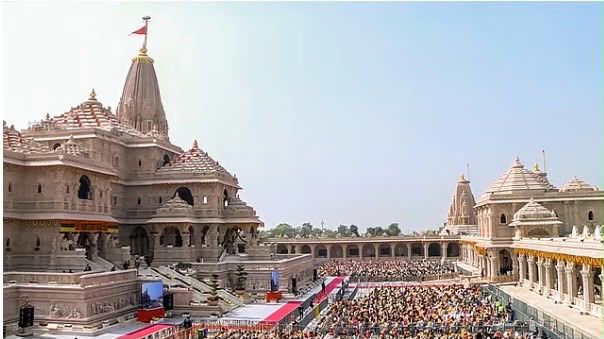
In the sacred precincts of Ayodhya’s Ram Mandir, where millions of devotees have poured their devotion and hard-earned money into hundis and offerings for Lord Ram, a scandal has erupted that strikes at the heart of Hindu faith. Allegations of systematic embezzlement of donations—cash, gold, silver, and valuables—have ignited outrage, exposing glaring lapses in oversight by the Shri Ram Janmabhoomi Teerth Kshetra Trust. As arrests mount and top officials resign, questions swirl: Is this a genuine probe into betrayal, or a limited damage-control exercise shielding powerful functionaries?
The Scam Unravels: Cash, Chaos, and Counting Lapses
The controversy exploded in mid-June 2026 when reports surfaced of massive irregularities in handling devotees’ offerings. A Special Investigation Team (SIT) formed by the Uttar Pradesh government uncovered blatant violations of standard operating procedures (SOPs) in the counting and management of donations. CCTV footage allegedly captured theft on around 70 occasions. SOPs mandating security guards during counting, personnel frisking, and 180-day preservation of footage were ignored.
On June 25-26, an FIR was registered against eight individuals involved in cash counting and management, including Lavkush Mishra, Anukalp Mishra, Avinash Shukla, Manish Yadav, Ramshankar Yadav (alias Tinnu, reportedly driver to Trust General Secretary Champat Rai), Subhash Chandra Srivastava, and others. All eight were arrested and sent to judicial custody. Police recovered approximately ₹79.85 lakh in cash from most of them, with additional assets like properties bought by low-salaried employees (earning ₹18,000-20,000/month) under scrutiny—one allegedly acquired land worth ₹1.5 crore.
Allegations extend beyond petty theft. Former officials and locals claim organized siphoning during counting and transit, with some valuables replaced or diverted. Opposition leaders, including Congress and SP figures, have thrown around figures of ₹5-7.5 crore or even higher (up to ₹200 crore in some claims), encompassing not just cash but gold, silver bricks, and major donations. The Trust has denied large-scale fraud, asserting regular audits, but the SIT’s preliminary findings paint a picture of systemic failure.
Land Deals: Inflated Prices and Insider Gains?
Irregularities are not limited to donations. Allegations of dubious land acquisitions for temple expansion have long dogged the Trust. Reports claim plots were bought at rates up to 17 times the circle rate. In one highlighted case, land reportedly worth ₹2 crore was allegedly flipped to the Trust for ₹18.5 crore within minutes, involving witnesses linked to Trust members. Relatives and associates of key functionaries are said to have profited, with demands for commissions on construction materials also surfacing.
These deals, tied to the Trust’s need for over 100 acres, raise suspicions of sweetheart transactions benefiting insiders while devotees’ funds foot the bill.
Resignations and the Eyewash Question
In a dramatic twist on June 26-27, Trust General Secretary Champat Rai and trustee Anil Mishra resigned, citing moral responsibility. The Trust confirmed receiving the letters, to be decided at its July 11 meeting. Rai, a VHP veteran, and Mishra faced scrutiny over oversight lapses, including keys to hundis held improperly. Administrator Gopal Rao was also questioned.
Critics argue these resignations are cosmetic. The FIR targets lower-level staff, sparing top functionaries. Is the SIT probe—limited in scope—an eyewash to protect RSS/VHP-linked figures like Rai? Trust statements insist donations are safe and audits ongoing, but public skepticism grows amid deleted footage claims and delayed FIR.
Power Struggle: RSS, VHP, and Political Undercurrents
The scandal has amplified fissures within the saffron ecosystem. Champat Rai’s VHP-RSS background contrasts with UP CM Yogi Adityanath’s swift action, including warnings to culprits. Analysts see echoes of RSS vs. VHP influence over the Trust, or broader Modi-Shah vs. Yogi dynamics ahead of UP polls. Yogi’s handling bolsters his pro-Hindutva image, while central figures face indirect heat.
Opposition parties (SP, Congress) demand CBI/ED/CAG probes, labelling it a “loot of faith.” Even some BJP-RSS voices, like Ayodhya’s Rajneesh Singh, sought transparent audits and public disclosure of accounts. PMO reportedly sought a report.
Who’s Hit Hardest? Devotees and Faith Itself
The primary victims are the crores of Ram bhakts whose shraddha (devotion) funded the temple. Annual Trust income hit ₹327 crore in 2024-25, reflecting massive public support post-2024 consecration. Embezzlement erodes that trust, turning a symbol of resurgence into one of suspicion. If exposed fully, it could damage the RSS-VHP ecosystem most, as guardians of the movement.
Supreme Court’s Role and Calls for Accountability
The Trust was constituted per the Supreme Court’s 2019 Ayodhya verdict. Petitions now seek suo motu cognizance, CBI-led probes, CAG audits, and forensic reviews. The apex court has scheduled hearings, with demands for court-monitored investigations to restore credibility. Critics note conflicts, like a serving CAG officer on the Trust’s committee.
ED, CBI, and full CAG involvement remain absent, with the state SIT leading—fueling cover-up accusations.
Implications: A Reckoning or Whitewash?
As of late June 2026, the probe continues with more officials potentially under lens. Eight arrests and recoveries signal action, but limited scope risks perceptions of protecting “top functionaries.” Resignations buy time, yet without independent high-level scrutiny, faith in the institution—and the broader Ram movement—hangs in balance.
This is not mere financial misconduct; it is a plunder of collective devotion. Devotees gave selflessly for a temple symbolizing civilizational assertion. Anything less than a thorough, transparent investigation—ideally CBI/ED/CAG with full disclosure—will deepen cynicism. The Ram Mandir must remain a beacon of purity, not a case study in institutional failure. The faithful demand answers; the nation watches. Only unflinching accountability can heal this wound to shraddha (devotion) and aastha (faith).

~Hasnain Naqvi is a former member of the history faculty at St. Xavier’s College, Mumbai….
The opinions expressed here are solely those of the author.

