
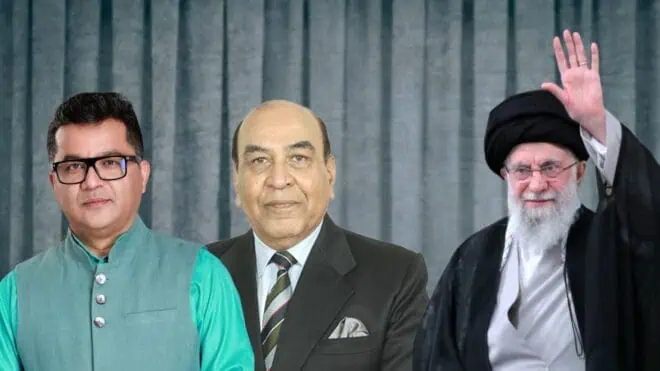
New Delhi, 29 June— Missing yet another opportunity to restore the balance in the country’s West Asia policy, the Modi government has reportedly decided to send Bihar Governor Lt Gen Syed Ata Hasnain (Retd.) and Minister of State for External Affairs Pabitra Margherita to attend the funeral ceremonies of Iran’s Supreme Leader, Ayatollah Seyyed Ali Khamenei.
Iran’s invitation to Prime Minister Narendra Modi to attend the funeral of Khamanei, who was killed in the US-Israel air attacks on 28 February last, had put policy planners in New Delhi in a serious dilemma.
While the Prime Minister has been travelling across the world with three days visit to Seychelles this week being the latest, Modi’s attending the funeral ceremony would have annoyed both Washington and Tel Aviv, diplomatic observers said.
Independent experts say that Modi’s attending would have gone a long way to restore the bilateral relationship to a new level and would have restored the balance in the country’s West Asia policy which in last few years has tilted heavily in favour of Israel.
The decision comes to address the dilemma as Modi will not attend the funeral, with the government instead deputing a senior minister and a gubernatorial representative to participate in the official proceedings. The move is seen as part of India’s diplomatic engagement with Iran during a sensitive geopolitical moment, officials in New Delhi said.
The funeral rites will begin on July 4, when Khamenei’s body will be placed at Tehran’s Grand Mosalla for members of the public to pay their respects. Processions are expected in Tehran and the holy city of Qom, while prayer services will also take place in the Iraqi cities of Najaf and Karbala.
The burial is scheduled for July 9 at the Imam Reza shrine in Mashhad, Khamenei’s hometown. The funeral ceremonies, originally planned for March following his death in a US-Israeli air strike on Tehran on February 28, were postponed because of the regional conflict.
After Khamenei’s death, Iran’s Assembly of Experts chose his son, Mojtaba Khamenei, to succeed him as Supreme Leader. The appointment marks the first time the country’s highest political and religious office has passed directly from father to son. Reports suggest Mojtaba remains at a secure location after reportedly being injured during the conflict and has had limited engagement with senior state officials.
According to reports, Iranian authorities had extended invitations to several global leaders for the ceremony. India’s representation at a high level reflects the importance New Delhi places on its bilateral relations with Tehran, particularly amid ongoing regional tensions and energy security concerns linked to the Strait of Hormuz.
The funeral arrangements for Khamenei, who played a central role in Iran’s political and religious establishment, are expected to draw international attention, with multiple countries sending official delegations.
Veteran Journalist and Political Commentator