

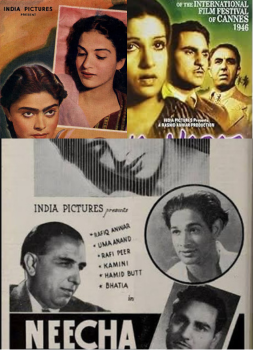
A cinematic milestone that history almost misplaced
Every year, Indian cinema celebrates its box-office triumphs, iconic stars and globally recognised filmmakers. Yet, hidden beneath the glitter of commercial success lies a remarkable achievement that remains curiously absent from popular memory. Long before Indian films became regular participants at international festivals, a young filmmaker named Chetan Anand created a socially charged masterpiece that won the highest honour at the Cannes Film Festival in 1946.
That film was Neecha Nagar—a pioneering work of Indian parallel cinema whose artistic brilliance earned it the festival’s Grand Prix, the precursor to today’s prestigious Palme d’Or. Yet, in one of the greatest ironies of Indian film history, the movie was never commercially released in India during its own era.
As the film world continues to celebrate India’s growing global presence, Neecha Nagar deserves renewed attention—not merely as an award-winning film but as a courageous artistic statement that challenged inequality, exploitation and social injustice decades before such themes became central to Indian art-house cinema.
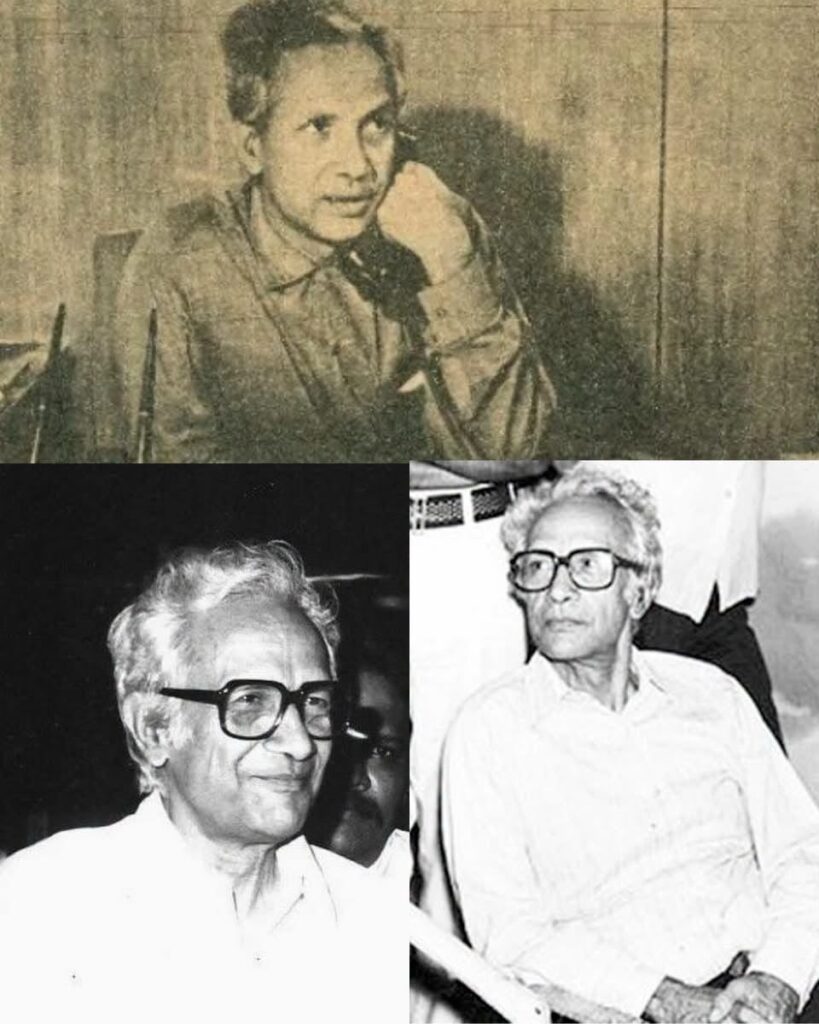
The making of an unconventional filmmaker
Born in Lahore on January 3, 1921, Chetan Anand belonged to a family that valued education and public service. His father, Pishori Lal Anand, hoped his eldest son would enter the prestigious Indian Civil Service and therefore sent him to London for higher studies.
Although Chetan completed his master’s degree and briefly worked with the BBC, the administrative career envisioned for him never materialised. Returning to India, he joined The Doon School in Dehradun as a Hindi teacher in 1940. His contribution, however, extended well beyond the classroom. He immersed himself in theatre, encouraged dramatic performances among students and nurtured a lifelong passion for music, even mastering the violin.
Teaching provided stability, but storytelling remained his true calling.
After marrying Uma Chatterjee—who later became Uma Anand—he increasingly devoted himself to writing film scripts. Eventually, the pull of cinema proved irresistible, prompting him to leave academia and settle permanently in Bombay in 1944. Soon his younger brother, Dev Anand, joined him in the city, where both would embark on careers that would profoundly shape Indian cinema.
A meeting ground for progressive minds
Bombay in the mid-1940s was a fertile space for artistic experimentation and political engagement. Chetan Anand became part of a vibrant circle of writers, actors, musicians and intellectuals closely associated with the Indian People’s Theatre Association, the cultural movement that sought to address pressing social realities through art.
Among those who frequently collaborated and exchanged ideas were Balraj Sahni, Zohra Sehgal, Khwaja Ahmad Abbas, Ravi Shankar and several other progressive artists. Their conversations reflected the turbulence of the times—colonial rule, economic inequality, communal tensions and the hope of an independent India.
This intellectual environment profoundly influenced Chetan Anand’s creative vision.
Bringing social realism to Indian cinema
The inspiration for Neecha Nagar emerged from a story by journalist and writer Hayatullah Ansari, which was adapted into a screenplay by Khwaja Ahmad Abbas. The narrative also drew inspiration from The Lower Depths, while remaining deeply rooted in Indian social realities.
The film presents a stark allegory of class conflict. An affluent and powerful landlord diverts contaminated water into a settlement occupied by the poor, exposing residents to disease and suffering. The resulting conflict becomes a powerful metaphor for structural inequality, exploitation and the moral bankruptcy of unrestrained privilege.
Far ahead of its time, Neecha Nagar rejected melodrama in favour of realism, symbolism and understated performances. It explored questions of justice, dignity and resistance with a cinematic language rarely seen in Indian films of the 1940s.
Many scholars now regard it as one of the earliest foundations of Indian parallel cinema, anticipating by decades the realist works later associated with filmmakers such as **Satyajit Ray>, Mrinal Sen and Shyam Benegal.
Challenges behind the camera
The making of Neecha Nagar was itself marked by compromise and perseverance.
Initially, Balraj Sahni and his wife Damayanti were expected to play the lead roles. However, wartime restrictions meant that film production licences were issued to only a handful of producers. One such licence holder agreed to finance the film only on the condition that he himself would play the male protagonist.
Balraj Sahni reluctantly withdrew from the project, and Damayanti also stepped aside.
Determined to continue, Chetan Anand cast Uma Kashyap, giving her the screen name Kamini Kaushal, which later became one of Hindi cinema’s most celebrated names. Zohra Sehgal also made one of her earliest screen appearances in the film, while Ravi Shankar composed its evocative musical score, adding another layer of artistic distinction to the production.
India’s first triumph at Cannes
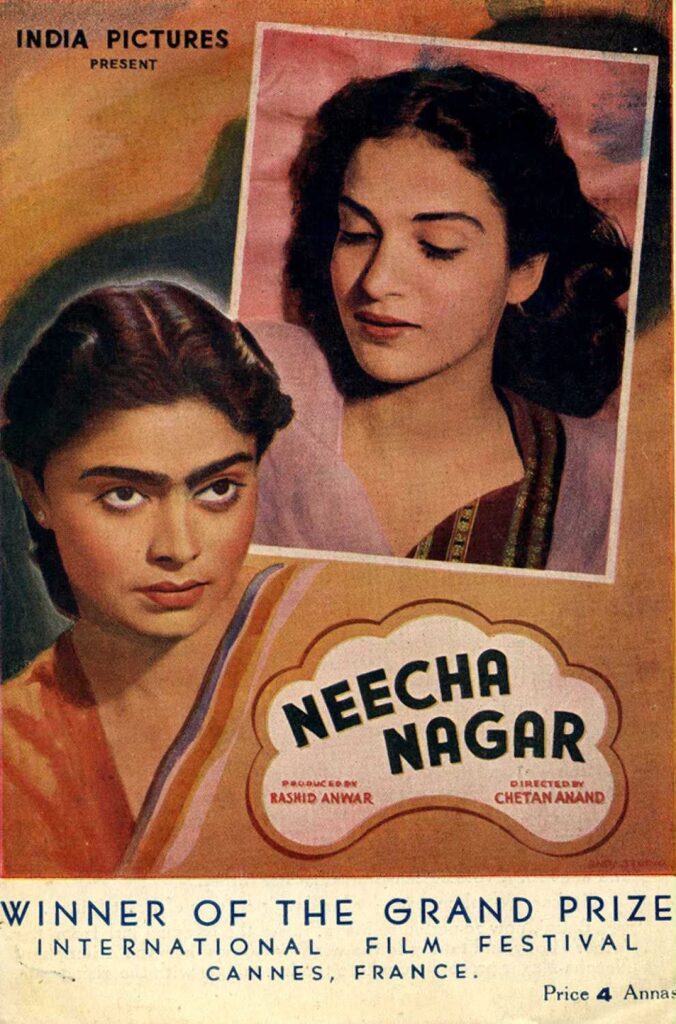
When Neecha Nagar travelled to Cannes in 1946 as India’s official entry, few could have predicted what would follow.
Competing against films from several countries in the very first post-war edition of the festival, it shared the Grand Prix—the highest award then bestowed by Cannes. The honour later evolved into the Palme d’Or, now considered the world’s most prestigious film prize.
The victory announced India’s arrival on the international cinematic stage years before Indian cinema became globally recognised. It also demonstrated that Indian filmmakers were capable of producing works of profound artistic merit that resonated across cultures.
Ironically, the recognition abroad did not translate into appreciation at home.
The masterpiece that audiences never saw
Despite winning the highest international honour available, Neecha Nagar found no commercial distributor in India.
Its bleak social realism, absence of conventional entertainment and uncompromising political themes made exhibitors hesitant to screen it. Consequently, the film remained virtually unseen by Indian audiences for decades.
Only in the 1980s did viewers finally gain an opportunity to watch it through a telecast on Doordarshan.
For Chetan Anand, this neglect remained a lifelong disappointment. He reportedly felt deeply saddened that the film which brought honour to India internationally had failed to receive a proper theatrical release in its own country.
Today, surviving prints are preserved by film archives, allowing scholars and cinephiles to reassess its enduring significance. Restoration efforts have also revived interest in this landmark achievement.
A legacy beyond awards
Although later generations remember Chetan Anand primarily for films such as Haqeeqat, Heer Raanjha and Hanste Zakhm, Neecha Nagar remains the purest expression of his artistic convictions.
It demonstrated that cinema could challenge entrenched power structures, provoke public debate and illuminate uncomfortable truths without sacrificing aesthetic excellence.
Long before conversations about economic inequality, environmental injustice and social exclusion entered mainstream discourse, Neecha Nagar had already transformed them into compelling visual storytelling.
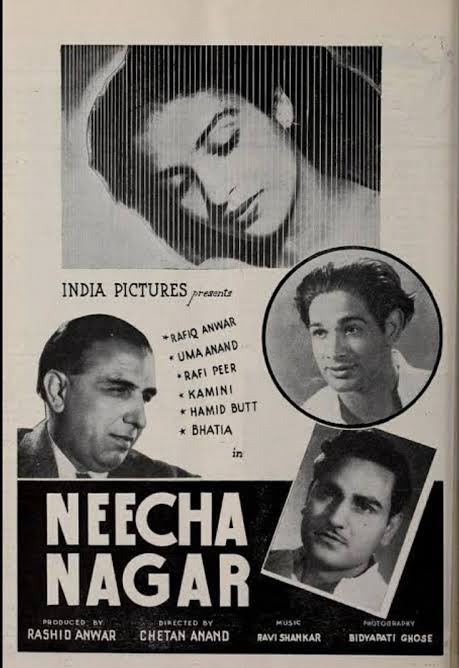
Remembering an overlooked pioneer
Chetan Anand, who passed away on July 6, 1997, left behind a body of work that combined artistic ambition with moral purpose. Yet no single film captures his vision more completely than Neecha Nagar.
Its rediscovery is not merely an act of cinematic nostalgia. It is a reminder that some of India’s greatest artistic achievements have too often remained overshadowed by commercial success and historical neglect.
Eighty years after its creation, Neecha Nagar continues to speak with remarkable urgency. Its portrait of divided societies, unequal access to resources and the human cost of unchecked power feels strikingly contemporary.
In celebrating India’s cinematic heritage, it is impossible to overlook the film that first carried the nation’s artistic voice to the summit of world cinema. Neecha Nagar was not simply India’s first Cannes triumph—it was a declaration that meaningful cinema could emerge from the country’s deepest social realities and still command universal acclaim.

~Hasnain Naqvi is a former member of the history faculty at St. Xavier’s College, Mumbai….
The opinions expressed here are solely those of the author.