
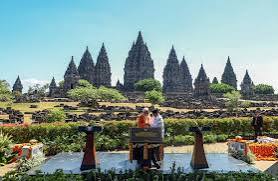
NEW DELHI: Prime Minister Narendra Modi visited Indonesia’s iconic Prambanan Temple on Wednesday, along with Indonesian President Prabowo Subianto during his official visit to the Southeast Asian nation.
The leaders offered prayers at the centuries-old Hindu temple complex, highlighting the deep civilisational ties shared by India and Indonesia. India and Indonesia also launched a conservation initiative for the historic site during the visit.
But beyond its diplomatic significance, Prambanan is one of Indonesia’s most remarkable cultural landmarks. Here’s what makes this UNESCO World Heritage Site so special.
A UNESCO World Heritage Site in Java, Prambanan is known for its sky-high temples, intricate carvings, and enduring place in Indonesia’s cultural heritage.
Prambanan is the largest Hindu temple complex in Indonesia and one of Southeast Asia’s finest examples of Hindu temple architecture. Recognised as a UNESCO World Heritage Site in 1991, the complex is known for its towering stone temples, intricate relief carvings and strong links to Hindu mythology. The main temples are dedicated to the Trimurti – Lord Shiva, Lord Vishnu and Lord Brahma – with the towering Shiva temple standing at the heart of the complex.
The site continues to be an important place of worship while also attracting travellers from around the world for its architecture, cultural significance and the stunning Ramayana reliefs carved into its walls.
Built in the 9th century, Prambanan is one of the most significant monuments from Java’s Hindu past. As per the official website of UNESCO, it is the largest temple compound dedicated to Shiva in Indonesia. The complex originally consisted of hundreds of temples arranged around its central shrines, showcasing the advanced architectural and stone-building skills of the era.

We are a multimedia news network. Website : www.7xnews.com Based in New Delhi (India)
Youtube : umakantlakheraspeaks@gmail.com