

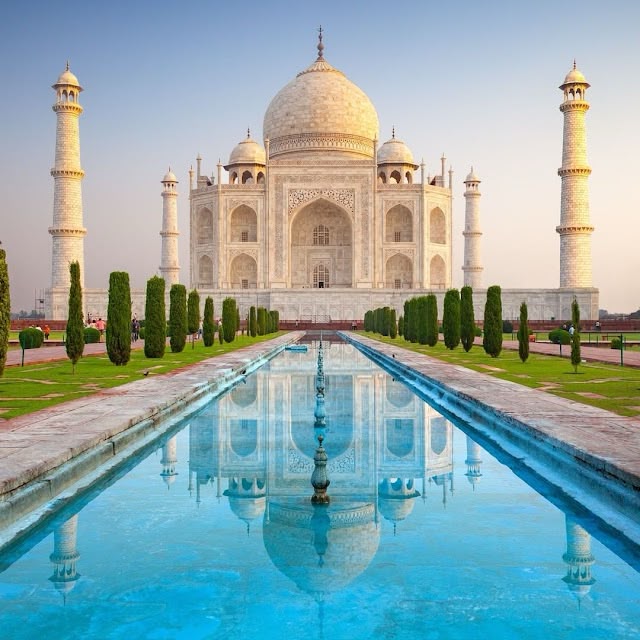
The latest judicial stir over the Taj Mahal is not an archaeological breakthrough; it is another reminder of how easily India’s public square can be hijacked by assertion masquerading as inquiry. The Allahabad High Court’s notice on a plea seeking a survey of the monument has revived a long-discredited “Tejo Mahalaya” story, even though the Taj’s identity as a 17th-century Mughal mausoleum is documented by UNESCO and the official Taj Mahal record.
A claim with no evidentiary spine
The petition’s premise — that the Taj Mahal was originally a Shiva temple — belongs to a well-worn genre of pseudo-history, popularised by P. N. Oak and repeatedly challenged by historians, archaeologists and the courts. UNESCO describes the Taj Mahal as “an immense mausoleum of white marble” built in Agra between 1631 and 1648 by order of Shah Jahan in memory of Mumtaz Mahal. UNESCO’s world heritage entry says the same, plainly and without ambiguity.
That matters because history is not built on insinuation, political convenience or viral certainty. It is built on sources, inscriptions, architectural evidence, court chronicles and scholarly method. On that standard, the “Tejo Mahalaya” claim has never established a credible case.
What the record says
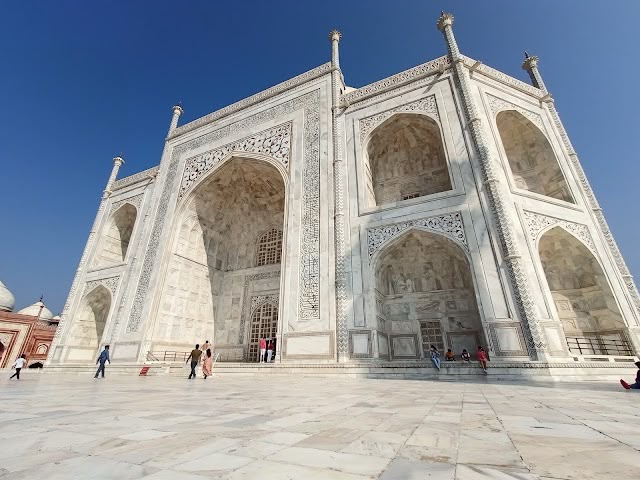
The public record overwhelmingly supports the accepted history of the Taj Mahal as a Mughal funerary complex, not a repurposed temple. UNESCO and the Taj Mahal’s official heritage description identify it as a mausoleum commissioned by Shah Jahan and completed in the mid-17th century. National Geographic, summarising mainstream historical understanding, likewise describes it as Shah Jahan’s memorial to Mumtaz Mahal, built over more than 15 years.
Even the structure itself aligns with that history: a tomb at the centre, a mosque on one side, a guesthouse on the other, and Qur’anic calligraphy integral to its design. None of this proves what mythmakers want it to prove; it proves the opposite. The burden of proof rests on those asserting a hidden temple, and so far they have not met it.
The courts and the Act
This controversy also exposes a deeper legal fault line. The Places of Worship (Special Provisions) Act, 1991 was meant to freeze the religious character of places of worship as of 15 August 1947 and prevent the reopening of old civilisational wounds. The Supreme Court’s Ayodhya judgment described the Act as imposing a “non-derogable obligation” towards secularism. Yet in the Gyanvapi proceedings, the court also observed that ascertainment of religious character was not barred, a line that critics say has encouraged a wave of litigation over mosques, dargahs and monuments.
That tension is now visible again in the Taj Mahal matter. Once a court entertains a plea built on speculation, the courtroom itself becomes the stage on which political theatre is legitimised. A notice is not a finding, but in an era of social-media absolutism, even procedural steps are quickly converted into proof.
The Chandrachud question
The larger criticism directed at former Chief Justice D.Y. Chandrachud is not merely about one case. It is about whether judicial language, meant to be careful and narrow, ended up widening the aperture for temple-dispute politics. Supporters say the court was only allowing limited ascertainment; critics say the distinction between “ascertainment” and “alteration” has proved too fine to hold in the rough world of communal mobilisation.
That criticism deserves serious engagement, but it should not be allowed to mutate into a license for rewriting history. The law can be debated. The record cannot. When public institutions appear uncertain, opportunists rush in to fill the vacuum with myth.
Why this keeps returning
The Taj Mahal is not under threat from archaeology; it is under threat from instrumental politics. Every few years, a new variation of the same old claim is revived, repackaged and inflated into a civilisational showdown. The aim is rarely historical clarification. It is to keep India trapped in an endless referendum on identity, where monuments are no longer monuments but weapons.
This is where responsible scholarship matters most. Historians such as Irfan Habib have repeatedly warned against allowing faith to replace fact in public discourse, because once that happens, history becomes the casualty. That warning is especially relevant here, where the evidence available in official heritage records already tells a coherent story.
Judicial intervention, not mythology
Judiciary should not flatter a hoax by treating it as an equivalent “side” in a balanced debate. The duty of the court is to test claims against the best available evidence, not to launder conjecture into controversy.
On the Taj Mahal, the evidence is not evenly split: the monument is recognised internationally and officially as a Mughal mausoleum, while the Shiva-temple theory remains a recycled assertion with no credible archaeological foundation.
The real question, then, is not whether the Taj Mahal was a Shiva temple. It was not, according to the documentary and heritage record. The real question is why India keeps rewarding the politics of provocation with national attention, and why institutions so often hesitate before drawing a firm line between scholarship and spectacle.
The Taj Mahal deserves better than to be dragged, again and again, into the swamp of manufactured hurt. It is a monument of grief, craftsmanship and imperial ambition — and also a test of whether a republic can still distinguish evidence from agitation.

~Hasnain Naqvi is a former member of the history faculty at St. Xavier’s College, Mumbai….
The opinions expressed here are solely those of the author.

