
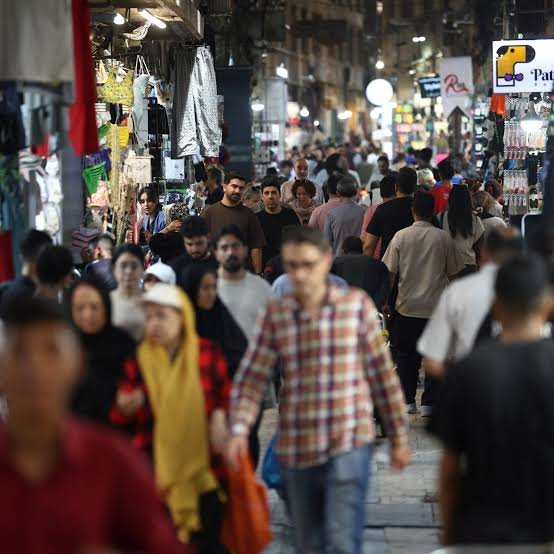
(Photo) Courtesy : Al Jazeera
As the Gulf war, now in its sixth month, spreads across a vast region from the Red Sea to the Dead Sea, even to the distant Caspian Sea, and shows no sign of ending, the question of how it impacts the economies of those involved has become crucial.
These costs have escalated for everyone – including the United States and Israel — as more nations – Saudi Arabia, Jordan, Kuwait, Egypt and Iraq – join in. The obvious victims, as it happens in any war, are the people.
The United States has already spent USD 37.5 billion, and the operational costs are estimated to cross USD 100 billion. Israel’s costs have not been quantified, while the new entrants have yet to indicate them.
As for Iran, the right question to ask is: why has its economy, under stress for over four decades, not collapsed so far?
It is difficult to get a balanced estimate of Iran’s economy. The available data is almost entirely from Western sources or from Iranian scholars living in the West, from where the sanctions on Iran have emanated.
But there is no denying that Iran faces a grim situation. The consensus is that poverty is not new to Iran. Even during the monarchy, which was a showpiece to the world, development had elitist and urban biases. About 48 per cent of rural Iran and nine per cent of city dwellers lived in poverty.
The International Monetary Fund (IMF) projects that in 2026, Iran’s economy will contract by 6.1% and the inflation rate will reach 68.9%.
Viewed from India, Iran’s total economic size is roughly one-tenth. According to the IMF, as of 2026, it is one-fifth the size of Saudi Arabia and Turkey, less than half the size of the UAE and Israel, and is about 20% smaller than Kazakhstan’s.
But Iran’s embattled economy is still far from a state of collapse despite six months of war with the United States, in its third round since June last year.
Millions of people and businesses in this sanctions-hit country continue to absorb economic shockwaves. Analysts say the trend looks set to continue.
Its rulers have, over decades, leaned on self-sufficiency in the face of harsh economic embargoes and confrontation with the US, Israel and the West.
Over time, it has developed in-built positives. The vast and resource-rich country, with over 92 million people, although a major oil exporter, has developed a relatively diversified domestic economy.
Water-intensive agriculture, manufacturing and services have reduced total reliance on oil. Shadowy oil transfers to Pakistan and Afghanistan in particular, cross-border trade, maritime networks and a large informal labour market have helped keep the economy resilient.
But decades of all-encompassing sanctions have hurt. Nationwide protests during which thousands were killed, and several state-imposed internet shutdowns in the past year, have only made it more difficult to earn a living wage and have a future outlook.
What constitutes an economic collapse? Welfare economist Hadi Kahalzadeh defines it as famine and the state losing the ability to pay its employees and deliver basic services. In that sense, he insists, Iran’s economy has not collapsed.
“I don’t think the combination of war, blockade and sanctions, as painful as it’s been, gets us there anytime soon,” Kahalzadeh, a research fellow at Brandeis University’s Centre for Global Development and Sustainability in Massachusetts, told Qatar-based Al Jazeera.
But then, economic shocks are often absorbed through inflation, and currency depreciation preserves some incentive to import and produce, which keeps goods on the shelves but makes them increasingly unaffordable.
This keeps the system functioning, but it dumps the cost directly onto households. The state tries to soften that with cash transfers and subsidies. “It’s an expensive way to survive, but it does avoid collapse,” he says.
Imported goods become more expensive as the national currency continues to sink to new lows against the US dollar. The closure of the Strait of Hormuz since the US-Israel war in late February blocks fresh supplies.
The monthly minimum wage is less than USD 100, and the government offers a monthly cash subsidy and electronic coupons for essential goods.
Iran’s official spokesperson Fatemeh Mohajerani told media last week that the government has belatedly managed to pay designated shops in the coupons scheme. But stores have not received the money because several major banks remain disrupted more than a month after authorities said they faced major cyberattacks.
She also highlighted infrastructure damage inflicted by the US during last month’s bombing, saying 12 bridges and two tunnels were struck and parts of Iran’s natural gas production and electricity generation capacity were lost.
Households bear the brunt. They reduce consumption. Firms postpone investment and educated workers consider emigration. The economy continues to function, but at the cost of a shrinking middle class, lower capital formation, weaker public services and declining confidence in the future.
Taking advantage of such conditions, some in power misuse their positions. Another official, Zabihollah Khodaeian, who heads the General Inspection Organisation of Iran, admits that some of the “trustees” designated by Iran’s top authorities, including the Supreme National Security Council, did not repatriate proceeds from the sale of crude oil and other products under sanctions. “They betrayed the country and took the money for themselves.”
He said these so-called trustees currently hold at least USD 11bn, of which USD 1.6bn has been “misused”.
Oil incomes have allowed the government to conceal some of the deficiencies and postpone consequences. But they have also encouraged rent-seeking and overdependence on the state, which has weakened the private sector and reduced incentives for innovation and long-term investment.
Iran has so far rejected the ‘deal’ the US offers, coupled with threats of “surrender, or else…” It holds on to control over access through the Hormuz Strait. For how long, it is difficult to say.
Analysts say that without a stable environment, the Iranian economy may continue to survive, but it will have little chance of genuine recovery. The most important need is reduction of geopolitical risks through diplomacy.
But for that, all the fighting hands have to clap together. For Iran, “rah-e-solh door ast” (“the road to peace is far”).

Mahendra Ved is a veteran Journalist and an Expert on international affairs.

