

Maharshi Vyasa’s Mahabharata does not record it. But popular folklore and the epic’s modern-day television adaptations state that Queen Gandhari cursed her brother Shakuni that his kingdom of Gandhara (modern-day Afghanistan) would never find peace or prosperity.
True or not, Gandhari, wife of the blind king Dhritarashtra, who blindfolded herself, was a woman of great virtue. She cursed Lord Krishna and predicted his lonely death. The epic portrays her as a symbol of women’s angst at the loss of the entire Kuru family.
She is not present to curse Afghanistan’s present-day rulers, under whom there is neither peace nor prosperity, and women are the worst sufferers.
Calling it the “world’s worst women’s crisis”, the United Nations’ July 2026 report laments that “women and girls in Afghanistan have been systematically stripped of their rights. The Taliban authorities have issued over 160 decrees curbing their education, work and freedom of movement.”
Two examples: “A woman is stopped from buying groceries alone. The shopkeeper who served her is slapped and hauled in for questioning. A teacher is turned away from her own classroom for wearing the wrong cloak.”
Four million children are undernourished, says the “Save the Children” organisation. As men and women develop physical and psychological debilities and children die of malnutrition and hunger, the Taliban, under their own interpretation of Islam, justify all human rights violations the world accuses them of. The tragedy is that the world has come to accept it as normal.
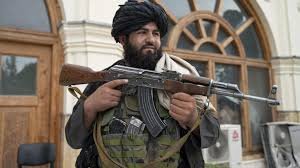
The Taliban completed five years on August 15. The country finds itself in crisis at home and isolated abroad. They wrested power as the United States evacuated after nearly 20 years. But now the Taliban are inviting it to come back — “with diplomats and cash, but no military.”
Afghan Foreign Minister Amir Khan Muttaqi told the New York Times (August 13) that the US could “reopen its embassy, maintain a diplomatic presence and invest in Afghanistan’s vast mineral wealth, dams and roads.”
These were projects that three US administrations and their allies (including India) spent billions trying to develop, “but the Taliban insurgency spent two decades trying to dismantle.”
The newspaper, quoting analysts and former diplomats, rules out any such move: “This is “a near-impossible sell for now.”
The Taliban want the US to treat the past as a “forgotten chapter”. But Washington seems uninterested, unless it regains some of its geopolitical leverage against China and Iran, its current target in the ongoing Gulf War.
The US has expanded sanctions on leading members of the Taliban and frozen Afghan USD nine billion in state assets. Afghanistan remains isolated. Till the US normalises ties, others will not.
Before 2021, it was Afghanistan’s largest aid donor, financing major development and reconstruction projects and disbursing humanitarian aid. After the Trump administration’s massive aid cuts, US aid to Afghanistan is now a fraction of what it was. Most US aid to Afghanistan reaches the country through indirect channels, such as the UN or NGOs.
For two decades before the return of the Taliban, economic activity was largely sustained by international aid, while corruption and insecurity undermined it. An economy so dependent on foreign assistance was bound to suffer when much of outside support disappeared overnight.
Following the Taliban’s takeover, the European Union and the World Bank have also halted large-scale reconstruction funding programmes and have gradually restarted much smaller, emergency-style programmes, with humanitarian aid delivered through NGOs instead.
Denied funds, the country of nearly 45 million people has fallen from bad to worse, with no sign, or even distant hope, of recovery.
The Taliban government remains non-transparent about public finances and unwilling to consolidate state institutions. That, to a certain extent, curtails its ability to cope with deep structural problems such as accountability and corruption.
The worst tragedy is that neither the Taliban nor the world seem to bother. Diplomatic isolation is only making the rulers bolder, and economic sanctions hurt not them, but the people.
To recap, the country located at the crossroads of civilisations in South, Central and West Asia has been in turmoil since the monarchy ended in 1973. First, the communists fought each other as the Soviet Union invaded, and then the Islamists were at war till the Taliban triumphed.
Post-9/11, the Americans and NATO nations unleashed the “global war on terrorism,” which much of the world supported. From 2002, Afghanistan had US-supported governments with an electoral mandate, however limited. Although corruption was rampant, the world community helped in relief and development. India undertook projects worth USD three billion, earning much goodwill from Afghans.
But double-crossed through two decades by Pakistan and tired of fighting the Taliban, the Americans developed “Afghanistan fatigue”. They naively thought that the warring Afghans would sit down and work together – just because the US wanted it. Their hubris and desperation to quit led to a victory-less exit in August 2021, and a virtual invitation to the Taliban to return.
Kabul has little diplomatic recognition today, and sanctions remain. There is also a race for lucrative projects among the European nations. Regional powers – China, Russia, Iran, Pakistan and India—have accorded full or quasi-diplomatic status to promote trade.
Internally, the Taliban hold Afghan society in a chokehold that spares no one. Religious and ethnic minorities are witnessing the forced closure of their places of worship. Anyone who voices criticism is repressed.
Add to that mass unemployment and growing domestic discontent. This is the most serious threat the Taliban have encountered since 2021.
But their grip on power seems immovable. The Taliban collect taxes and are pretty good at it. They are building roads, dams and canals. European countries are desperate to work with them to deport Afghan migrants and asylum seekers.
And yet the signs of trouble are impossible to ignore. Resistance is building up in the north. The Taliban also fight waves of attacks from armed groups owing allegiance to Al Qaida and Islamic State (IS) who want to topple them.
They face a conflict just short of open war with Pakistan. Once their sponsor, Pakistan has launched dozens of airstrikes on Afghanistan in recent months, killing 500 civilians since October.
Growing animosity toward Pakistan and a vast population of unemployed young Afghans are fertile ground for radicalisation when economic opportunities are few. Under the Taliban, Afghanistan is, once again, a pariah state.

Mahendra Ved is a veteran Journalist and an Expert on international affairs.

