

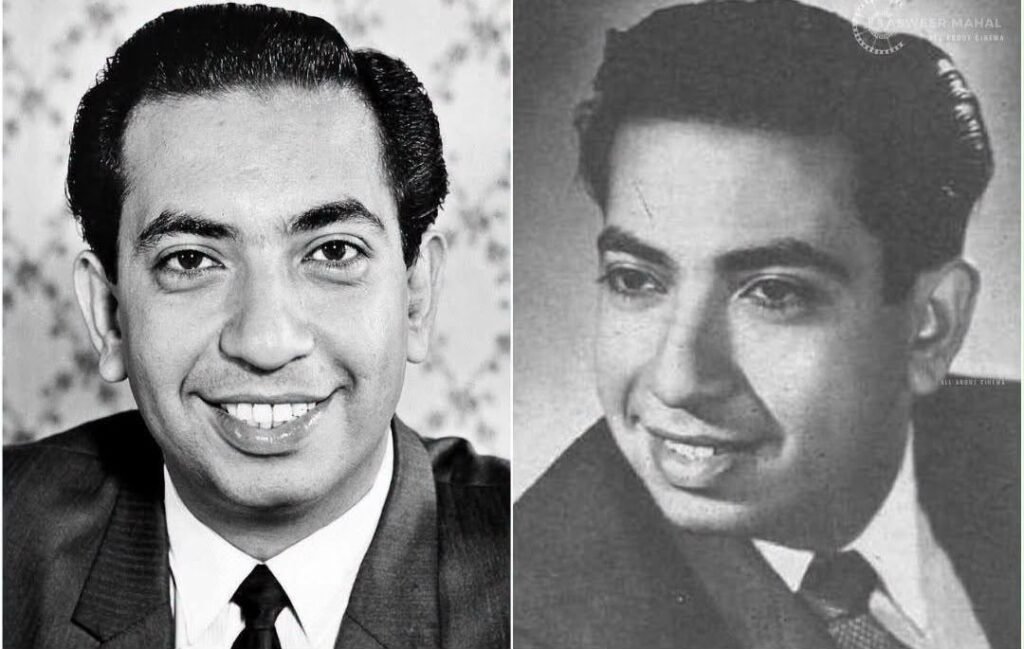
On his death anniversary, reflecting on a five-decade career that moved seamlessly from delicate romantic philosophy to stirring patriotic anthems.
When the resounding chants of B.R. Chopra’s 1988 Mahabharat echoed across millions of Indian living rooms every Sunday morning, or when the brassy, optimistic notes of ‘Mere Desh Ki Dharti’ filled independence celebrations, one distinct vocal timbre united them all. September 27 marks the death anniversary of Mahendra Kapoor, one of the most prolific and emotionally versatile playback singers in the history of Indian cinema. Over a career spanning five decades, Kapoor built a repertoire of more than 2,500 songs across Hindi and numerous regional languages. He was not merely a performer who recorded hits; he was a sonic anchor for an evolving post-independence India, giving voice to its national pride, its philosophical yearnings, and its romantic tribulations.
A CLASSICAL FOUNDATION AND THE BREAKTHROUGH
Born in Amritsar, Punjab, a young Mahendra Kapoor moved to Mumbai drawn by an overwhelming passion for music and a deep reverence for Mohammed Rafi, whom he considered his primary inspiration. Recognizing that natural talent required rigorous discipline, Kapoor immersed himself in classical vocal training under an extraordinary lineage of masters: Pandit Hussanlal, Pandit Jagannath Bua, Ustad Niaz Ahmed Khan, Ustad Abdul Rehman Khan, and Pandit Tulsidaas Sharma. This rigorous grounding endowed his voice with exceptional breath control, a grand dynamic range, and an authoritative projection capable of carrying complex emotional shades.
While completing his graduation at St. Xavier’s College in Mumbai—where he shared classrooms with future radio legend Ameen Sayani—Kapoor actively sought to carve out an identity distinct from his contemporaries. His crucial artistic breakthrough came when he won the prestigious Metro Murphy All-India Singing Competition. This triumph caught the attention of master composer C. Ramchandra and veteran director V. Shantaram, who offered Kapoor his playback debut in Navrang (1958). His rendition of ‘Aadha Hai Chandrama Raat Aadhi’ announced the arrival of a singer whose voice possessed both crystalline clarity and rich, resonant power.
B.R. CHOPRA, SAHIR LUDHIANVI, AND THE POETICS OF HEARTBREAK
While Navrang showcased his classical finesse, it was Kapoor’s long-standing association with filmmaker B.R. Chopra that cemented his legacy as a master of philosophical romance. Chopra’s cinema often dealt with complex interpersonal dynamics, moral dilemmas, and mature relationships, requiring a vocalist who could express deep psychological nuance. Kapoor became that essential voice across milestone films including Dhool Ka Phool, Gumrah, Waqt, Hamraaz, Dhund, Dharmaputra, and Nikaah.
It was in Gumrah (1963) that Kapoor rendered what remains one of the most sophisticated ballads in Hindi film history: ‘Chalo Ek Baar Phir Se Ajnabi Ban Jayen Hum Dono’. Set to Sahir Ludhianvi’s poignant poetry and Ravi’s restrained composition, Kapoor’s performance re-imagined the cinematic expression of heartbreak. Rather than resorting to melodrama or despair, his voice carried a quiet, dignified composure, capturing the profound maturity of two former lovers agreeing to part ways without bitterness. The song became a cultural touchstone for how Indian cinema articulated romance—not as mere passion, but as a reflective, philosophical journey.
This seamless alignment between lyricism and vocal warmth extended into Hamraaz, where Kapoor delivered a suite of immortal classics. He moved effortlessly from the expansive romanticism of ‘Neele Gagan Ke Tale’ and the gentle reassurance of ‘Tum Agar Saath Dene Ka Wada Karo’ to the steadfast stoicism of ‘Na Munh Chhupa Ke Jiyo’ and the tender vulnerability of ‘Kisi Patthar Ki Moorat Se’. Whether pleading for affection in ‘Tere Pyar Ka Aasra Chahta Hoon’ (Dhool Ka Phool) or giving expression to silent devotion in ‘Dil Ki Ye Aarzoo Thi’ (Nikaah), Kapoor brought an unmistakable authenticity to every word.
THE SOUND OF PATRIOTISM: THE MANOJ KUMAR PARTNERSHIP
If B.R. Chopra provided Kapoor with a platform for philosophical introspection, his association with actor-director Manoj Kumar turned his voice into the definitive sound of Indian nationalism. During an era when India was forging its post-colonial identity through agrarian development and social resilience, Manoj Kumar’s films demanded a high-octane, triumphant vocal persona.
The centerpiece of this collaboration was Upkaar (1967), featuring ‘Mere Desh Ki Dharti Sona Ugley’. Kapoor’s ringing, jubilant rendition captured the spirit of the nation’s farmers and soldiers, turning the track into an enduring alternate anthem for the country. This patriotic synergy continued through Purab Aur Paschim with iconic tracks like ‘Hai Preet Jahan Ki Reet Sada’ and ‘Dulhan Chali’, as well as the fiery social commentary of ‘Aur Nahin Bus Aur Nahin’ in Roti Kapda Aur Makaan, and the folk-infused optimism of ‘Ek Tara Bole’ in Yaadgaar.
A notable testament to Kapoor’s standing among his peers occurred during the production of Aadmi (1967). The duet ‘Kaisi Haseen Aaj Baharon Ki Raat’ was originally recorded by Mohammed Rafi and Talat Mehmood. However, Manoj Kumar felt Talat’s delicate vocal texture did not match his screen persona, leading to the song being re-recorded with Kapoor performing alongside his mentor, Rafi. Standing shoulder to shoulder with the artist he had idolized as a youth was both a personal triumph for Kapoor and a defining moment in playback history.
REGIONAL DOMINANCE, TELEVISION HISTORY, AND ENDURING HERITAGE
Beyond Hindi cinema, Mahendra Kapoor achieved unprecedented success across regional film industries. He holds the unique distinction of having performed in the largest number of films across Punjabi, Gujarati, Bhojpuri, and Marathi cinema. In Marathi cinema, he enjoyed a particularly celebrated partnership as the playback voice for iconic actor-filmmaker Dada Kondke. What made this accomplishment notable was his versatility: while delivering Kondke’s upbeat, colloquial tracks with energetic flair, Kapoor simultaneously recorded classical and devotional Marathi compositions with equal reverence.
In the late 1980s, Kapoor reached a new generation of listeners through the medium of television. His powerful delivery of the title track, along with the dohas, mantras, and chaupais for B.R. Chopra’s epic serial Mahabharat (1988), became a weekly ritual for millions. His commanding vocal presence gave the ancient text a grandeur that remains unmatched in Indian broadcasting history.
In recognition of his legendary contributions to music and culture, the Government of India honored him with the Padma Shri in 1972. Despite his monumental fame, Kapoor remained dedicated to his family—his wife, three daughters, and son Rohan Kapoor, who pursued acting and singing in 1980s films such as Faasle, Love 86, and Imandaar, frequently sharing the stage with his father during international concert tours.
When Mahendra Kapoor passed away on September 27, 2008, following cardiac failure, Indian cinema lost one of its most steadfast and radiant voices. Yet, his musical legacy remains vibrantly alive. Whether through the timeless grace of ‘Chalo Ek Baar Phir Se’, the celebratory fervour of ‘Mere Desh Ki Dharti’, or the sacred chants of Mahabharat, Mahendra Kapoor’s voice continues to echo across generations—a permanent monument to an era when film music carried heart, dignity, and purpose.

~Hasnain Naqvi is a former member of the history faculty at St. Xavier’s College, Mumbai….
The opinions expressed here are solely those of the author.